


Food supplementation for improving the physical and psychosocial health of socio-economically disadvantaged children aged three months to five years
- PMID: 25739460
- PMCID: PMC6885042
- DOI: 10.1002/14651858.CD009924.pub2
Food supplementation for improving the physical and psychosocial health of socio-economically disadvantaged children aged three months to five years
Abstract
Background: Undernutrition contributes to five million deaths of children under five each year. Furthermore, throughout the life cycle, undernutrition contributes to increased risk of infection, poor cognitive functioning, chronic disease, and mortality. It is thus important for decision-makers to have evidence about the effectiveness of nutrition interventions for young children.
Objectives: Primary objective1. To assess the effectiveness of supplementary feeding interventions, alone or with co-intervention, for improving the physical and psychosocial health of disadvantaged children aged three months to five years.Secondary objectives1. To assess the potential of such programmes to reduce socio-economic inequalities in undernutrition.2. To evaluate implementation and to understand how this may impact on outcomes.3. To determine whether there are any adverse effects of supplementary feeding.
Search methods: We searched CENTRAL, Ovid MEDLINE, PsycINFO, and seven other databases for all available years up to January 2014. We also searched ClinicalTrials.gov and several sources of grey literature. In addition, we searched the reference lists of relevant articles and reviews, and asked experts in the area about ongoing and unpublished trials.
Selection criteria: Randomised controlled trials (RCTs), cluster-RCTs, controlled clinical trials (CCTs), controlled before-and-after studies (CBAs), and interrupted time series (ITS) that provided supplementary food (with or without co-intervention) to children aged three months to five years, from all countries. Adjunctive treatments, such as nutrition education, were allowed. Controls had to be untreated.
Data collection and analysis: Two or more review authors independently reviewed searches, selected studies for inclusion or exclusion, extracted data, and assessed risk of bias. We conducted meta-analyses for continuous data using the mean difference (MD) or the standardised mean difference (SMD) with a 95% confidence interval (CI), correcting for clustering if necessary. We analysed studies from low- and middle-income countries and from high-income countries separately, and RCTs separately from CBAs. We conducted a process evaluation to understand which factors impact on effectiveness.
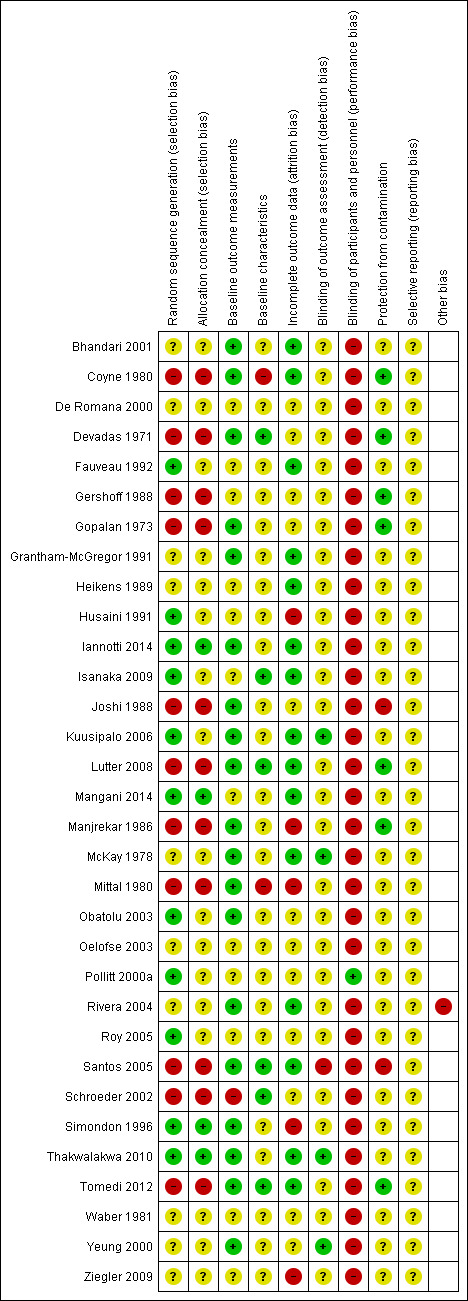
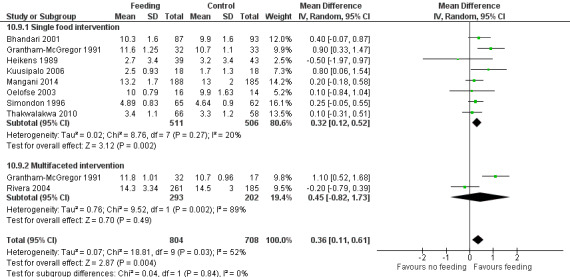
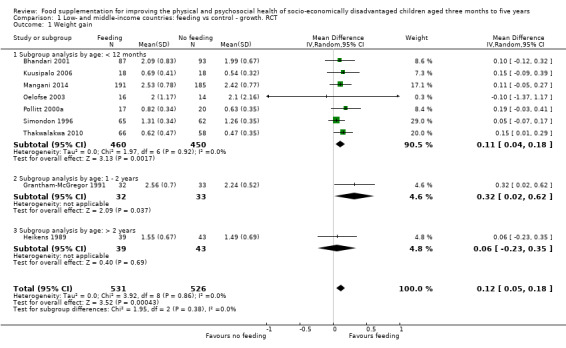
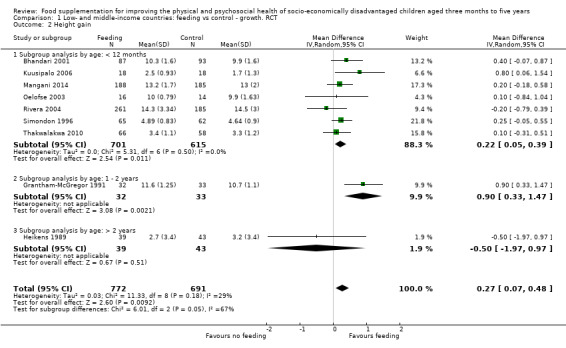
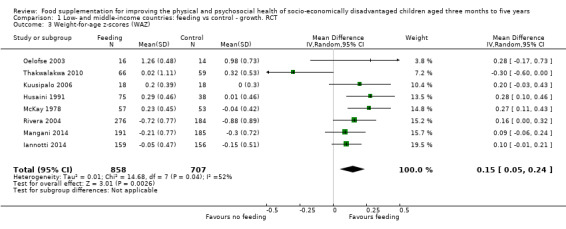
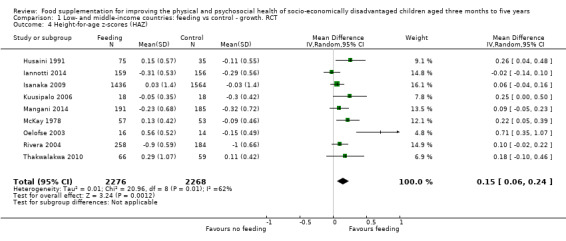
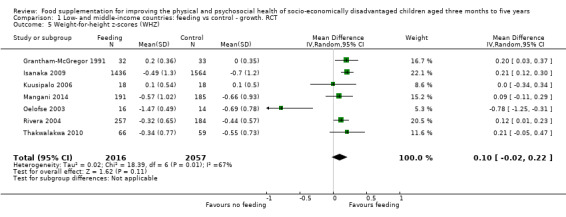
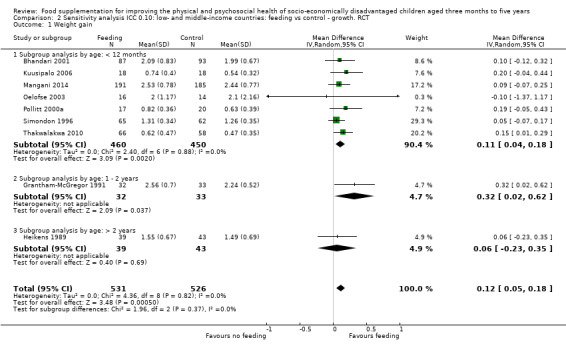
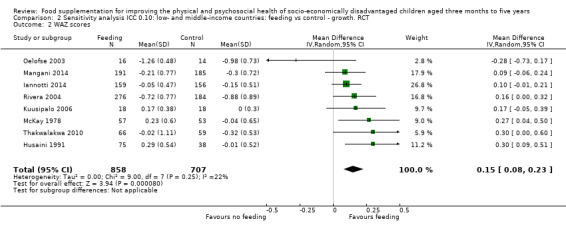
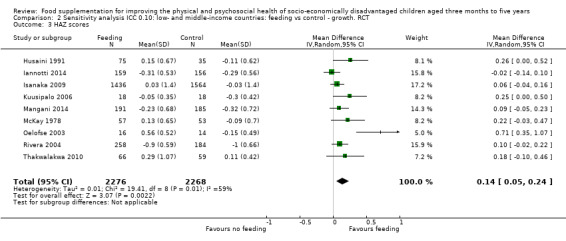
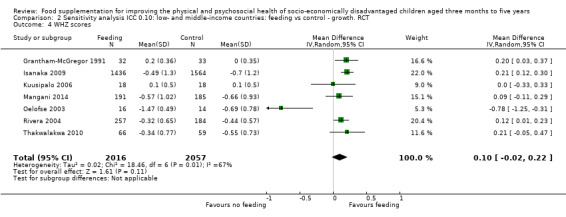
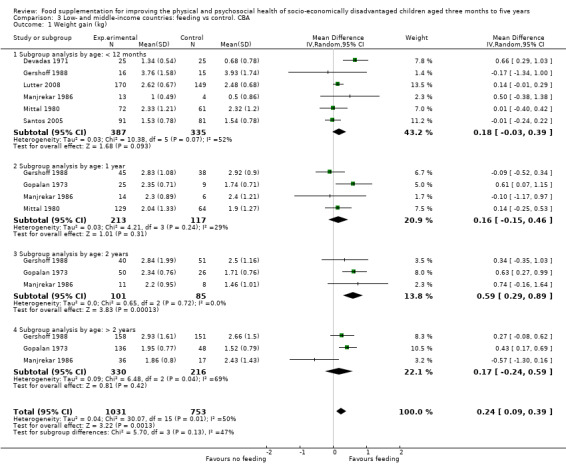
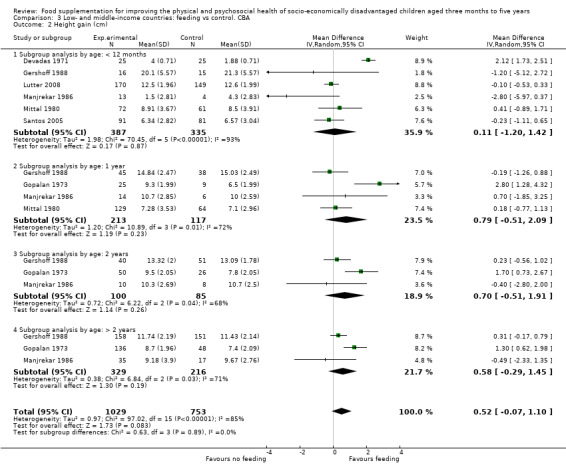
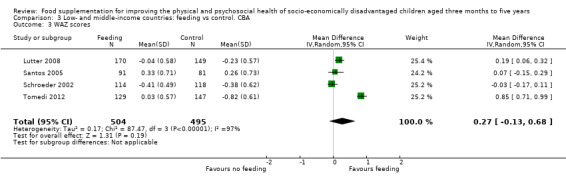
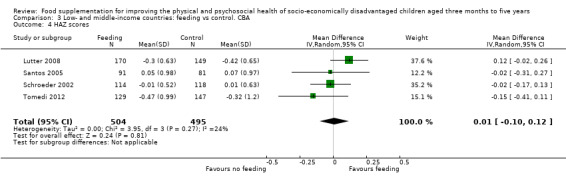
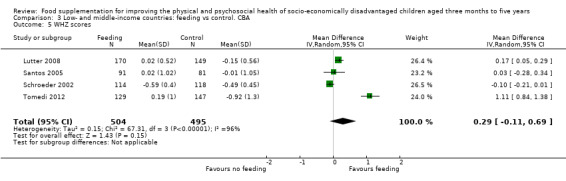
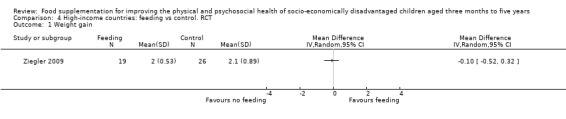
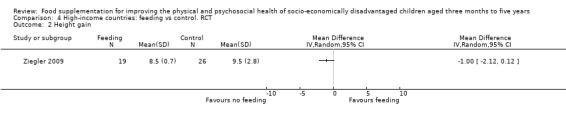
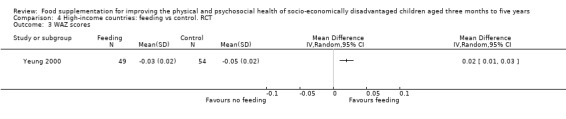
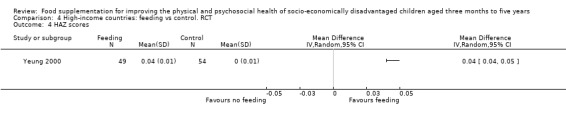
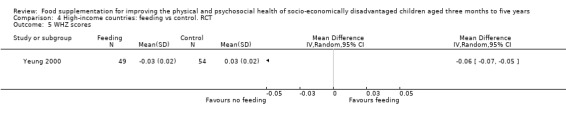
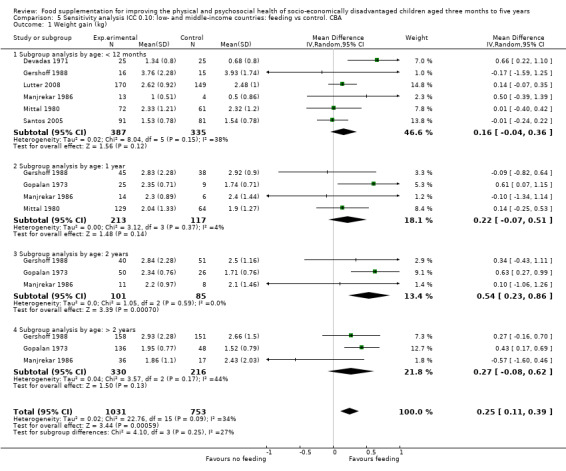
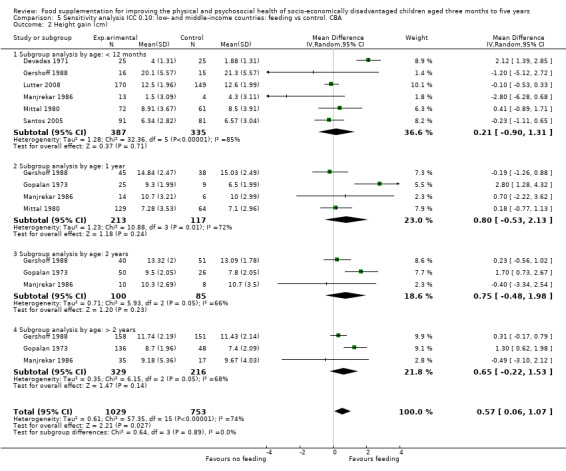
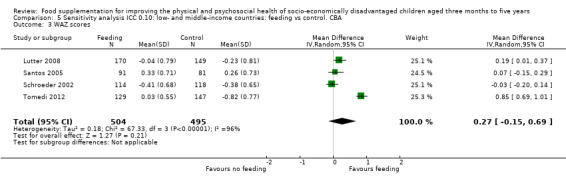
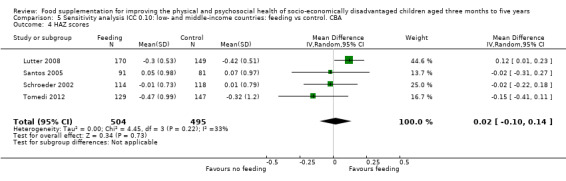
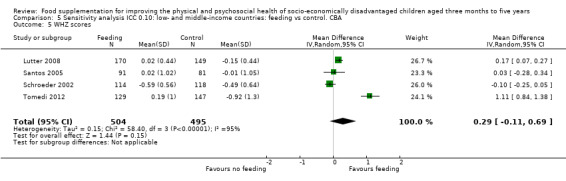
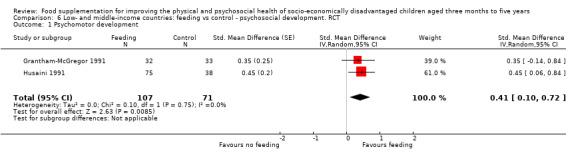
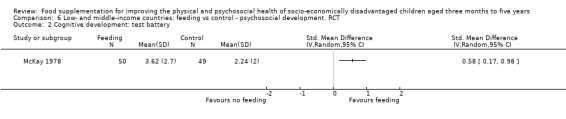
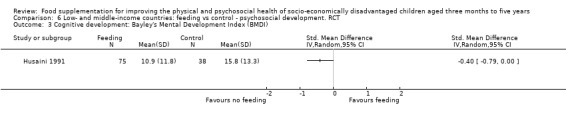
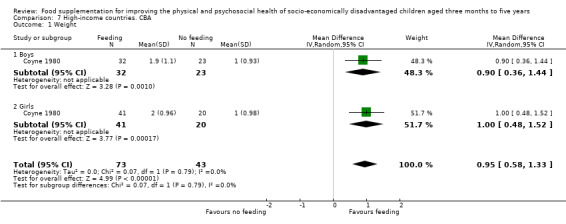
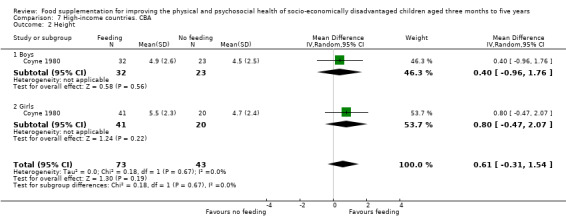
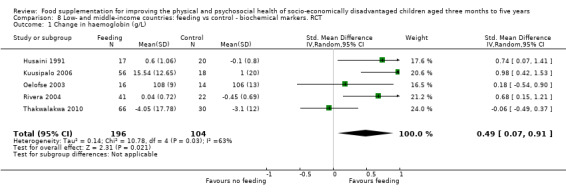
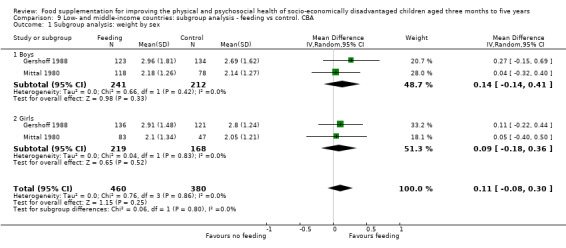
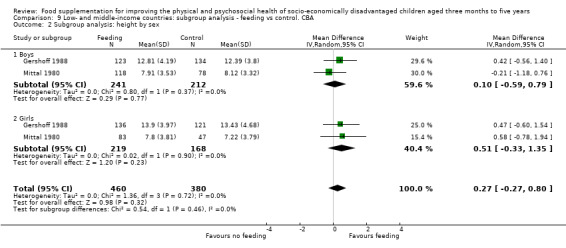
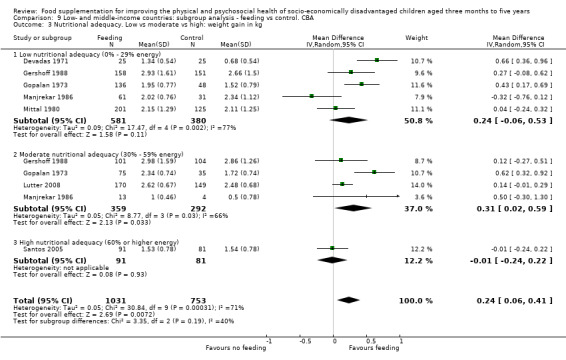
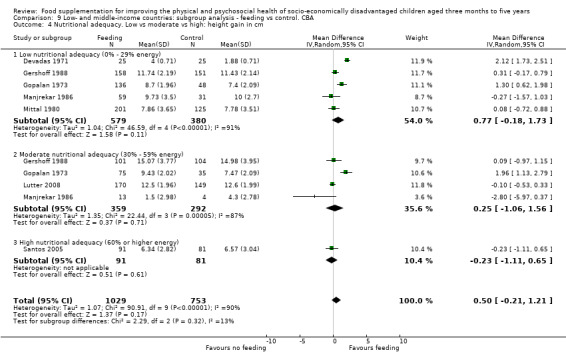
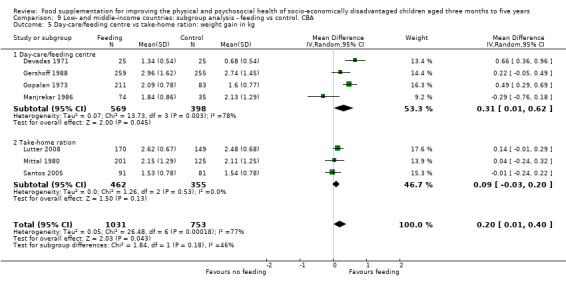
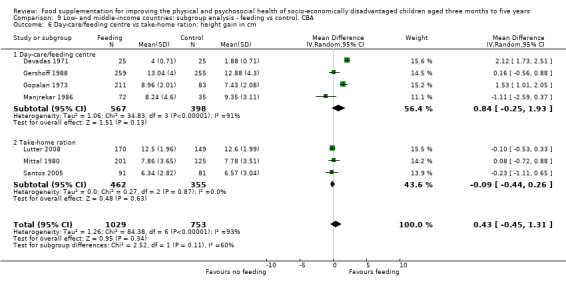
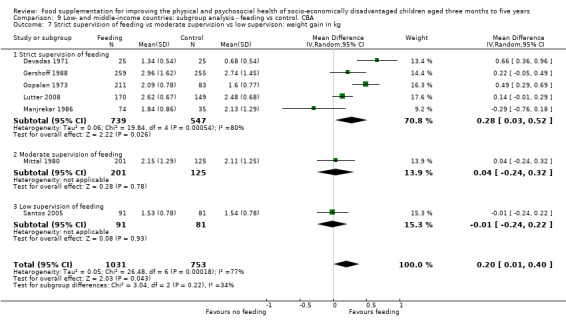
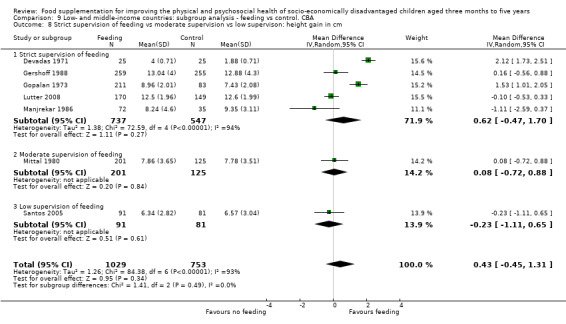
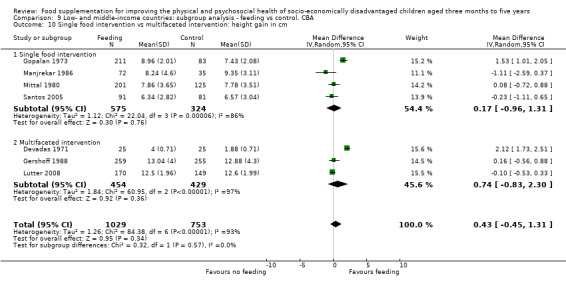
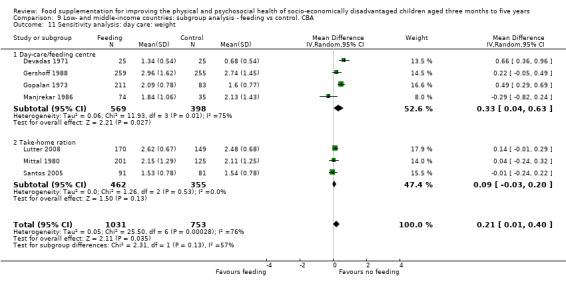
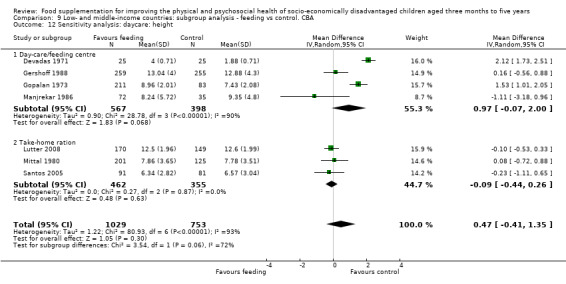
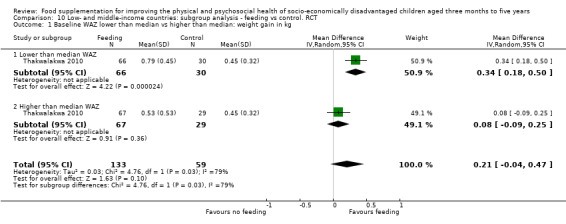
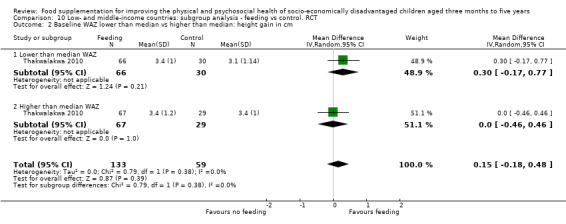
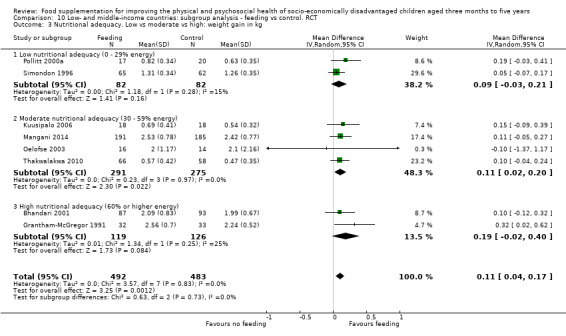
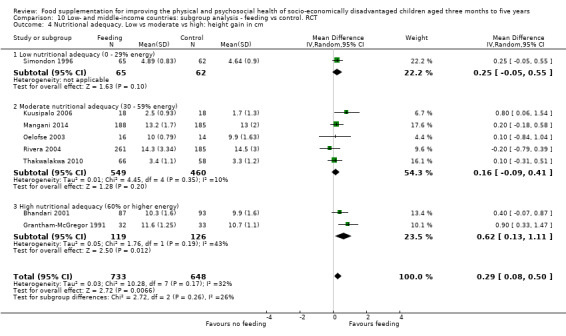
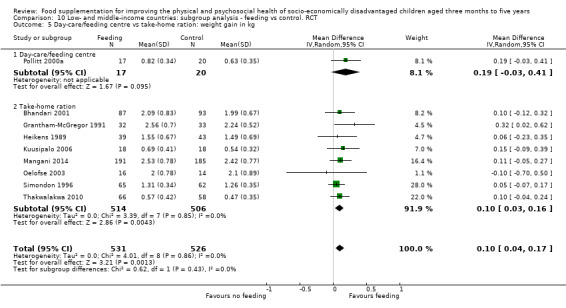
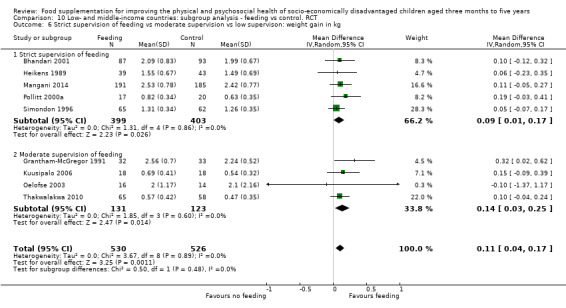
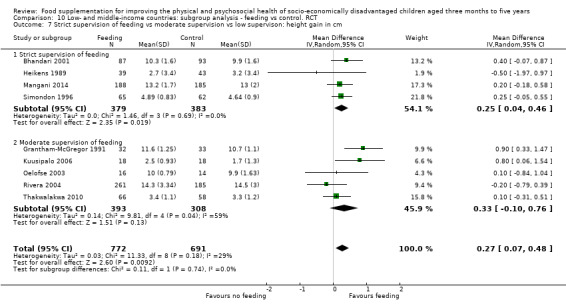
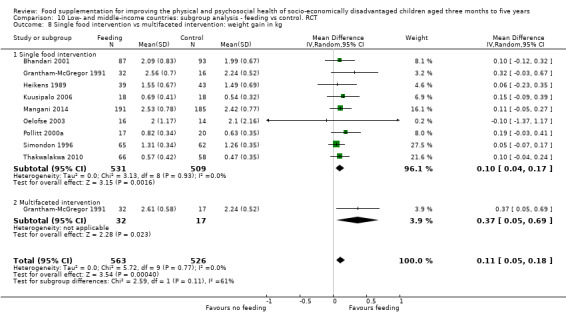
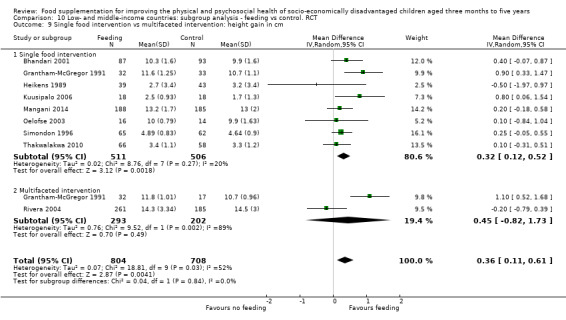
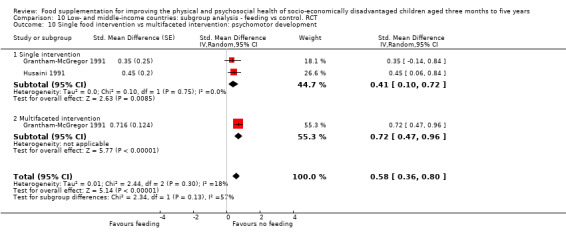
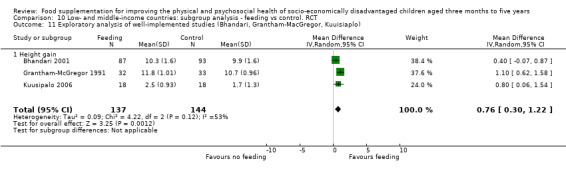
Main results: We included 32 studies (21 RCTs and 11 CBAs); 26 of these (16 RCTs and 10 CBAs) were in meta-analyses. More than 50% of the RCTs were judged to have low risk of bias for random selection and incomplete outcome assessment. We judged most RCTS to be unclear for allocation concealment, blinding of outcome assessment, and selective outcome reporting. Because children and parents knew that they were given food, we judged blinding of participants and personnel to be at high risk for all studies.Growth. Supplementary feeding had positive effects on growth in low- and middle-income countries. Meta-analysis of the RCTs showed that supplemented children gained an average of 0.12 kg more than controls over six months (95% confidence interval (CI) 0.05 to 0.18, 9 trials, 1057 participants, moderate quality evidence). In the CBAs, the effect was similar; 0.24 kg over a year (95% CI 0.09 to 0.39, 1784 participants, very low quality evidence). In high-income countries, one RCT found no difference in weight, but in a CBA with 116 Aboriginal children in Australia, the effect on weight was 0.95 kg (95% CI 0.58 to 1.33). For height, meta-analysis of nine RCTs revealed that supplemented children grew an average of 0.27 cm more over six months than those who were not supplemented (95% CI 0.07 to 0.48, 1463 participants, moderate quality evidence). Meta-analysis of seven CBAs showed no evidence of an effect (mean difference (MD) 0.52 cm, 95% CI -0.07 to 1.10, 7 trials, 1782 participants, very low quality evidence). Meta-analyses of the RCTs demonstrated benefits for weight-for-age z-scores (WAZ) (MD 0.15, 95% CI 0.05 to 0.24, 8 trials, 1565 participants, moderate quality evidence), and height-for-age z-scores (HAZ) (MD 0.15, 95% CI 0.06 to 0.24, 9 trials, 4638 participants, moderate quality evidence), but not for weight-for-height z-scores MD 0.10 (95% CI -0.02 to 0.22, 7 trials, 4176 participants, moderate quality evidence). Meta-analyses of the CBAs showed no effects on WAZ, HAZ, or WHZ (very low quality evidence). We found moderate positive effects for haemoglobin (SMD 0.49, 95% CI 0.07 to 0.91, 5 trials, 300 participants) in a meta-analysis of the RCTs.Psychosocial outcomes. Eight RCTs in low- and middle-income countries assessed psychosocial outcomes. Our meta-analysis of two studies showed moderate positive effects of feeding on psychomotor development (SMD 0.41, 95% CI 0.10 to 0.72, 178 participants). The evidence of effects on cognitive development was sparse and mixed.We found evidence of substantial leakage. When feeding was given at home, children benefited from only 36% of the energy in the supplement. However, when the supplementary food was given in day cares or feeding centres, there was less leakage; children took in 85% of the energy provided in the supplement. Supplementary food was generally more effective for younger children (less than two years of age) and for those who were poorer/ less well-nourished. Results for sex were equivocal. Our results also suggested that feeding programmes which were given in day-care/feeding centres and those which provided a moderate-to-high proportion of the recommended daily intake (% RDI) for energy were more effective.
Authors' conclusions: Feeding programmes for young children in low- and middle-income countries can work, but good implementation is key.
Conflict of interest statement
Elizabeth Kristjansson ‐ none known. Damian K Francis ‐ none known. Selma Liberato ‐ none known. Maria Benkhalti Jandu ‐ none known. Vivian Welch ‐ none known. Malek Batal ‐ none known. Trish Greenhalgh ‐ none known. Tamara Rader ‐ none known. Eamonn Noonan ‐ none known. Beverley Shea ‐ none known. Laura Janzen ‐ none known. George A Wells ‐ none known. Mark Petticrew ‐none known.
Figures
Update of
References
References to studies included in this review
Bhandari 2001 {published data only}
-
- Bhandari N, Bahl R, Nayyar B, Khokhar P, Rohde JE, Bhan MK. Food supplementation with encouragement to feed it to infants from 4 to 12 months of age has a small impact on weight gain. Journal of Nutrition 2001;131(7):1946‐51. - PubMed
Coyne 1980 {published data only}
-
- Coyne T, Dowling M, Condon‐Paoloni D. Evaluation of the preschool meals program on the nutritional health of Aboriginal children. Medical Journal of Australia 1980;2(7):369‐75. - PubMed
De Romana 2000 {published data only}
-
- Romano GL. Experience with complementary feeding in the FONCODES project. Food and Nutrition Bulletin 2000;21(1):43‐8.
Devadas 1971 {published data only}
-
- Devadas RP, Balambal M, Ushakumari N. Impact of an applied nutrition programme on the nutritional status of preschool children in a village. Indian Journal of Nutrition and Dietetics 1971;8(5):260‐3.
Fauveau 1992 {published data only}
-
- Fauveau C, Siddiqui M, Briend A, Silimperi D, Begum N, Fauveau V. Limited impact of a targeted food supplementation programme in Bangladeshi urban slum children. Annals of Tropical Paediatrics 1992;12(1):41‐6. - PubMed
Gershoff 1988 {published data only}
-
- Gershoff SN, McGandy RB, Nondasuta A, Tantiwongse P. Nutrition studies in Thailand: effects of calories, nutrient supplements, and health interventions on growth of preschool Thai village children. American Journal of Clinical Nutrition 1988;48(5):1214‐8. - PubMed
Gopalan 1973 {published data only}
-
- Gopalan C, Swaninathan MC, Kumari VK, Rao DH, Vijayaraghavan K. Effect of calorie supplementation on growth of undernourished children. American Journal of Clinical Nutrition 1973;26(5):563‐6. - PubMed
-
- Rao DH, Naidu N. Nutritional supplementation: whom does it benefit most?. American Journal of Clinical Nutrition 1977;30(10):1612‐6. - PubMed
Grantham‐McGregor 1991 {published data only}
-
- Gardner JM, Grantham‐McGregor SM, Himes J, Chang S. Behaviour and development of stunted and nonstunted Jamaican children. Journal of Child Psychology and Psychiatry 1999;40(5):819‐27. - PubMed
-
- Grantham‐McGregor SM, Powell CA, Walker SP, Himes JH. Nutritional supplementation, psychosocial stimulation, and mental development of stunted children: the Jamaican Study. Lancet 1991;338(8758):1‐5. - PubMed
-
- Grantham‐McGregor SM, Walker S, Chang SM, Powell CA. Effects of early childhood supplementation with and without stimulation on later development in stunted Jamaican children. American Journal of Clinical Nutrition 1997;66(2):247‐53. - PubMed
-
- Meeks Gardner JM, Grantham‐MacGregor SM, Himes J, Chang S. Behaviour and development of stunted and nonstunted Jamaican children. Journal of Child Psychology and Psychiatry 1999;40(5):819‐27. - PubMed
-
- Walker S, Powell C, Grantham‐McGregor S, Himes JH, Chang SM. Nutritional supplementation, psychosocial stimulation and growth of stunted children: the Jamaican study. American Journal of Clinical Nutrition 1991;54(4):642‐8. - PubMed
Heikens 1989 {published data only}
-
- Heikens GT, Schofiled WN, Dawson S, Grantham‐McGregor S. The Kingston Project I. Growth of malnourished children during rehabilitation in the community, given a high energy supplement. European Journal of Clinical Nutrition 1989;43(3):145‐60. - PubMed
Husaini 1991 {published data only}
-
- Husaini M, Jahari B, Pollitt E. The effects of high energy and micronutrient supplementation on iron status in nutritionally at‐risk infants. Biomedical and Environmental Sciences 1996;9(2‐3):325‐40. - PubMed
-
- Husaini MA, Karyadi L, Husaini YK, Sandjaja, Karyadi D, Pollitt E. Developmental effects of short‐term supplementary feeding in nutritionally‐at‐risk Indonesian infants. American Journal of Clinical Nutrition 1991;54(5):799‐804. - PubMed
-
- Pollitt E, Watkins W, Husaini M. Three‐month nutritional supplementation in Indonesian infants and toddlers benefits memory function 8 years later. American Journal of Clinical Nutrition 1997;66(6):1357‐63. - PubMed
Iannotti 2014 {published data only}
Isanaka 2009 {published data only}
-
- Isanaka S, Nombela N, Djibo A, Poupard M, Beckhoven D, Gaboulaud V, et al. Effect of preventive supplementation with ready‐to‐use therapeutic food on the nutritional status, mortality, and morbidity of children aged 6 to 60 months in Niger: a cluster randomized trial. JAMA 2009;301(3):277‐85. - PMC - PubMed
Joshi 1988 {published data only}
-
- Joshi S, Rao S. Assessing supplementary feeding programmes in selected Balwadies. European Journal of Clinical Nutrition 1988;42(9):779‐85. - PubMed
Kuusipalo 2006 {published data only}
-
- Kuusipalo H, Maleta K, Briend A, Manary M, Ashorn P. Growth and change in blood haemoglobin concentration among underweight Malawian infants receiving fortified spreads for 12 weeks: a preliminary trial. Journal of Pediatric Gastroentrentrology and Nutrition 2006;43(4):525‐32. - PubMed
Lutter 2008 {published data only}
-
- Lutter CK, Rodriguez A, Fuenmayor G, Avila L, Sempertegui F, Escobar J. Growth and micronutrient status in children receiving a fortified complementary food. Journal of Nutrition 2008;138(2):379‐88. - PubMed
Mangani 2014 {published data only}
-
- Mangani C, Cheung YB, Maleta K, Phuka J, Thakwalakwa C, Dewey, K, et al. Providing lipid‐based nutrient supplements does not affect developmental milestones among Malawian children. Acta Pædiatrica 2014;103(1):e17–26. - PubMed
-
- Mangani C, Maleta K, Phuka J, Cheung YB, Thakwalakwa C, Dewey K, et al. Effect of complementary feeding with lipid based nutrient supplements and corn‐soy blend on the incidence of stunting and linear growth among 6‐ to 18‐month‐old infants and children in rural Malawi. Maternal and Child Nutrition 2013 Jun 25 [Epub ahead of print]. [DOI: 10.1111/mcn.12068] - DOI - PMC - PubMed
Manjrekar 1986 {published data only}
-
- Manjrekar C, Leelavathi K, Saraswathi A, Sujayalakshmi AN, Katyayani V. Evaluation of the special nutrition programme in Mysore City. Indian Journal of Medical Research 1986;83:404‐7. - PubMed
McKay 1978 {published data only}
-
- McKay H, Sinisterra L, McKay A, Gomez H, Lloreda P. Improving cognitive ability in chronically deprived children. Science 1978;200(4339):270‐8. - PubMed
-
- Pérez‐Escamilla R, Pollitt E. Growth improvements in children above 3 years of age: the Cali Study. Journal of Nutrition 1995;125(4):885‐93. - PubMed
Mittal 1980 {published data only}
-
- Mittal S, Gupta MC. Evaluation of a supplementary feeding programme through take home system. Journal of Tropical Pediatrics 1980;26(2):50‐3. - PubMed
Obatolu 2003 {published data only}
-
- Obatolu V. Growth pattern of infants fed with a mixture of extruded malted maize and cowpea. Nutrition 2003;19(2):174‐8. - PubMed
Oelofse 2003 {published data only}
-
- Oelofse A, Raaij JM, Benade AJ, Dhansay MA, Tolboom JJ, Hautvast JG. The effect of a micronutrient‐fortified complementary food on micronutrient status, growth and development of 6‐ to 12‐month‐old disadvantaged urban South African infants. International Journal of Food Sciences and Nutrition 2003;54(5):399‐407. - PubMed
Pollitt 2000a {published data only}
-
- Aitchison T, Durnin J, Beckett C, Pollitt E. Effects of an energy and micronutrient supplement on growth and activity, correcting for non‐supplemental sources of energy input in undernourished children in Indonesia. European Journal of Clinical Nutrition 2000;54 Suppl 2:S69‐73. - PubMed
-
- Beckett C, Durnin JVGA, Aitchison T, Pollitt E. Effects of an energy and micronutrient supplement on anthropometry in undernourished children in Indonesia. European Journal of Clinical Nutrition 2000;54 Suppl 2:S52‐9. - PubMed
-
- Durnin JVGA, Aitchison TC, Beckett C, Husaini M, Pollitt E. Nutritional intake of an undernourished infant population receiving an energy and micronutrient supplement in Indonesia. European Journal of Clinical Nutrition 2000;54 Suppl 2:S43‐51. - PubMed
-
- Jahari AB, Saco‐Pollitt C, Husaini MA, Pollitt E. Effects of an energy and micronutrient supplement on motor development and motor activity in undernourished children in Indonesia. European Journal of Clinical Nutrition 2000;54 Suppl 2:S60‐8. - PubMed
-
- Pollitt E, Durnin JVGA, Husani M, Jahari A. Effect of an energy and micro‐nutrient supplement on growth and development in undernourished children in Indonesia: methods. European Journal of Clinical Nutrition 2000;54 Suppl 2:S16‐20. - PubMed
Rivera 2004 {published data only}
-
- Rivera JA, Sotres‐Alvarez D, Habicht JP, Shamah T, Villalpando S. Impact of the Mexican program for education, health, and nutrition (Progresa) on rates of growth and anaemia in infants and young children: a randomized effectiveness study. JAMA 2004;291(21):2563‐70. - PubMed
Roy 2005 {published data only}
-
- Roy SK, Fuchs GJ, Mahmud Z, Ara G, Islam S, Shafique S, et al. Intensive nutrition education with or without supplementary feeding improves the nutritional status of moderately‐malnourished children in Bangladesh. Journal of Health, Population, and Nutrition 2005;23(4):320‐3. - PubMed
Santos 2005 {published data only}
-
- Santos IS, Gigante DP, Coitinho DC, Haisma H, Valle NC, Valente G. Evaluation of the impact of a nutritional program for undernourished children in Brazil. Cadernos de Saúde Pública 2005;21(3):776‐85. - PubMed
Schroeder 2002 {published data only}
-
- Schroeder DG, Pachón H, Dearden KA, Kwon CB, Ha TT, Lang TT, et al. An integrated child nutrition intervention improved growth of younger, more malnourished children in northern Viet Nam. Food and Nutrition Bulletin 2002;23 Suppl 4:53‐61. - PubMed
Simondon 1996 {published data only}
-
- Simondon KB, Gartner A, Berger J, Cornu A, Massamba JP, Miguel JL, et al. Effect of early, short‐term supplementation on weight and linear growth of 4‐7 month old infants in developing countries: a four‐country randomized trial. American Journal of Clinical Nutrition 1996;64(4):537‐45. - PubMed
Thakwalakwa 2010 {published data only}
-
- Thakwalakwa C, Ashorn P, Phuka J, Briend A, Puumalainen T, Maleta K. A lipid‐based nutrient supplement but not corn‐soy blend modestly increases weight gain among 6‐ to 18‐month‐old moderately underweight children in rural Malawi. Journal of Nutrition 2010;140(11):2008‐13. - PubMed
Tomedi 2012 {published data only}
-
- Tomedi A, Rohan‐Minjares F, McCalmont K, Ashton R, Opiyo R, Mwanthi M. Feasibility and effectiveness of supplementation with locally available foods in the prevention of child malnutrition in Kenya. Public Health Nutrition 2012;15(4):749‐56. - PubMed
Waber 1981 {published data only}
-
- Waber D, Vuori‐Christiansen L, Ortiz N, Clement JR, Christiansen NE, Mora JO, et al. Nutritional supplementation, maternal education, and cognitive development of infants at risk of malnutrition. American Journal Of Clinical Nutrition 1981;34(4):807‐13. - PubMed
Yeung 2000 {published data only}
References to studies excluded from this review
Baertl 1970 {published data only}
-
- Baertl JM, Morales E, Verastegui G, Graham G. Diet supplementation for entire communities. Growth and mortality of infants and children. American Journal of Clinical Nutrition 1970;23(6):707‐15. - PubMed
Das Gupta 2005 {published data only}
-
- Das Gupta M, Loshkin M, Gragnotati M, Ivaschenko O. Improving child nutrition outcomes in India: can the integrated child development services be more effective?. http://bit.ly/1yRpqhi (accessed 30 January 2015).
Gartner 2007 {published data only}
-
- Gartner A, Kameli Y, Traissac P, Dhur A, Delpeuch F, Maire B. Has the first implementation phase of the Community Nutrition Project in urban Senegal had an impact?. Nutrition 2007;23(3):219‐28. - PubMed
Hanafy 1967 {published data only}
-
- Hanafy MM, Aref MK, Seddik Y, Zein MS, El‐Kashlan KM. Effect of supplementary feeding on the nutritional status of the pre‐school child. Journal of Tropical and Medical Hygiene 1967;70(10):238‐42. - PubMed
Hicks 1982 {published data only}
Hillis 1992 {published data only}
-
- Hillis SD, MIranda CM, McCann M, Bender D, Weigle K. Day care center attendance and diarrheal morbidity in Colombia. Pediatrics 1992;90(4):582‐8. - PubMed
Huybregts 2012 {published data only}
Khan 2011 {published data only}
Leroy 2008 {published data only}
-
- Leroy JL, Garcia‐Guerra A, Guerra R, Dominguez C, Rivera J, Neufield LM. The Opportunitades program increases the linear growth of children enrolled at young ages in urban Mexico. Journal of Nutrition 2008;138(4):793‐8. - PubMed
Matilsky 2009 {published data only}
Meller 2012 {unpublished data only}
-
- Meller M, Lithschig S. Saving lives: evidence from a nutrition program in Ecuador. http://bit.ly/1zKWk3j (accessed 30 January 2015).
Mora 1981 {published data only}
-
- Mora JO, Herrera G, Suescun J, Navarro L, Wagner M. The effects of nutritional supplementation on physical growth of children at risk of malnutrition. American Journal of Clinical Nutrition 1981;34(9):1885‐92. - PubMed
Rivera 1991 {published data only}
-
- Martorell R, Habicht JP, Rivera JA. History and design of the INCAP longitudinal study (1969‐1977) and its follow‐up (1988‐89). Journal of Nutrition 1991;125(4 Suppl):1027S‐41S. - PubMed
-
- Rivera JA, Habicht JP, Robson DS. Effect of supplementary feeding on recovery from mild to moderate wasting in preschool children. American Journal of Clinical Nutrition 1991;54(1):62‐8. - PubMed
-
- Scroeder DG, Martorell R, Rivera JA, Ruela MT, Habicht JP. Age differences in the impact of nutritional supplementation on growth. Journal of Nutrition 1995;125 (4 Suppl):1051‐9S. - PubMed
Rosado 2010 {published data only}
-
- Rosado GL, Lopez P, Garcia OP, Alatorre J, Alvarado C. Effectiveness of the nutritional supplement used in the Mexican Oportunidades programme on growth, anaemia, morbidity and cognitive development in children aged 12‐24 months. Public Health Nutrition 2010;14(5):933‐7. - PubMed
Van Hoan 2009 {published data only}
-
- Hoan N, Phu P, Salvignol B, Berger J, Trèche S. Effect of the consumption of high energy dense and fortified gruels on energy and nutrient intakes of 6‐10‐month‐old Vietnamese infants. Appetite 2009;53(2):233‐40. - PubMed
Vermeersch 2004 {unpublished data only}
-
- Vermeersch C, Kremer M. School meals, educational achievement and school competition: evidence from a randomized evaluation. http://datatopics.worldbank.org/hnp/files/edstats/KENimp04.pdf (accessed 30 June 2014).
References to studies awaiting assessment
He 2005 {published data only}
-
- He M, Yang YX, Han H, Men JH, Bian LH, Wang GD. Effects of yogurt supplementation on growth of preschool children in Bejing suburbs. Biomedical and Environmental Sciences 2005;18(3):192‐7. - PubMed
Additional references
ACC/SCN 1993
-
- ACC/SCN. SCN news, number 11 ‐ maternal and child nutrition. http://bit.ly/1zKWyr4 (accessed 30 June 2014).
Alderman 2004
-
- Alderman H, Berhman J, Hoddinott J. Improving child malnutrition for sustainable poverty reduction in Africa. http://bit.ly/1E1GEz5 (accessed 1 July 2011).
Allen 1994
-
- Allen L. Nutritional influences on linear growth: a general review. European Journal of Clinical Nutrition 1994;48 Suppl 1:S75‐89. - PubMed
Arblaster 1996
-
- Arblaster L, Lambert M, Entwistle V, Forster M, Fullerton D, Sheldon T, et al. A systematic review of the effectiveness of health service interventions aimed at reducing inequalities in health. Journal of Health Services Research and Policy 1996;1(2):93‐103. - PubMed
Auestad 2000
-
- Auestad N. Infant nutrition – brain development ‐ disease in later life. An introduction. Developmental Neuroscience 2000;22(5‐6):472‐3. - PubMed
Barker 1992
-
- Barker DJP. The effect of nutrition of the fetus and neonate on cardiovascular disease in adult life. Proceedings of the Nutrition Society 1992;51(2):135‐44. - PubMed
Barker 2001
-
- Barker DJ. Fetal and infant origins of adult disease. Monatsschrift Kinderheilkunde 2001;149(1 Suppl):S2‐6.
Barrett 1985
-
- Barrett DE, Radke‐Yarrow M. Effects of nutritional supplementation on children's responses to novel, frustrating, and competitive situations. American Journal of Clinical Nutrition 1985;42(1):102‐20. - PubMed
Baumgartner 1986
-
- Baumgartner RN, Roche AF, Himes JH. Incremental growth tables: supplementary to previously published charts. American Journal of Clinical Nutrition 1986;43(5):711‐22. - PubMed
Beaton 1982
-
- Beaton GH, Ghassemi H. Supplementary feeding programs for young children in developing countries. American Journal of Clinical Nutrition 1982;35(4):863‐916. - PubMed
Beaton 1992
-
- Beaton G. Which age group should be targeted for supplementary feeding?. Proceedings of the ACC/SCN Symposium on Nutritional Issues in Food Aid; Rome. 1992.
Beaton 1993
-
- Beaton G. Nutritional issues in food aid − nutrition policy discussion paper no.12. Which age groups should be targeted for supplementary feeding?. http://bit.ly/1A2vQPJ (accessed 1 July 2011).
Beckett 2000
-
- Beckett C, Durnin JVGA, Aitchison T, Pollitt E. Effects of an energy and micronutrient supplement on anthropometry in undernourished children in Indonesia. European Journal of Clinical Nutrition 2000;54 Suppl 2:S52‐9. - PubMed
Bhutta 2008
-
- Bhutta ZA, Ahmed T, Black RE, Cousens S, Dewey K, Giugliani E, et al. What works? Interventions for maternal and child undernutrition and survival. Lancet 2008;371(9610):417‐40. - PubMed
Black 2003a
Black 2003b
-
- Black RE, Morris SS, Bryce J. Where and why are 10 million children dying every year?. Lancet 2003;361(9376):2226‐34. - PubMed
Black 2008
-
- Black RE, Allen LH, Bhutta ZA, Caulfield LE, Onis M, Ezzati M, et al. Maternal and child undernutrition: global and regional exposures and health consequences. Lancet 2008;371(9608):243‐60. - PubMed
Browne 2009
-
- Browne J, Laurence S, Thorpe S. Acting on food insecurity in urban Aboriginal and Torres Strait Islander communities: policy and practice interventions to improve local access and supply of nutritious food. http://bit.ly/1ANxsxp (accessed 15 March 2014).
Caballero 2001
-
- Caballero B, Popkin BM (editors). The Nutrition Transition: Diet and Disease in the Developing World. London: Academic Press, 2001.
Caulfield 2004
-
- Caulfield LE, Onis M, Blossner M, Black RE. Undernutrition as an underlying cause of child deaths associated with diarrhea, pneumonia, malaria, and measles. American Journal of Clinical Nutrition 2004;80(1):193‐8. - PubMed
Cook 1989
-
- Cook MJ, Holder‐Brown L, Johnson LJ, Kilgo JL. An examination of the stability of the Bayley Scales of infant development with high‐risk infants. Journal of Early Intervention 1989;13(1):45‐9.
Dewey 2008
Du 2005
-
- Du X, Zhu K, Trube A, Fraser DR, Greenfield H, Zhang Q, et al. Effects of school‐milk intervention on growth and bone mineral accretion in Chinese girls aged 10‐12 year: accounting for cluster randomisation. British Journal of Nutrition 2005;94(6):1038‐9. - PubMed
Egger 1997
Engle 1992b
-
- Engle PL, Gorman K, Martorell R, Pollitt E. Infant and preschool psychological development. Food and Nutrition Bulletin 1992;14(3):201‐14.
EPHPP 2009
-
- Effective Public Health Practice Project. Quality assessment tool for quantitative studies 2009. www.ephpp.ca (accessed 1 July 2011).
EPOC 2009
-
- Effective Practice, Organization of Care. Risk of bias tool. http://goo.gl/6Ki2iy (accessed 1 July 2011).
EPOC 2012
-
- Effective Practice and Organization of Care Group. Data abstraction form. http://goo.gl/ojeDUj (accessed 1 May 2012).
FAO 2013
-
- Food, Agriculture Organization. The state of food insecurity in the world. http://bit.ly/1piFzNB (accessed 13 May 2014).
Fishman 2003
-
- Fishman L, Rappaport L, Schonwald A, Nurko S. Trends in referral to a single encopresis clinic over 20 years. Pediatrics 2003;111(5):e604‐7. - PubMed
Galloway 2009
-
- Galloway R, Kristjansson E, Gelli A, Meir U, Espejo F, Bundy D. School feeding: outcomes and costs. Food and Nutrition Bulletin 2009;30(2):171‐82. - PubMed
Gaskin 2000
-
- Gaskin PS, Walker SP, Forrester TE, Grantham‐McGregor S. Early linear growth retardation and later blood pressure. European Journal of Clinical Nutrition 2000;54(7):563‐7. - PubMed
Golub 1995
-
- Golub MS, Keen CL, Gershwin ME, Hendrickx AG. Developmental zinc deficiency and behavior. Journal of Nutrition 1995;125(8 Suppl):2263‐71S. - PubMed
Grantham‐McGregor 1997
-
- Grantham‐McGregor SM, Walker S, Chang SM, Powell CA. Effects of early childhood supplementation with and without stimulation on later development in stunted Jamaican children. American Journal of Clinical Nutrition 1997;66(2):247‐53. - PubMed
Grantham‐McGregor 2007
-
- Grantham‐McGregor S. Early child development in developing countries. Lancet 2007;369(9564):824. - PubMed
Griffiths 2000
-
- Griffiths M. Panel: what are the relative roles of processed complementary foods and behavioural change in improving nutritional status? The need for strategic planning, not a technological fix. Food and Nutrition Bulletin 2000;21(1):73‐5.
Guyatt 2011
-
- Guyatt GH, Oxman AD, Schunemann HJ, Tugwell P, Knotterus A. GRADE guidelines: a new series of articles in the journal of clinical epidemiology. Journal of Clinical Epidemiology 2011;64(4):380‐2. - PubMed
Haanga 1987
-
- Haanga J, Mason J. Food distribution within the family: evidence and implications for research and programmes. Food Policy 1987;12(2):146‐60.
Haddad 2000
-
- Haddad L, Alderman H. Malnutrition: income growth or nutrition programs. IFPRI 1999‐2000 Annual Report 2000.
Higgins 2003
Higgins 2011a
-
- HIggins JPT, Green S (editors). Cochrane Handbook for Systematic Reviews of Interventions Version 5.1.0 [updated March 2011]. The Cochrane Collaboration, 2011. Available from www.cochrane‐handbook.org.
Higgins 2011b
-
- Higgins JPT, Altman DG, Sterne JAC. Chapter 8: Assessing the risk of bias in included studies. in: Higgins JPT, Green S (editors). Cochrane Handbook for Systematic Reviews of Interventions Version 5.1.0 (updated March 2011). The Cochrane Collaboration, 2011. Available from www.cochrane‐handbook.org.
Hoffman 2000
-
- Hoffman DJ, Sawaya AL, Verreschi I, Tucker KL, Roberts SB. Why are nutritionally stunted children at increased risk of obesity? Studies of metabolic rate and fat oxidation in shantytown children from São Paulo, Brazil. American Journal of Clinical Nutrition 2000;72(3):702‐7. - PubMed
Horton 2008
-
- Horton R. Maternal and child undernutrition: an urgent opportunity. Lancet 2008;371(9608):179. - PubMed
Irwin 2007
-
- Irwin L, Siddiqi A, Hertzman C. The equalizing power of early child development: from the Commission on Social Determinants of Health to Action. Child Health and Education 2007;1(3):146‐61.
Ivanovic 2004
-
- Ivanovic DM, Leiva BP, Pérez HT, Olivares MG, Díaz NS, Urrutia MS, et al. Head size and intelligence, learning, nutritional status and brain development: head, IQ, learning, nutrition and brain. Neuropsychologia 2004;42(8):1118‐31. - PubMed
Jahari 2000
-
- Jahari AB, Saco‐Pollitt C, Husaini MA, Pollitt E. Effects of an energy and micronutrient supplement on motor development and motor activity in undernourished children in Indonesia. European Journal of Clinical Nutrition 2000;54 Suppl 2:S60‐8. - PubMed
Jones 2003
-
- Jones G, Steketee RW, Black RE, Bhutta ZA, Morris SS, Bellagio Child Survival Study Group. How many child deaths can we prevent this year?. Lancet 2003;362(9377):65‐71. - PubMed
Kain 1998
-
- Kain J, Vio F, Albala C. Childhood nutrition in Chile: from deficit to excess. Nutrition Research 1998;18(11):1825‐37.
Kennedy 1987
-
- Kennedy ET, Alderman HH. Comparative analyses of nutritional effectiveness of food subsidies and other food‐related interventions. http://bit.ly/1EJELoG (accessed 30 June 2014).
Khan 2010
-
- Khan NZ, Muslima H, Begum D, Shilpi AB, Akhter S, Bilkis K, et al. Validation of rapid neurodevelopmental assessment instrument for under‐two‐year‐old children in Bangladesh. Pediatrics 2010;125(4):e755‐62. - PubMed
Kristjansson 2007
Lassi 2013
-
- Lassi ZS, Das JK, Zahid G, Imdad A, Bhutta ZA. Impact of education and provision of complementary feeding on growth and morbidity in children less than 2 years of age in developing countries: a systematic review. BMC Public Health 2013;13 Suppl 3:S13. [DOI: 10.1186/1471-2458-13-S3-S13] - DOI - PMC - PubMed
Lopez 2006
-
- Lopez A, Mathers C, Ezzati M, Jamison D, Murray C. Global burden of disease and risk factors. The World Bank 2006. www.dcp2.org/pubs/GBD (accessed 1 July 2011):1‐552.
Lumbers 2001
-
- Lumbers ER, Yu ZY, Gibson KJ. The selfish brain and the barker hypothesis. Clinical and Experimental Pharmacology & Physiology 2001;28(11):942‐7. - PubMed
López‐Jaramillo 2008
-
- López‐Jaramillo P, Silva SY, Rodriguez‐Salamanca N, Duran A, Mosquera W, Castillo V. Are nutrition‐induced epigenetic changes the link between socioeconomic pathology and cardiovascular diseases?. American Journal of Theraputics 2008;15(4):362‐72. - PubMed
Martorell 2010
Meeks Gardner 1995
-
- Meeks Gardner J, Grantham‐McGregor SM, Chang SM, Himes JH, Powell CA. Activity and behavioral development in stunted and nonstunted children and response to nutritional supplementation. Child Development 1995;66(6):1785‐97. - PubMed
Meeks Gardner 1999
-
- Meeks Gardner JM, Grantham‐McGregor S, Himes J, Chang S. Behaviour and development of stunted and nonstunted Jamaican children. Journal of Child Psychology and Psychiatry 1999;40(5):819‐27. - PubMed
Morgane 2002
-
- Morgane PJ, Mokler DJ, Galler JR. Effects of prenatal protein malnutrition on the hippocampal formation. Neuroscience and Biobehavioral Reviews 2002;26(4):471‐83. - PubMed
Nord 2010
-
- Nord M, Coleman‐Jensen A, Andrews M, Carlson S. Household food security in the United States, 2009. http://1.usa.gov/1CEDRay (accessed 30 June 2014).
Ogilvie 2005
ONPP 2004
-
- Office of Nutrition Policy and Promotion, Health Policy and Food Branch. Income related household food insecurity in Canada. http://bit.ly/1azDJe9 (accessed 1 July 2011):1‐124.
Patel 2005
-
- Patel MP, Sandige HL, Ndekha MJ, Briend A, Ashom P, Manary MJ. Supplemental feeding with ready‐to‐use therapeutic food in Malawian children at risk of malnutrition. Journal of Health, Population and Nutrition 2005;23(4):351‐7. - PubMed
Petrou 2010
-
- Petrou S, Kupek E. Poverty and childhood undernutrition in developing countries: a multi‐national cohort study. Social Science and Medicine 2010;71(7):1366‐73. - PubMed
Pollitt 1994
-
- Pollitt E, Oh SY. Early supplementary feeding, child development and health policy. Food and Nutrition Bulletin 1994;15(3):208‐14.
Pollitt 1997
-
- Pollitt E, Watkins WE, Husaini MA. Three‐month nutritional supplementation in Indonesian infants and toddlers benefits memory function 8 y later. American Journal of Clinical Nutrition 1997;66(6):1357‐63. - PubMed
Pollitt 1998
-
- Pollitt E, Mathews R. Breakfast and cognition: an integrative summary. American Journal of Clinical Nutrition 1998;67(4):804‐13S. - PubMed
Pollitt 2000b
-
- Pollitt E, Saco‐Pollitt C, Jahari A, Husaini MA, Huang J. Effects of an energy and micronutrient supplement on mental development and behavior under natural conditions in undernourished children in Indonesia. European Journal of Clinical Nutrition 2000;54 Suppl 2:S80‐90. - PubMed
Power 1997
-
- Power C, Hertzman C. Social and biological pathways linking early life and adult disease. British Medical Bulletin 1997;53(1):210‐21. - PubMed
Prentice 2005
Rao 1977
-
- Rao DH, Naidu N. Nutritional supplementation: whom does it benefit most?. American Journal of Clinical Nutrition 1977;30(10):1612‐6. - PubMed
Review Manager 2012 [Computer program]
-
- The Nordic Cochrane Centre, The Cochrane Collaboration. Review Manager (RevMan). Version 5.2. Copenhagen: The Nordic Cochrane Centre, The Cochrane Collaboration, 2012.
Rivera 2013 [pers comm]
-
- Rivera J. [personal communication]. E‐mail to: Elizabeth Kristjansson 2013.
Rondo 1990
-
- Rondo SP. Supplementary feeding programs: a critical analysis. Revista de Saúde Pública 1990;24(5):412‐9. - PubMed
Rosier 2011
-
- Rosier K. Food insecurity in Australia: what is it, who experiences it and how can child and family services support families experiencing it?. http://bit.ly/1E1VJRd (accessed 30 June 2014). [ISSN: 1838‐7330]
Rush 1998
-
- Rush D, Leighton J, Sloan NL, Alvir JM, Horvitz DG, Seaver WB, et al. The National WIC Evaluation: evaluation of the Special Supplemental Food Program for Women, Infants, and Children. VI. Study of infants and children. American Journal of Clinical Nutrition 1988;48(2 Suppl):484‐511. - PubMed
Schochet 2005
-
- Schochet PZ. Statistical power for random assignment evaluations for education programs. http://bit.ly/1EJJQgP (accessed 15 August 2006).
Schrimshaw 1998
-
- Schrimshaw NS. Malnutrition, brain development, learning, and behaviour. Nutrition Research 1998;18(2):351‐79.
Schroeder 1995
-
- Scroeder DG, Martorell R, Rivera J, Ruela MT, Habicht JP. Age differences in the impact of nutritional supplementation on growth. Journal of Nutrition 1995;125(4 Suppl):1051‐9S. - PubMed
Seidler 1990
-
- Seidler FJ, Bell JM, Slotkin TA. Undernutrition and overnutrition in the neonatal rat: long‐term effects on noradrenergic pathways in brain regions. Pediatric Research 1990;27(2):191‐7. - PubMed
Sguassero 2012
Shankar 2000
-
- Shankar AH. Nutritional modulation of malaria morbidity and mortality. Journal of Infectious Diseases 2000;182 Suppl 1:S37‐53. - PubMed
Strupp 1995
-
- Strupp BJ, Levitsky DA. Enduring cognitive effects of child malnutrition: a theoretical reappraisal. Journal of Nutrition 1995;125 Suppl 8:2221‐32S. - PubMed
Tanner 2002
-
- Tanner EM, Finn‐Stevenson M. Nutrition and brain development: social policy implications. American Journal of Orthopsychiatry 2002;72(2):182‐93. - PubMed
Tomkins 1989
-
- Tomkins A, Watson F. Malnutrition and infection ‐ a review ‐ nutrition policy discussion paper No.5. http://bit.ly/1FX18rZ (accessed 30 June 2014).
Tugwell 2010
-
- Tugwell P, Petticrew M, Kristjansson E, Welch V, Euffing E, Waters E, et al. Assessing equity in systematic reviews: realising the recommendations of the Commission on Social Determinants of Health. BMJ 2010;341:c4739. - PubMed
Uauy 2001
-
- Uauy R, Albala C, Kain J. Obesity trends in Latin America: transiting from under‐ to overweight. Journal of Nutrition 2001;131(3):893‐9S. - PubMed
Ukoumunne 1999
-
- Ukoumunne OC, Gulliford MC, Chinn S, Sterne JAC, Burney PGJ. Methods for evaluating area‐wide and organisation based interventions in health and health care: a systematic review. Health Technology Assessment 1999;3(5):1‐108. - PubMed
UNICEF 2006
-
- United Nations Children's Fund. Progress for children: a report card on nutrition. http://uni.cf/1L6M5Nn (accessed 1 July 2011).
United Nations ACC/SCN 2000
-
- United Nations ACC Sub‐Committee on Nutrition. 4th report on the world nutrition situation: nutrition throughout the life cycle. http://bit.ly/1DlFnDQ (accessed 20 June 2014).
Van de Poel 2008
Victora 2008
Viera 2007
-
- Viera A, Bangdiwala S. Eliminating bias in randomized controlled trials: importance of allocation concealment and masking. Family Medicine 2007;39(2):132‐7. - PubMed
Wachs 2000
-
- Wachs TD. Nutritional deficits and behavioural development. International Journal of Behavioral Development 2000;24(4):435‐41.
Wachs 2005
-
- Wachs TD, Creed‐Kanashiro H, Cueto S, Jacoby E. Maternal education and intelligence predict offspring diet and nutritional status. Journal of Nutrition 2005;135(9):2179‐86. - PubMed
Walker 1991
-
- Walker SP, Powell CA, Grantham‐McGregor SM, Himes JH, Chang SM. Nutritional supplementation, psychosocial stimulation, and growth of stunted children: the Jamaican study. American Journal of Clinical Nutrition 1991;54(4):642‐8. - PubMed
Walker 2007
-
- Walker SP, Wachs TD, Gardner JM, Lozoff B, Wasserman GA, Pollitt E, et al. Child development: risk factors for adverse outcomes in developing countries. Lancet 2007;369(9556):145‐57. - PubMed
WHO 2013
-
- World Health Organization. Global nutrition policy review: what does it take to scale up nutrition action?. http://bit.ly/1AA0Ybi (accessed 12 August 2013).
World Bank 2011
-
- World Bank. Country and lending groups. http://bit.ly/1baL18q (accessed 1 July 2011).
World Hunger Education Service 2012
-
- World Hunger Education Service. 2012 World hunger and poverty facts and statistics. http://bit.ly/1eGO0c7 (accessed 1 July 2011).
Worobey 1999
-
- Worobey J, Worobey HS. The impact of a two‐year school breakfast program for pre‐school children on their nutrient intake and pre‐academic performance. Child Study Journal 1999;29(2):113‐31.
Zhang 2006 [pers comm]
-
- Zhang Q. [personal communication]. Emails to: E Kristjansson and editorial base of the Cochrane Developmental, Psychosocial and Learning Problems Group June 2006.
References to other published versions of this review
Kristjansson 2012
-
- Kristjansson E, Francis DK, Liberato S, Benkhalti Jandu M, Welch V, Batal M, et al. Feeding interventions for improving the physical and psychosocial health of disadvantaged children aged three months to five years. Cochrane Database of Systematic Reviews 2012, Issue 6. [DOI: 10.1002/14651858.CD009924] - DOI - PMC - PubMed
Publication types
MeSH terms
Grants and funding
LinkOut - more resources
Full Text Sources
Medical
