


Reading the unique DNA methylation landscape of the brain: Non-CpG methylation, hydroxymethylation, and MeCP2
- PMID: 25739960
- PMCID: PMC4460470
- DOI: 10.1073/pnas.1411269112
Reading the unique DNA methylation landscape of the brain: Non-CpG methylation, hydroxymethylation, and MeCP2
Abstract
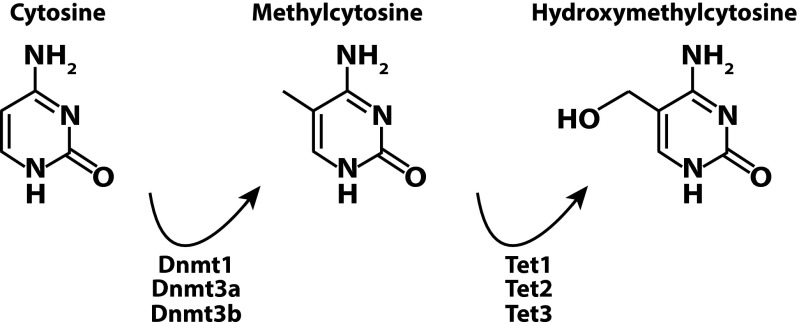
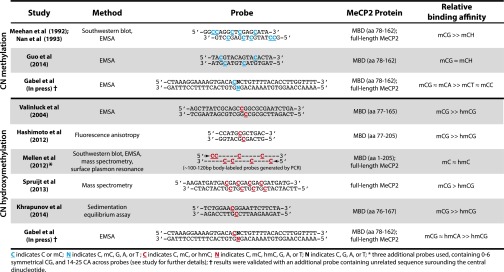
DNA methylation at CpG dinucleotides is an important epigenetic regulator common to virtually all mammalian cell types, but recent evidence indicates that during early postnatal development neuronal genomes also accumulate uniquely high levels of two alternative forms of methylation, non-CpG methylation and hydroxymethylation. Here we discuss the distinct landscape of DNA methylation in neurons, how it is established, and how it might affect the binding and function of protein readers of DNA methylation. We review studies of one critical reader of DNA methylation in the brain, the Rett syndrome protein methyl CpG-binding protein 2 (MeCP2), and discuss how differential binding affinity of MeCP2 for non-CpG and hydroxymethylation may affect the function of this methyl-binding protein in the nervous system.
Keywords: MeCP2; Rett syndrome; hydroxymethylation; non-CpG methylation.
Conflict of interest statement
The authors declare no conflict of interest.
Figures
References
-
- Bird A. DNA methylation patterns and epigenetic memory. Genes Dev. 2002;16(1):6–21. - PubMed
-
- Kulis M, Esteller M. DNA methylation and cancer. Adv Genet. 2010;70:27–56. - PubMed
-
- Huang Y, Rao A. 2014. Connections between TET proteins and aberrant DNA modification in cancer. Trends in Genetics 30(10):464–474.
-
- Amir RE, et al. Rett syndrome is caused by mutations in X-linked MECP2, encoding methyl-CpG-binding protein 2. Nat Genet. 1999;23(2):185–188. - PubMed
-
- Chahrour M, Zoghbi HY. The story of Rett syndrome: From clinic to neurobiology. Neuron. 2007;56(3):422–437. - PubMed
Publication types
MeSH terms
Substances
Grants and funding
LinkOut - more resources
Full Text Sources
Other Literature Sources
