


A metagenomics and case-control study to identify viruses associated with bovine respiratory disease
- PMID: 25740998
- PMCID: PMC4442534
- DOI: 10.1128/JVI.00064-15
A metagenomics and case-control study to identify viruses associated with bovine respiratory disease
Abstract
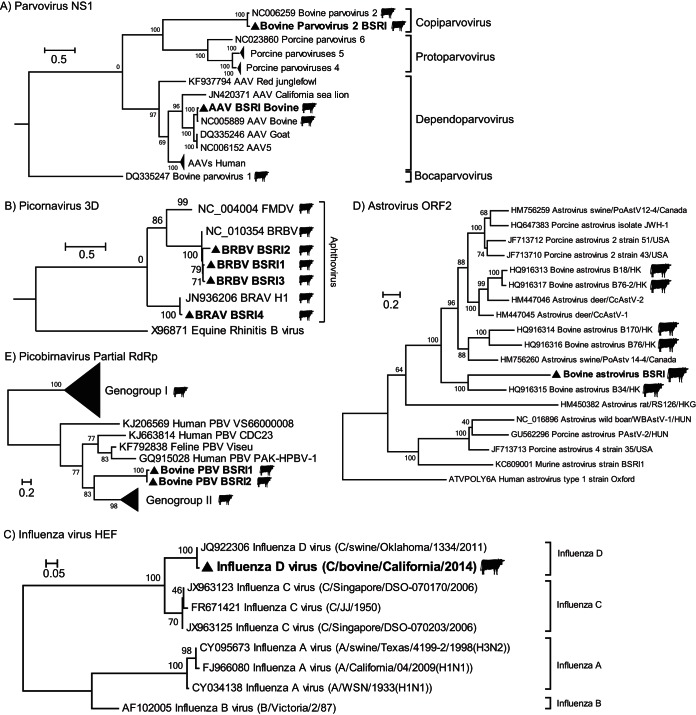
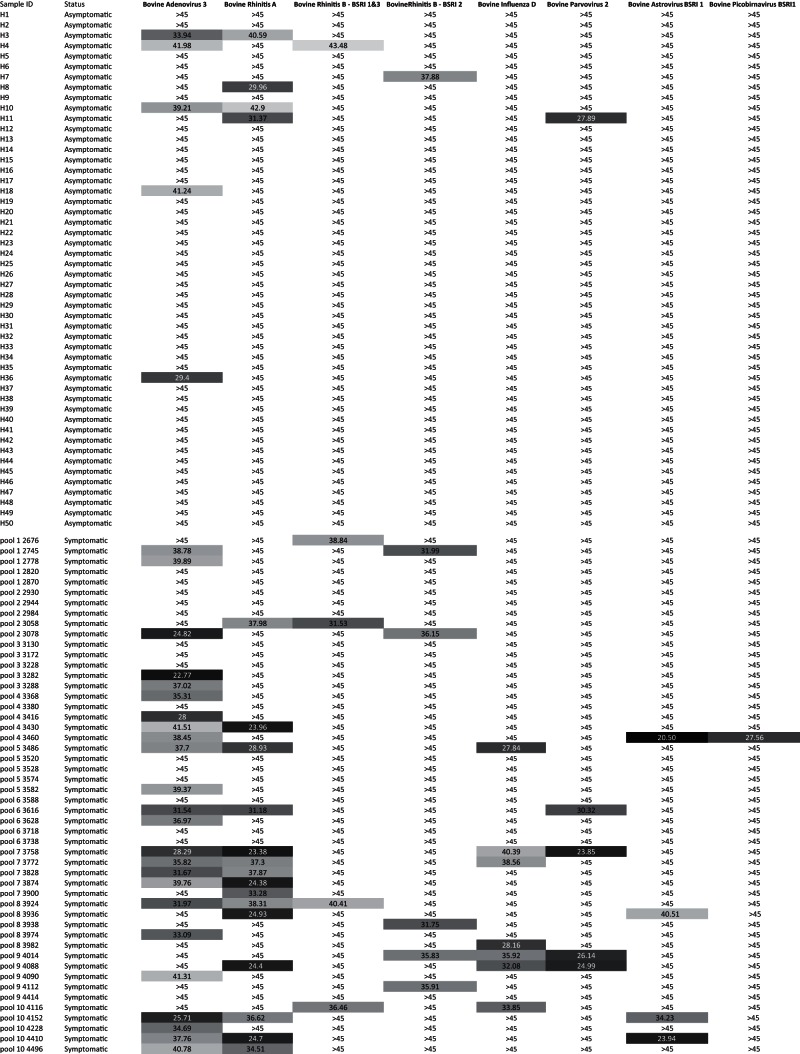
Bovine respiratory disease (BRD) is a common health problem for both dairy and beef cattle, resulting in significant economic loses. In order to identify viruses associated with BRD, we used a metagenomics approach to enrich and sequence viral nucleic acids in the nasal swabs of 50 young dairy cattle with symptoms of BRD. Following deep sequencing, de novo assembly, and translated protein sequence similarity searches, numerous known and previously uncharacterized viruses were identified. Bovine adenovirus 3, bovine adeno-associated virus, bovine influenza D virus, bovine parvovirus 2, bovine herpesvirus 6, bovine rhinitis A virus, and multiple genotypes of bovine rhinitis B virus were identified. The genomes of a previously uncharacterized astrovirus and picobirnaviruses were also partially or fully sequenced. Using real-time PCR, the rates of detection of the eight viruses that generated the most reads were compared for the nasal secretions of 50 animals with BRD versus 50 location-matched healthy control animals. Viruses were detected in 68% of BRD-affected animals versus 16% of healthy control animals. Thirty-eight percent of sick animals versus 8% of controls were infected with multiple respiratory viruses. Significantly associated with BRD were bovine adenovirus 3 (P < 0.0001), bovine rhinitis A virus (P = 0.005), and the recently described bovine influenza D virus (P = 0.006), which were detected either alone or in combination in 62% of animals with BRD. A metagenomics and real-time PCR detection approach in carefully matched cases and controls can provide a rapid means to identify viruses associated with a complex disease, paving the way for further confirmatory tests and ultimately to effective intervention strategies.
Importance: Bovine respiratory disease is the most economically important disease affecting the cattle industry, whose complex root causes include environmental, genetics, and infectious factors. Using an unbiased metagenomics approach, we characterized the viruses in respiratory secretions from BRD cases and identified known and previously uncharacterized viruses belonging to seven viral families. Using a case-control format with location-matched animals, we compared the rates of viral detection and identified 3 viruses associated with severe BRD signs. Combining a metagenomics and case-control format can provide candidate pathogens associated with complex infectious diseases and inform further studies aimed at reducing their impact.
Copyright © 2015, American Society for Microbiology. All Rights Reserved.
Figures
References
-
- Griffin D. 1997. Economic impact associated with respiratory disease in beef cattle. Vet Clin North Am Food Anim Pract 13:367–377. - PubMed
Publication types
MeSH terms
Grants and funding
LinkOut - more resources
Full Text Sources
Other Literature Sources
