


ROS-mediated abiotic stress-induced programmed cell death in plants
- PMID: 25741354
- PMCID: PMC4332301
- DOI: 10.3389/fpls.2015.00069
ROS-mediated abiotic stress-induced programmed cell death in plants
Abstract
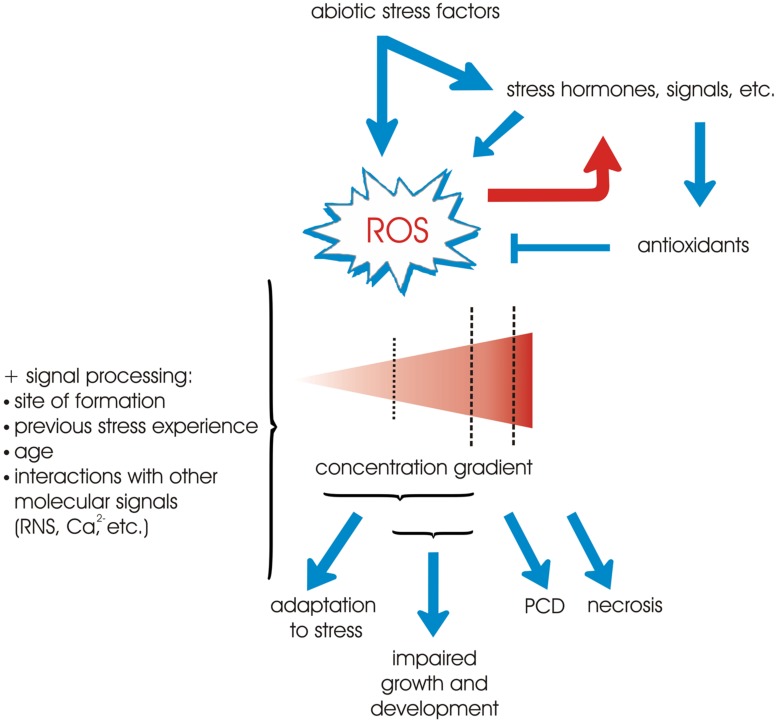
During the course of their ontogenesis plants are continuously exposed to a large variety of abiotic stress factors which can damage tissues and jeopardize the survival of the organism unless properly countered. While animals can simply escape and thus evade stressors, plants as sessile organisms have developed complex strategies to withstand them. When the intensity of a detrimental factor is high, one of the defense programs employed by plants is the induction of programmed cell death (PCD). This is an active, genetically controlled process which is initiated to isolate and remove damaged tissues thereby ensuring the survival of the organism. The mechanism of PCD induction usually includes an increase in the levels of reactive oxygen species (ROS) which are utilized as mediators of the stress signal. Abiotic stress-induced PCD is not only a process of fundamental biological importance, but also of considerable interest to agricultural practice as it has the potential to significantly influence crop yield. Therefore, numerous scientific enterprises have focused on elucidating the mechanisms leading to and controlling PCD in response to adverse conditions in plants. This knowledge may help develop novel strategies to obtain more resilient crop varieties with improved tolerance and enhanced productivity. The aim of the present review is to summarize the recent advances in research on ROS-induced PCD related to abiotic stress and the role of the organelles in the process.
Keywords: abiotic stress; programmed cell death; reactive oxygen species; signal transduction; stress adaptation.
Figures
References
-
- Alboresi A., Dall’osto L., Aprile A., Carillo P., Roncaglia E., Cattivelli L., et al. (2011). Reactive oxygen species and transcript analysis upon excess light treatment in wild-type Arabidopsis thaliana vs a photosensitive mutant lacking zeaxanthin and lutein. BMC Plant Biol. 11:62 10.1186/1471-2229-11-62 - DOI - PMC - PubMed
-
- Anderson J. M., Park Y. I., Chow W. S. (1997). Photoinactivation and photoprotection of photosystem II in nature. Physiol. Plant. 100 214–223 10.1034/j.1399-3054.1997.1000202.x - DOI
Publication types
LinkOut - more resources
Full Text Sources
Other Literature Sources
