Demographic and health status differences among people aged 45 or older with and without functional difficulties related to increased confusion or memory loss, 2011 Behavioral Risk Factor Surveillance System
- PMID: 25742067
- PMCID: PMC4353175
- DOI: 10.5888/pcd12.140429
Demographic and health status differences among people aged 45 or older with and without functional difficulties related to increased confusion or memory loss, 2011 Behavioral Risk Factor Surveillance System
Abstract
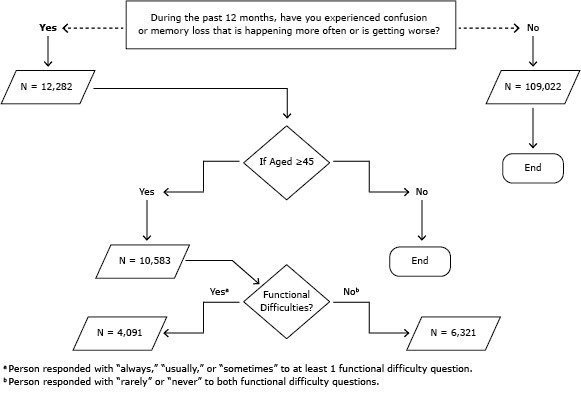
We examined the demographic and health characteristics of people aged 45 years or older in 21 states with self-reported increased confusion or memory loss (ICML) (n = 10,583) by whether or not they also reported functional difficulties related to ICML. We used data from the 2011 Behavioral Risk Factor Surveillance System optional module on impact of cognitive impairment. After adjusting for demographic differences, we found that respondents with ICML and functional difficulties were significantly more likely than those with ICML and no functional difficulties to report frequent poor physical health, frequent poor mental health, limited activity due to poor physical or mental health, and a need for more help. Further understanding of the implications for long-term services and supports is needed.
Figures
References
-
- Centers for Disease Control and Prevention and the Alzheimer’s Association. The Healthy Brain Initiative: a national public health road map to maintaining cognitive health. Chicago (IL): Alzheimer’s Association; 2007. http://www.cdc.gov/aging/pdf/TheHealthyBrainInitiative.pdf. Accessed December 29, 2014.
-
- Alzheimer’s Association and Centers for Disease Control and Prevention. The Healthy Brain Initiative: the public health road map for state and national partnerships, 2013–2018: Chicago (IL): Alzheimer’s Association; 2013. http://www.cdc.gov/aging/pdf/2013-healthy-brain-initiative.pdf. Accessed December 29, 2014.
-
- Measuring Healthy Days: population assessment of health-related quality of life. Atlanta (GA): Centers for Disease Control and Prevention; 2000. http://www.cdc.gov/hrqol/pdfs/mhd.pdf. Accessed December 29, 2014.
Publication types
MeSH terms
LinkOut - more resources
Full Text Sources
Other Literature Sources
Medical