


Cryopreservation of the Hair Follicle Maintains Pluripotency of Nestin-Expressing Hair Follicle-Associated Pluripotent Stem Cells
- PMID: 25743086
- PMCID: PMC4523096
- DOI: 10.1089/ten.TEC.2014.0500
Cryopreservation of the Hair Follicle Maintains Pluripotency of Nestin-Expressing Hair Follicle-Associated Pluripotent Stem Cells
Abstract
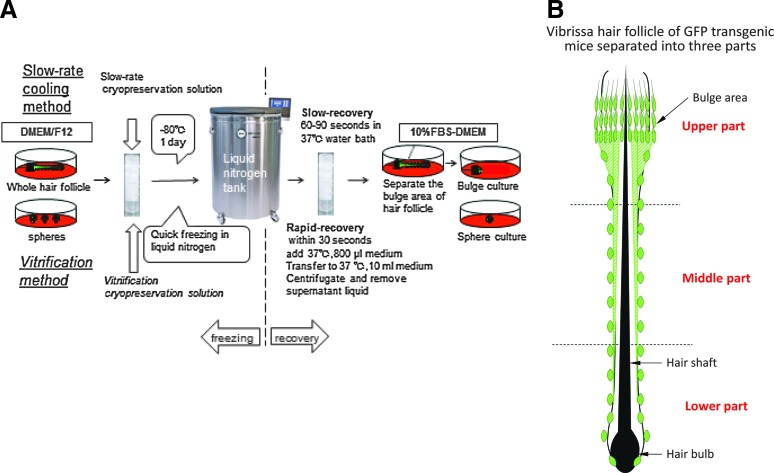
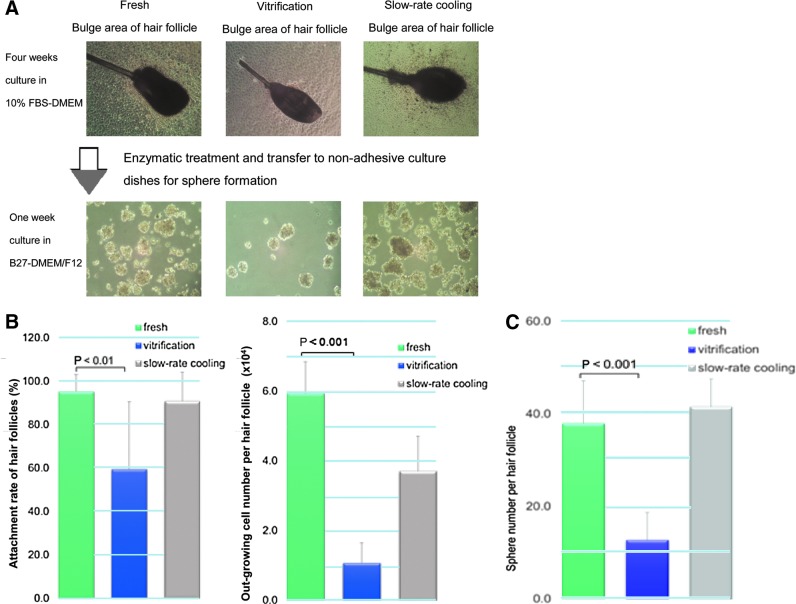
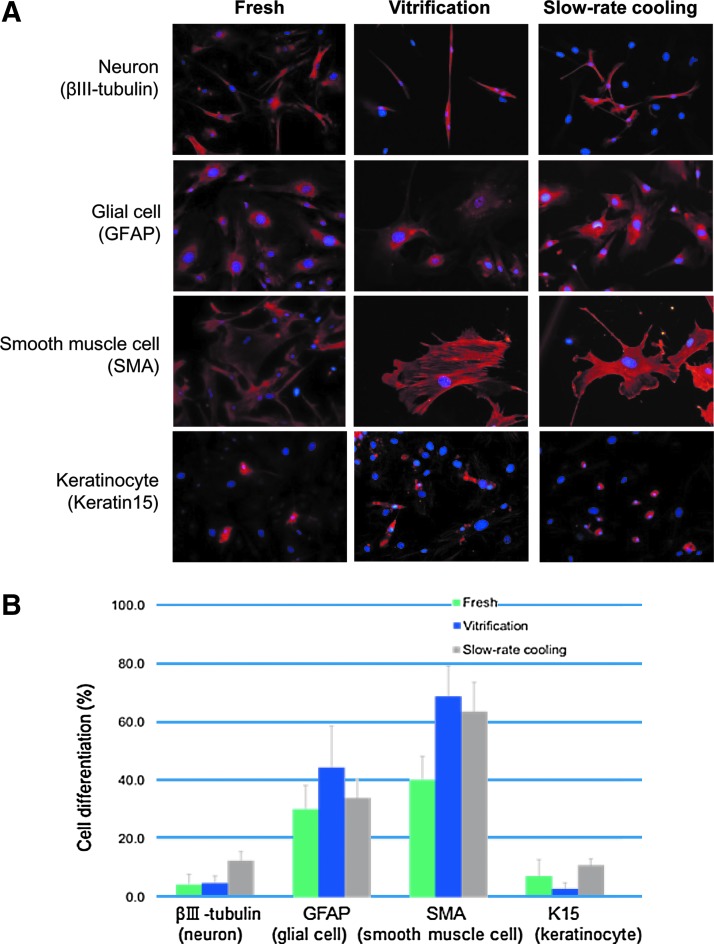
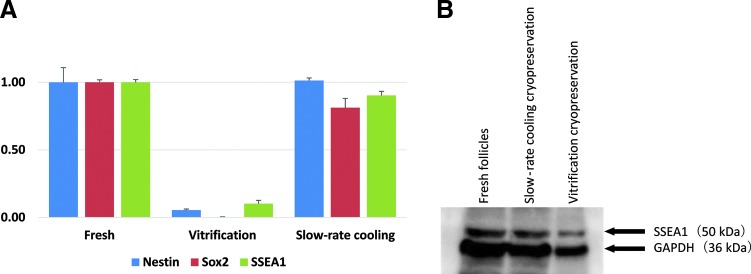
Hair follicles contain nestin-expressing pluripotent stem cells, the origin of which is above the bulge area, below the sebaceous gland. We have termed these cells hair follicle-associated pluripotent (HAP) stem cells. In the present study, we established efficient cryopreservation methods of the hair follicle that maintained the pluripotency of HAP stem cells. We cryopreserved the whole hair follicle from green fluorescent protein transgenic mice by slow-rate cooling in TC-Protector medium and storage in liquid nitrogen. After thawing, the upper part of the hair follicle was isolated and cultured in Dulbecco's Modified Eagle's Medium (DMEM) with fetal bovine serum (FBS). After 4 weeks of culture, cells from the upper part of the hair follicle grew out. The growing cells were transferred to DMEM/F12 without FBS. After 1 week of culture, the growing cells formed hair spheres, each containing ∼1×10(2) HAP stem cells. The hair spheres contained cells that differentiated to neurons, glial cells, and other cell types. The thawed and cultured upper part of the hair follicle produced almost as many pluripotent hair spheres as fresh follicles. The hair spheres derived from slow-cooling cryopreserved hair follicles were as pluripotent as hair spheres from fresh hair follicles. In contrast, rapid-cooling (vitrification) cryopreservation poorly preserved the pluripotency of the hair follicle stem cells. Stem cell marker genes (nestin, Sox2, and SSEA-1) were as highly expressed in slow-rate cooled cryopreserved follicles, after thawing, as in fresh follicles. However, in the vitrification cryopreserved follicles, the expression of the stem cell marker genes was greatly reduced. Direct cryopreservation of hair spheres by either the rapid-cooling, or slow-cooling method, resulted in loss of pluripotency. These results suggest that the slow-rate cooling cryopreservation of the whole hair follicle is effective to store HAP stem cells. Stored HAP stem cells would be very useful in personalized regenerative medicine, enabling any individual to maintain a bank of pluripotent stem cells for future clinical use.
Figures
References
-
- Hoffman R.M. The hair follicle as a gene therapy target. Nat Biothechnol 18, 20, 2000 - PubMed
-
- Oshima H., Rochat A., Kedzia C., Kobayashi K., and Barrandon Y. Morphogenesis and renewal of hair follicles from adult multipotent stem cells. Cell 104, 233, 2001 - PubMed
-
- Cotsarelis G., Sun T.T., and Lavker R.M. Label-retaining cells reside in the bulge area of pilosebaceous unit: implications for follicular stem cells, hair cycle, and skin carcinogenesis. Cell 61, 1329, 1990 - PubMed
Publication types
MeSH terms
Substances
Grants and funding
LinkOut - more resources
Full Text Sources
Other Literature Sources
Miscellaneous
