


Superior oblique extraocular muscle shape in superior oblique palsy
- PMID: 25747676
- PMCID: PMC4426247
- DOI: 10.1016/j.ajo.2015.02.019
Superior oblique extraocular muscle shape in superior oblique palsy
Abstract
Purpose: To investigate the superior oblique (SO) extraocular muscle cross section in normal controls and in SO palsy using high-resolution magnetic resonance imaging (MRI).
Design: Prospective observational study.
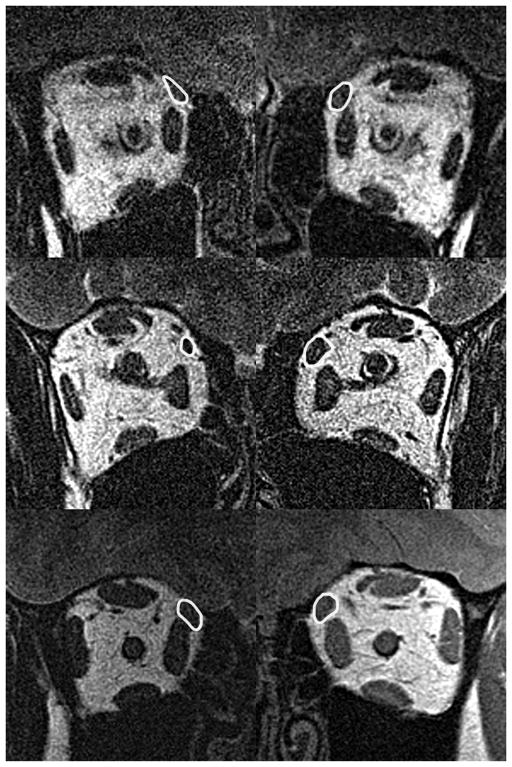
Methods: At a single academic medical center, high-resolution MRI was obtained at 312 μm in-plane resolution using surface coils in multiple, contiguous, quasi-coronal planes perpendicular to the orbital axis in 12 controls and 62 subjects with SO palsy. Previous strabismus surgery was excluded. Imaging was repeated in central gaze and infraduction. In each image plane along the SO, its cross section was outlined to compute cross-sectional area and the major and minor axes of the best-fitting ellipse. Main outcome measures were SO morphology and ocular motility.
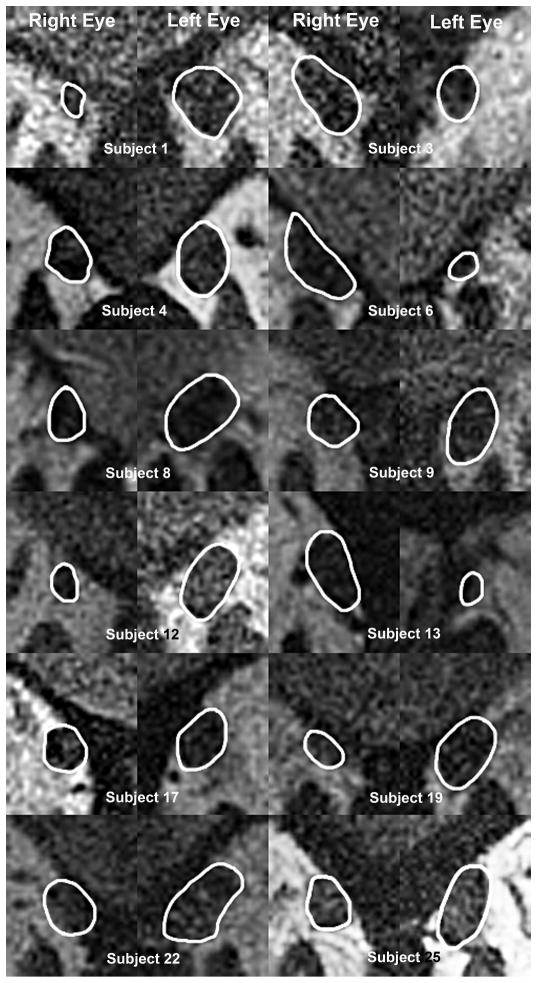
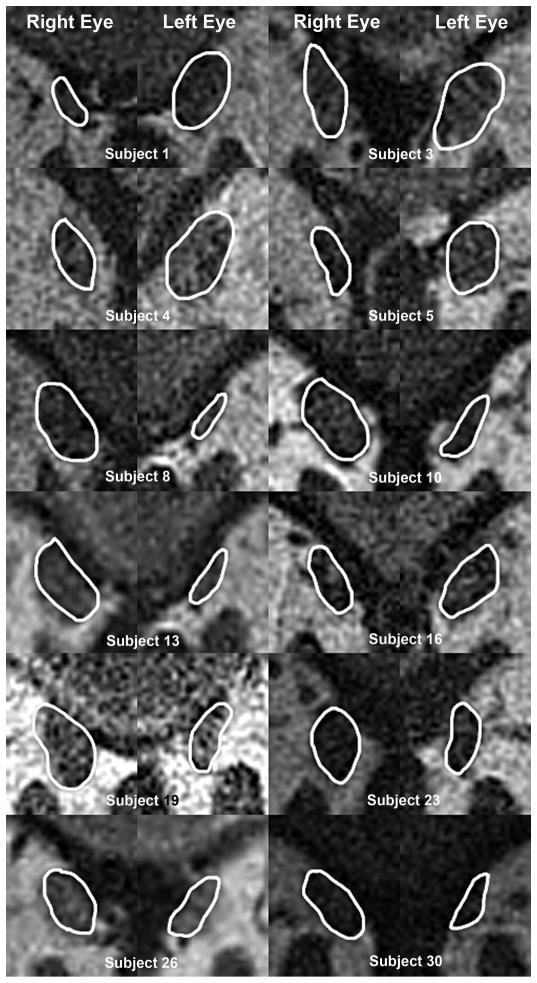
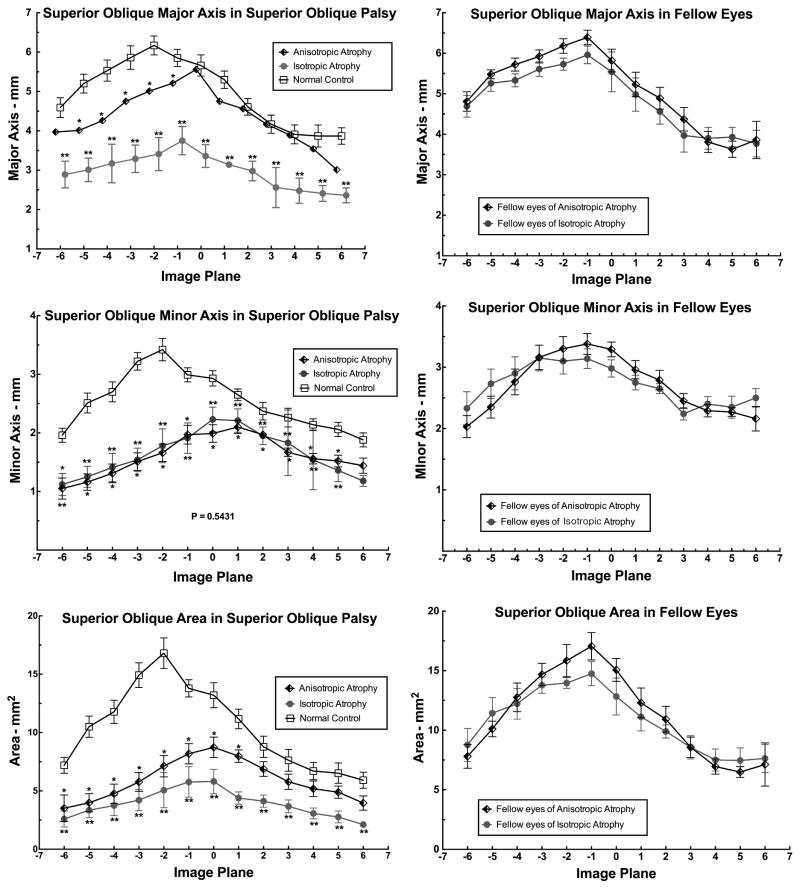
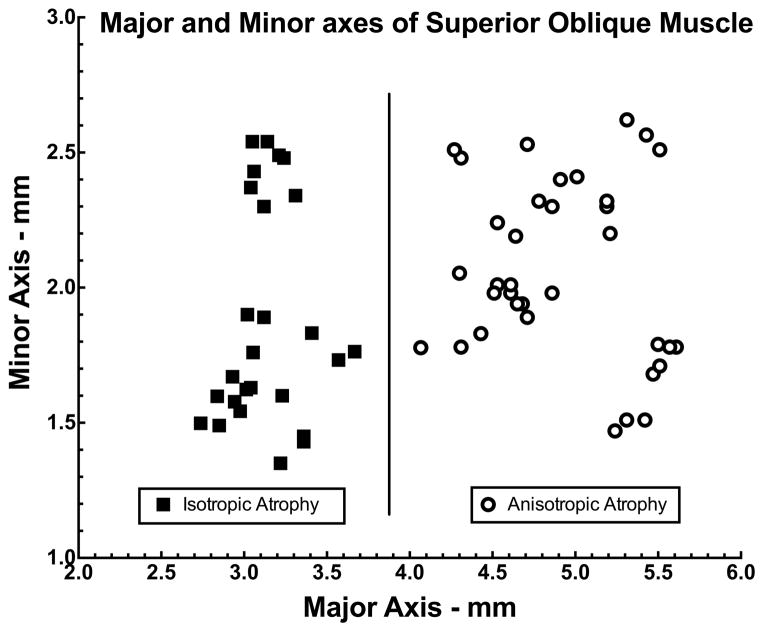
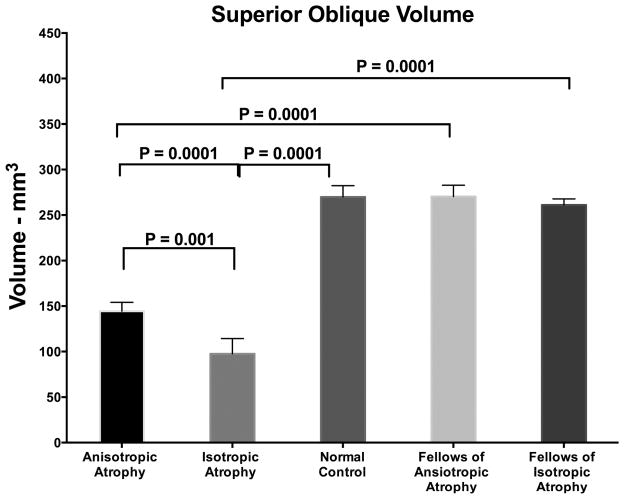
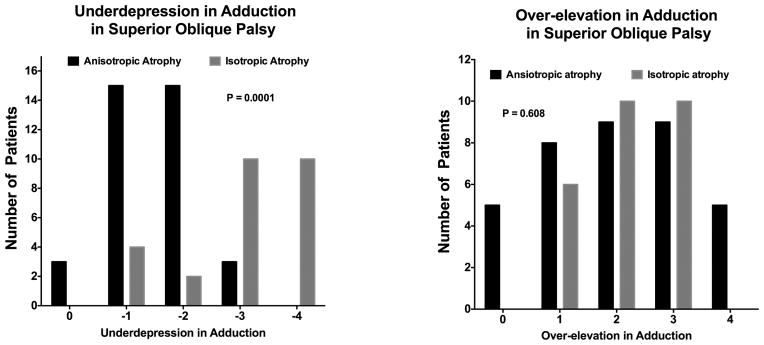
Results: The major and minor axes, cross-sectional area distributions, and volume of the SO belly were subnormal in orbits with SO palsy at most anteroposterior locations (P = .001), but discriminant analysis showed that palsied SO cross sections segregated distinctly into round and elongate shapes representing isotropic vs anisotropic atrophy, respectively. The major axis was relatively preserved in anisotropic atrophy (P = .0146). Cases with isotropic atrophy exhibited greater hypertropia in infraversion than central gaze, as well as greater excyclotorsion, than cases with anisotropic atrophy (P < .05 for all).
Conclusions: Characteristic differences in shape of the palsied SO belly correlate with different clinical features, and may reflect both the degree of differential pathology in the medial vs lateral neuromuscular SO compartments and the basis for diversity in patterns of resulting hypertropia.
Copyright © 2015 Elsevier Inc. All rights reserved.
Figures
Comment in
-
Superior Oblique Extraocular Muscle Shape in Superior Oblique Palsy.Am J Ophthalmol. 2015 Oct;160(4):846-7. doi: 10.1016/j.ajo.2015.07.016. Epub 2015 Aug 4. Am J Ophthalmol. 2015. PMID: 26251124 No abstract available.
-
Reply: To PMID 25747676.Am J Ophthalmol. 2015 Oct;160(4):847. doi: 10.1016/j.ajo.2015.07.018. Epub 2015 Aug 6. Am J Ophthalmol. 2015. PMID: 26257148 No abstract available.
References
Publication types
MeSH terms
Grants and funding
LinkOut - more resources
Full Text Sources
Other Literature Sources
