


How Preclinical Models Evolved to Resemble the Diagnostic Criteria of Drug Addiction
- PMID: 25747744
- PMCID: PMC4702261
- DOI: 10.1016/j.biopsych.2015.01.004
How Preclinical Models Evolved to Resemble the Diagnostic Criteria of Drug Addiction
Abstract
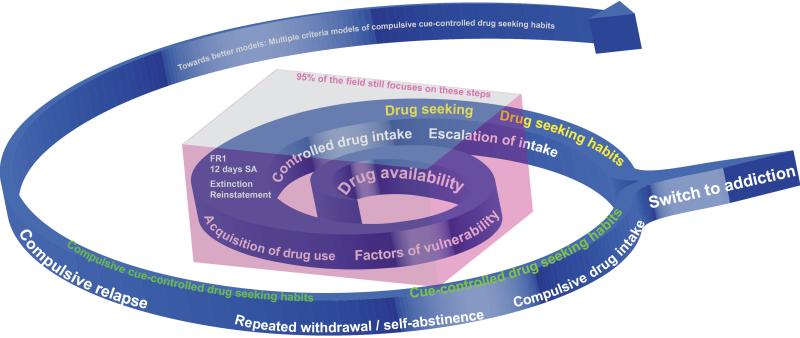
Drug addiction is a complex neuropsychiatric disorder that affects a subset of the individuals who take drugs. It is characterized by maladaptive drug-seeking habits that are maintained despite adverse consequences and intense drug craving. The pathophysiology and etiology of addiction is only partially understood despite extensive research because of the gap between current preclinical models of addiction and the clinical criteria of the disorder. This review presents a brief overview, based on selected methodologies, of how behavioral models have evolved over the last 50 years to the development of recent preclinical models of addiction that more closely mimic diagnostic criteria of addiction. It is hoped that these new models will increase our understanding of the complex neurobiological mechanisms whereby some individuals switch from controlled drug use to compulsive drug-seeking habits and relapse to these maladaptive habits. Additionally, by paving the way to bridge the gap that exists between biobehavioral research on addiction and the human situation, these models may provide new perspectives for the development of novel and effective therapeutic strategies for drug addiction.
Keywords: Behavioral models; Cocaine; Compulsive drug seeking; Limbic system; Substance use disorders.
Published by Elsevier Inc.
Figures
References
-
- Anthony JC, Warner LA, Kessler RC. Comparative epidemiology of dependence on tobacco, alcohol, controlled substances, and inhalants: Basic findings from the National comorbidity Survey. Exp Clin Psychopharmacol. 1994;2:244–268.
-
- Everitt BJ, Robbins TW. Neural systems of reinforcement for drug addiction: from actions to habits to compulsion. Nat Neurosci. 2005;8:1481–1489. - PubMed
-
- Association AP. bookpointUS; 2013. The Diagnostic and Statistical Manual of Mental Disorders: DSM; p. 5.
Publication types
MeSH terms
Grants and funding
LinkOut - more resources
Full Text Sources
Other Literature Sources
Medical
Miscellaneous
