


Are sporadic fidgety movements as clinically relevant as is their absence?
- PMID: 25748086
- PMCID: PMC5951271
- DOI: 10.1016/j.earlhumdev.2015.02.003
Are sporadic fidgety movements as clinically relevant as is their absence?
Abstract
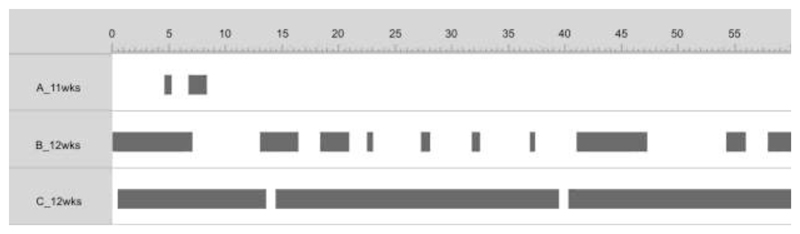
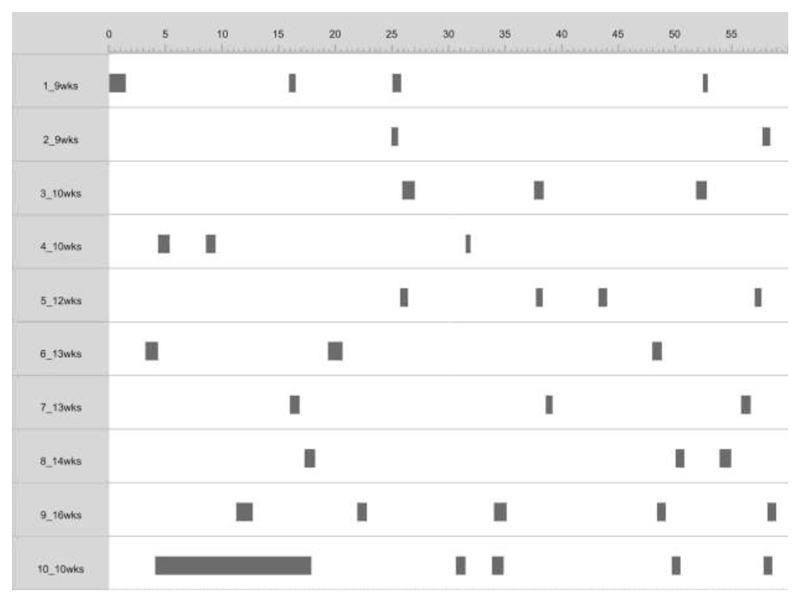
Background: Infants with normal fidgety movements at 3 to 5 months after term are very likely to show neurologically normal development, while the absence of fidgety movements is an early marker for an adverse neurological outcome, mainly cerebral palsy (CP). The clinical significance of so-called sporadic fidgety movements (i.e., fidgety movements occur isolated in a few body parts and are of 1- to 3-second-duration) is not yet known.
Aims: Our objective was to determine whether infants who had developed CP and had sporadic fidgety movements have a better outcome than infants who did not have fidgety movements.
Study design: Longitudinal study. Retrospective analysis of prospectively collected data.
Subjects: 61 infants who developed CP (46 male, 15 female; 29 infants born preterm; videoed for the assessment of movements and postures at 9 to 16 weeks post-term age).
Outcome measures: The Gross Motor Function Classification System (GMFCS) was applied at 3 to 5 years of age.
Results: There was no difference between children diagnosed with CP who had sporadic fidgety movements at 9 to 16 weeks post-term age (n = 9) and those who never developed fidgety movements (n = 50) with regard to their functional mobility and activity limitation at 3 to 5 years of age. One infant had normal FMs and developed unilateral CP, GMFCS Level I; the remaining infant had abnormal FMs and developed bilateral CP, GMFCS Level II.
Conclusions: There is no evidence that the occurrence of occasional isolated fidgety bursts indicates a milder type of CP.
Keywords: Cerebral palsy; Early marker; Fidgety movements; General movements; Infant; Prediction; Video analysis.
Copyright © 2015. Published by Elsevier Ireland Ltd.
Conflict of interest statement
None to declare.
Figures
References
-
- Prechtl HFR, Einspieler C, Cioni G, Bos AF, Ferrari F, Sontheimer D. An early marker for neurological deficits after perinatal brain lesions. Lancet. 1997;349:1361–3. - PubMed
-
- Hadders-Algra M. General movements: a window for early identification of children at high risk for developmental disorders. J Pediatr Suppl. 2004;145:S12–8. - PubMed
-
- Bosanquet M, Copeland L, Ware R, Boyd R. A systematic review of tests to predict cerebral palsy in young children. Dev Med Child Neurol. 2013;55:418–26. - PubMed
-
- Ferrari F, Cioni G, Einspieler C, Roversi MF, Bos AF, Paolicelli PB, et al. Cramped synchronised general movements in preterm infants as an early marker for cerebral palsy. Arch Pediatr Adolesc Med. 2002;156:460–7. - PubMed
-
- Einspieler C, Marschik PB, Bos AF, Ferrari F, Cioni G, Prechtl HFR. Early markers for cerebral palsy: insights from the assessment of general movements. Future Neurol. 2012;7:709–17.
Publication types
MeSH terms
Grants and funding
LinkOut - more resources
Full Text Sources
Other Literature Sources
Medical
Miscellaneous
