. 2015 Mar 12;160(6):1222-32.
doi: 10.1016/j.cell.2015.02.024. Epub 2015 Mar 5.

Hypothalamic Agrp neurons drive stereotypic behaviors beyond feeding

Affiliations

Hypothalamic Agrp neurons drive stereotypic behaviors beyond feeding

Marcelo O Dietrich et al. Cell. .

Erratum in

Abstract

The nervous system evolved to coordinate flexible goal-directed behaviors by integrating interoceptive and sensory information. Hypothalamic Agrp neurons are known to be crucial for feeding behavior. Here, however, we show that these neurons also orchestrate other complex behaviors in adult mice. Activation of Agrp neurons in the absence of food triggers foraging and repetitive behaviors, which are reverted by food consumption. These stereotypic behaviors that are triggered by Agrp neurons are coupled with decreased anxiety. NPY5 receptor signaling is necessary to mediate the repetitive behaviors after Agrp neuron activation while having minor effects on feeding. Thus, we have unmasked a functional role for Agrp neurons in controlling repetitive behaviors mediated, at least in part, by neuropeptidergic signaling. The findings reveal a new set of behaviors coupled to the energy homeostasis circuit and suggest potential therapeutic avenues for diseases with stereotypic behaviors.


Figures

Figure 1
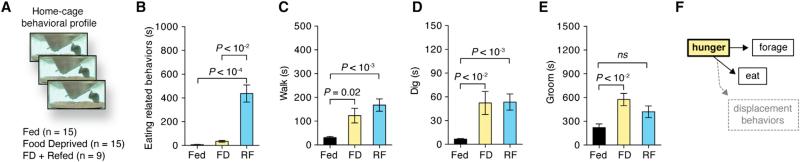
Figure 1. Home-Cage Behaviors in Food-Deprived and Re-Fed Mice
(A) Mouse behaviors in the home cage of fed (black bars), food-deprived (yellow bars), and re-fed (blue bars) mice. (B–E) Time spent in (B) eating-related behaviors, (C) walking, (D) digging, and (E) grooming. (F) Behaviors elicited by hunger states. Error bars represent mean ± SEM. p values represent Holm-Sidak's multiple comparisons test.
Figure 2
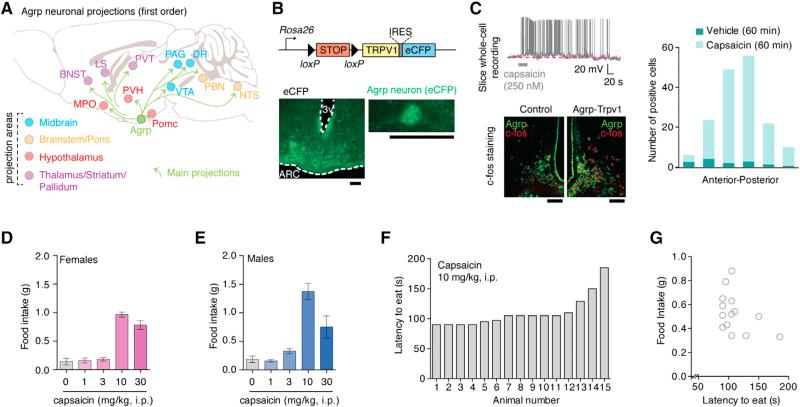
Figure 2. Trpv1 Channels in Agrp Neurons Allow Acute Control of Neuronal Activity
(A) Main projection from Agrp neurons. (B) Reporter Trpv1 mice and CFP staining in the arcuate nucleus of Agrp-Trvp1 mice. (C) Whole-cell recording of an Agrp-Trpv1 neuron and c-fos staining in Agrp-Trpv1-HA reporter mice 60 min after capsaicin injection (10 mg.kg, i.p.). (D and E) Food intake in (D) female Agrp-Trpv1 and in (E) male mice. (F) Latency to eat in female Agrp-Trpv1 mice. (G) Correlation between latency and food intake. Error bars represent mean ± SEM. Scale bars, 50 μm. See also Figure S1 and Movie S1.
Figure 3
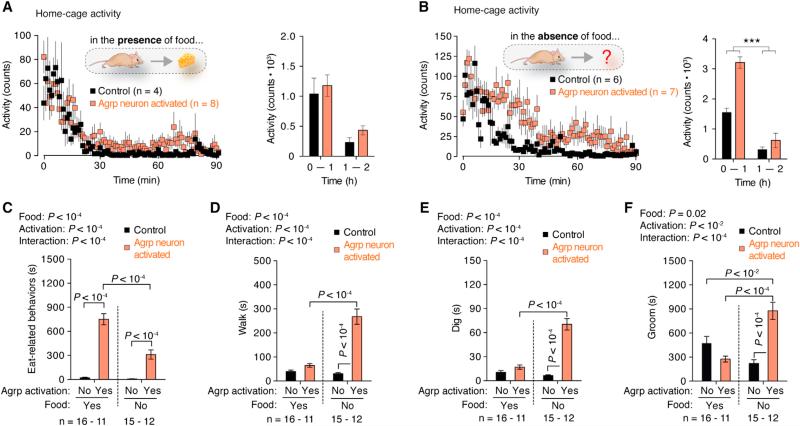
Figure 3. Home-Cage Behavior Analysis of Agrp Neuronal Activated Mice
(A) Activity in the home cage with food provided. (B) Activity with no food provided. (C) Eat-related behaviors. (D) Time walking. (E) Time digging. (F) Time grooming. Symbols and bars represent mean ± SEM. Statistical data derived from two-way ANOVA and Holm-Sidak's multiple comparisons test. See also Figure S2.
Figure 4
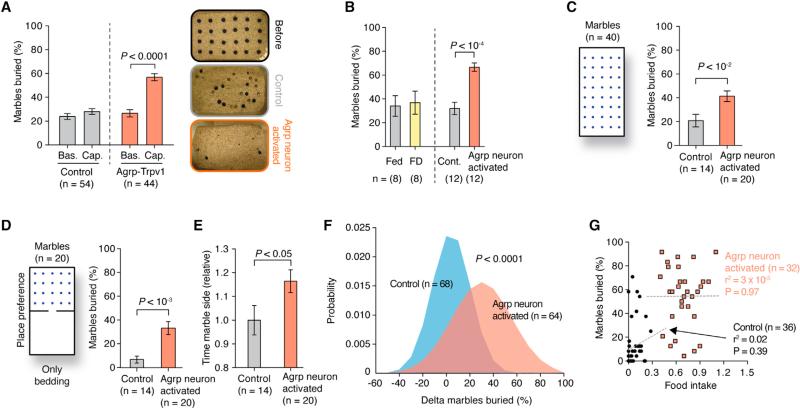
Figure 4. Repetitive Behaviors after Agrp Neuron Activation
(A) Marbles buried after Agrp neuron activation. (B) Marble buried in fed, food-deprived (FD), control, and Agrp-neuron-activated mice. (C) Marble buried in the modified marble-burying test. (D) Marble buried in the modified place-preference test. (E) Time animals spent in the marble side relative to control animals. (F) Normal distribution fitted to pooled experimental data (delta marbles buried [capsaicin injection – baseline]). p value was calculated using unpaired t test with Welch's correction. (G) Linear regression analysis correlating marble-burying behavior and food intake. Each data point represents one mouse. Female mice were used in this study. Error bars represent mean ± SEM, and p values were calculated using t test. See also Figure S3 and Movies S2 and S3.
Figure 5
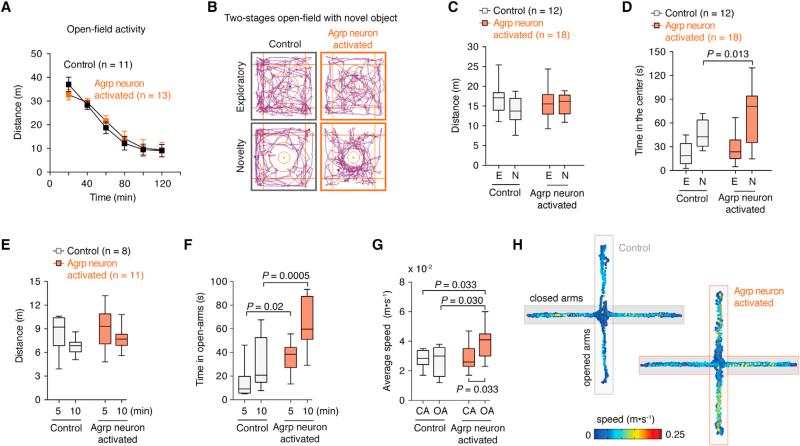
Figure 5. Activation of Agrp Neurons Decreases Anxiety-Related Behaviors
(A) Activity in the open field. Data points represent mean ± SEM. (B) Two-stage open-field test. (C) Total distance traveled in the two-stage open-field test. (D) Time spent in the center of the open field. (E) Distance traveled by mice in the plus-maze test. (F) Time animals spent in the open arms. (G) Average speed of mice in the close arms (CA) and open arms (OA) of the apparatus. (H) Representative tracking data. See also Figure S4 and Movies S4 and S5. Box and whiskers represent median ± min/max values. p values were calculated using two-way ANOVA with repeated-measures followed by Holm-Sidak's multiple comparisons test.
Figure 6
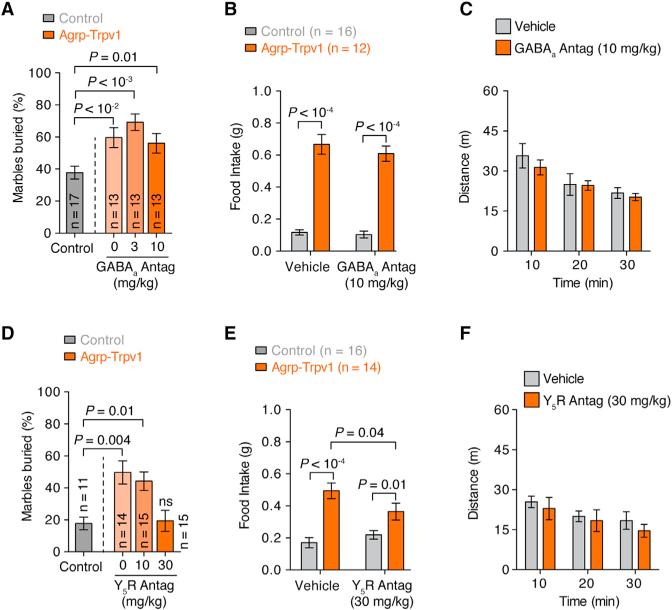
Figure 6. Effects of GABAA or NPY5 Receptors Blockade in Agrp-Neuron-Activated Mice
(A) Effect of the GABAA receptor blocker, bicuculline, in the marble-burying test after activation of Agrp neurons. (B) Effect of bicuculline on food intake. (C) Effect of bicuculline on locomotor activity. (D) Similar to A but using the NPY5 receptor antagonist (CGP71683 hydrochloride). (E) Similar to B using CGP71683. (F) Similar to C using CGP71683. Error bars represent mean ± SEM. p values were calculated using one-way ANOVA in A and D and two-way ANOVA with repeated-measures in B, C, E, and F followed by Holm-Sidak's multiple comparisons test.
Figure 7
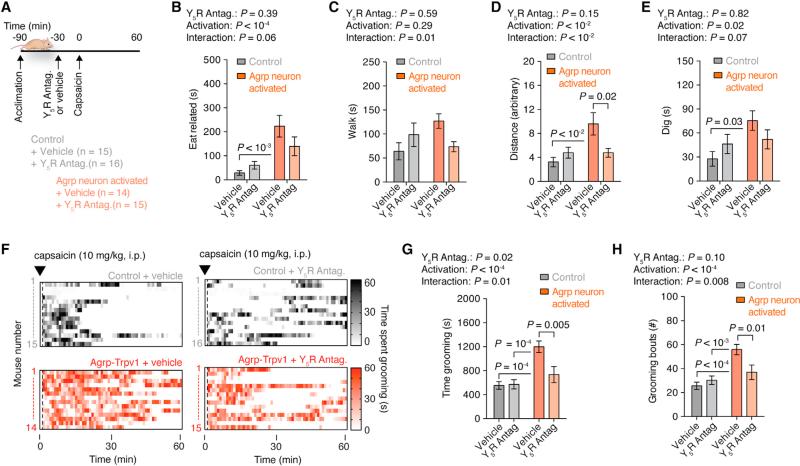
Figure 7. NPY5 Receptor Signaling Is Necessary for Agrp-Neuron-Mediated Behaviors
(A) Protocol to record home-cage behaviors using CGP71683 (30 mg/kg, i.p). (B) Time spent in eating-related behaviors. (C) Time spent walking. (D) Total traveled distance. (E) Time spent digging. (F) Raster plots showing grooming behavior in individual mouse. (G) Time spent grooming. (H) Grooming bouts. Error bars represent mean ± SEM. p values were calculated using two-way ANOVA followed by Holm-Sidak's multiple comparisons test and are reported in the panels. See also Figure S5.

References

    1. Adamah-Biassi EB, Stepien I, Hudson RL, Dubocovich ML. Automated video analysis system reveals distinct diurnal behaviors in C57BL/ 6 and C3H/HeN mice. Behav. Brain Res. 2013;243:306–312. - PMC - PubMed
    1. Ahmari SE, Spellman T, Douglass NL, Kheirbek MA, Simpson HB, Deisseroth K, Gordon JA, Hen R. Repeated cortico-striatal stimulation generates persistent OCD-like behavior. Science. 2013;340:1234–1239. - PMC - PubMed
    1. Amodeo DA, Jones JH, Sweeney JA, Ragozzino ME. Differences in BTBR T+ tf/J and C57BL/6J mice on probabilistic reversal learning and stereotyped behaviors. Behav. Brain Res. 2012;227:64–72. - PMC - PubMed
    1. Anderson DJ, Perona P. Toward a science of computational ethology. Neuron. 2014;84:18–31. - PubMed
    1. Aponte Y, Atasoy D, Sternson SM. AGRP neurons are sufficient to orchestrate feeding behavior rapidly and without training. Nat. Neurosci. 2011;14:351–355. - PMC - PubMed

Publication types