


Coexpression analysis of CD133 and CD44 identifies proneural and mesenchymal subtypes of glioblastoma multiforme
- PMID: 25749043
- PMCID: PMC4467436
- DOI: 10.18632/oncotarget.3365
Coexpression analysis of CD133 and CD44 identifies proneural and mesenchymal subtypes of glioblastoma multiforme
Abstract
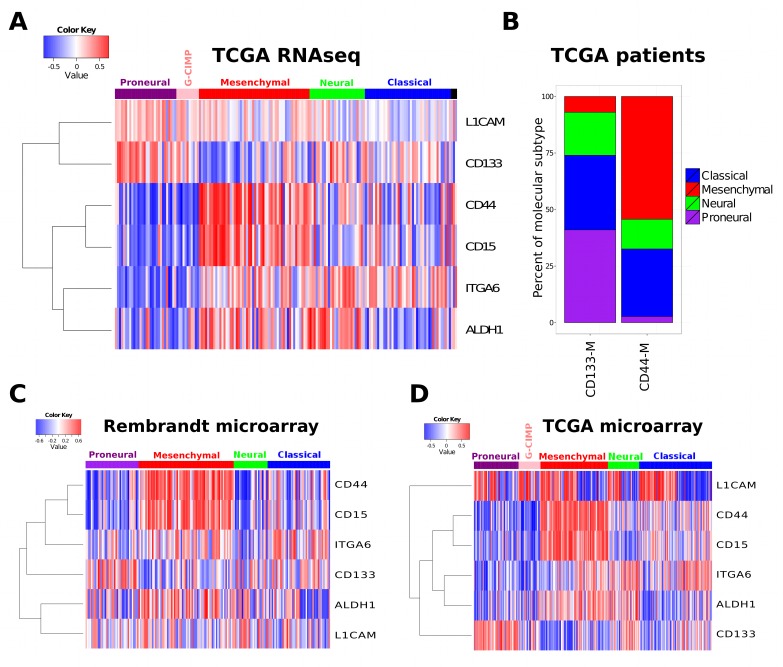
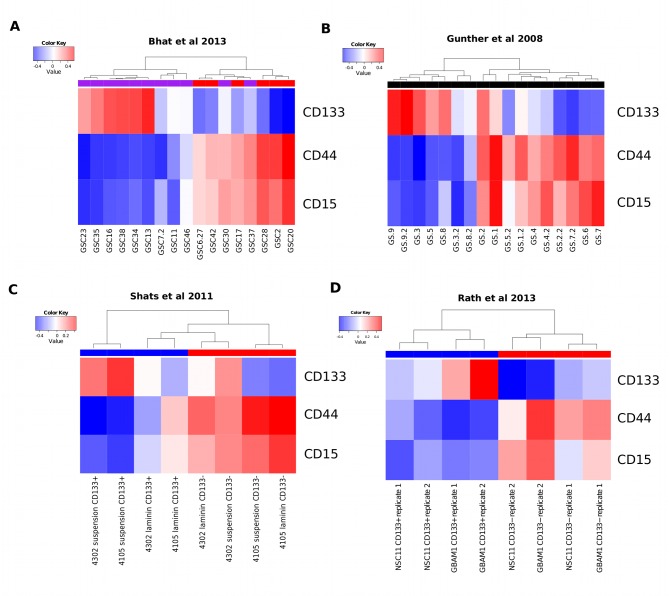
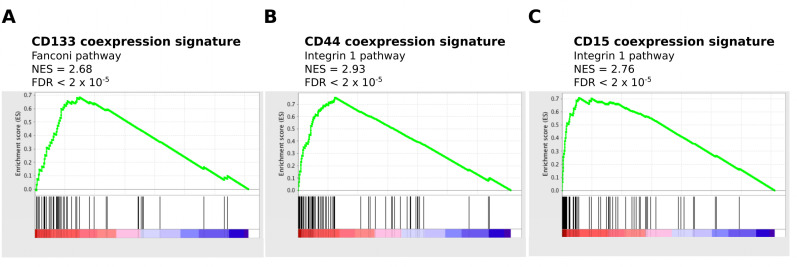
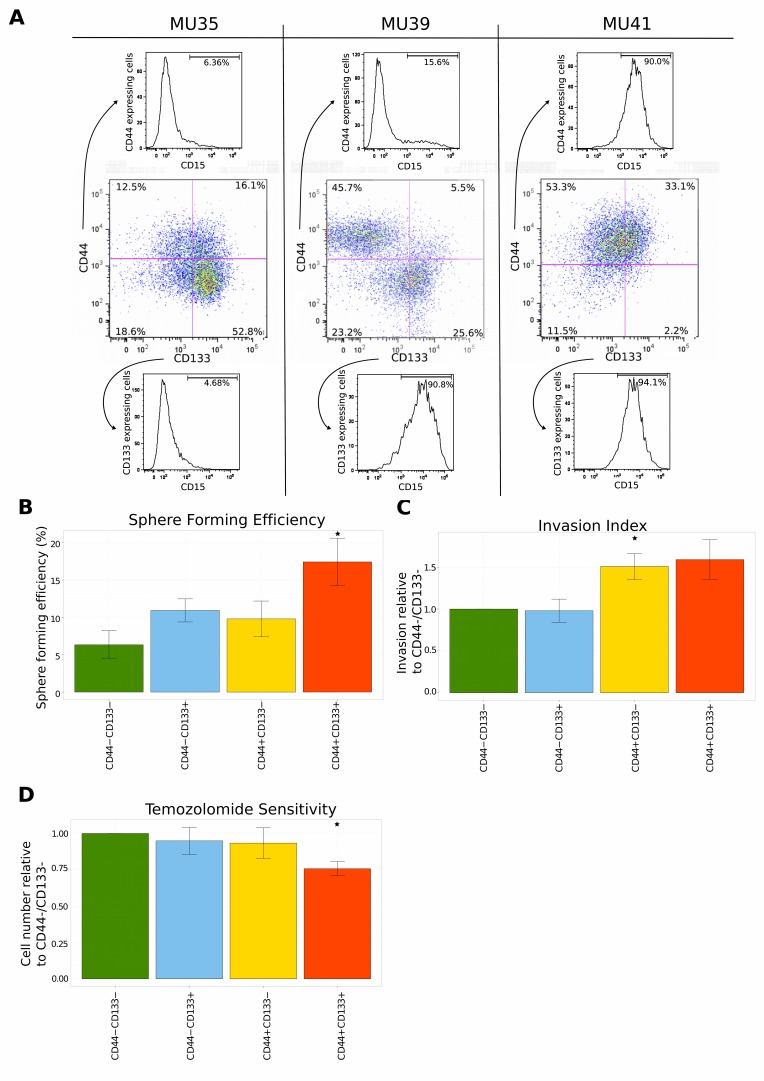
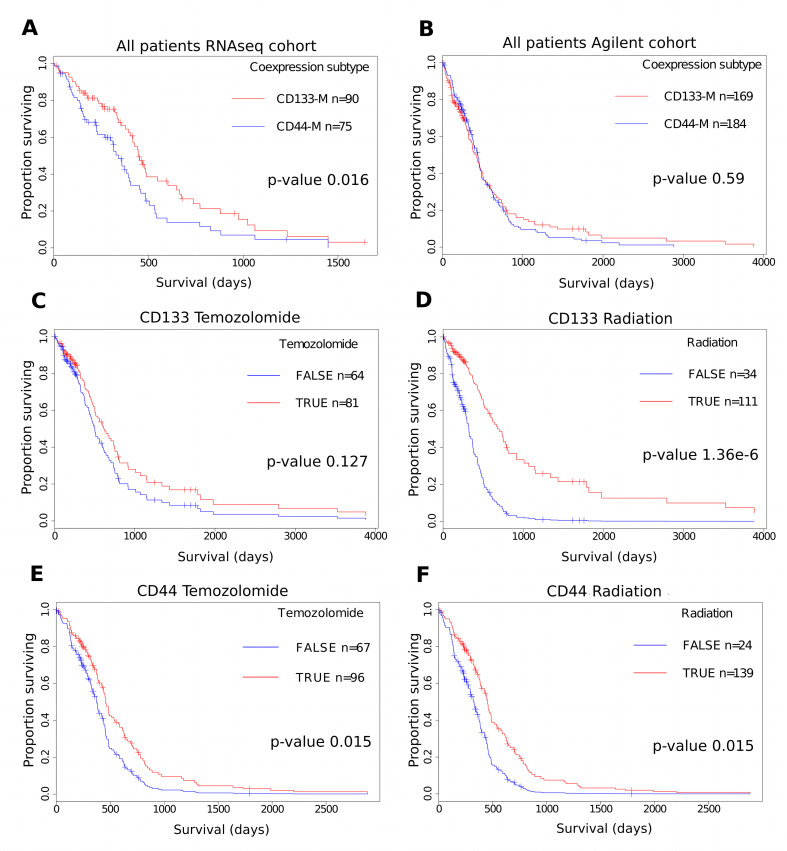
Accumulating evidence suggests that the stem cell markers CD133 and CD44 indicate molecular subtype in Glioblastoma Multiforme (GBM). Gene coexpression analysis of The Cancer Genome Atlas GBM dataset was undertaken to compare markers of the Glioblastoma Stem-Progenitor Cell (GSPC) phenotype. Pearson correlation identified genes coexpressed with stem cell markers, which were then used to build a gene signature that classifies patients based on a CD133 coexpression module signature (CD133-M) or CD44-M subtype. CD133-M tumors were enriched for the Proneural (PN) GBM subtype compared to Mesenchymal (MES) subtype for CD44-M tumors. Gene set enrichment identified DNA replication/cell cycle genes in the CD133-M and invasion/migration in CD44-M, while functional experiments showed enhanced cellular growth in CD133 expressing cells and enhanced invasion in cells expressing CD44. As with the 4 major molecular subtypes of GBM, there was no long-term survival difference between CD44-M and CD133-M patients, although CD44-M patients responded better to temozolomide while CD133-M patients benefited from radiotherapy. The use of a targeted coexpression approach to predict functional properties of surface marker expressing cells is novel, and in the context of GBM, supports accumulating evidence that CD133 and CD44 protein marker expression correlates with molecular subtype.
Keywords: cancer genome atlas; cancer stem cells; coexpression; glioblastoma; molecular subtype.
Figures
References
-
- Miller CR, Perry A. Glioblastoma: morphologic and molecular genetic diversity. Archives of pathology & laboratory medicine. 2007;131(3):397–406. - PubMed
-
- Smoll NR, Schaller K, Gautschi OP. Long-term survival of patients with glioblastoma multiforme (GBM) Journal of clinical neuroscience : official journal of the Neurosurgical Society of Australasia. 2013;20(5):670–675. - PubMed
-
- Phillips HS, Kharbanda S, Chen R, Forrest WF, Soriano RH, Wu TD, Misra A, Nigro JM, Colman H, Soroceanu L, Williams PM, Modrusan Z, Feuerstein BG, Aldape K. Molecular subclasses of high-grade glioma predict prognosis, delineate a pattern of disease progression, and resemble stages in neurogenesis. Cancer Cell. 2006;9(3):157–173. - PubMed
-
- Verhaak RGW, Hoadley KA, Purdom E, Wang V, Qi Y, Wilkerson MD, Miller CR, Ding L, Golub T, Mesirov JP, Alexe G, Lawrence M, O'Kelly M, Tamayo P, Weir BA, Gabriel S, et al. Integrated genomic analysis identifies clinically relevant subtypes of glioblastoma characterized by abnormalities in PDGFRA, IDH1, EGFR, and NF1. Cancer Cell. 2010;17(1):98–110. - PMC - PubMed
MeSH terms
Substances
LinkOut - more resources
Full Text Sources
Other Literature Sources
Medical
Research Materials
Miscellaneous
