


Prenatal stress enhances excitatory synaptic transmission and impairs long-term potentiation in the frontal cortex of adult offspring rats
- PMID: 25749097
- PMCID: PMC4352064
- DOI: 10.1371/journal.pone.0119407
Prenatal stress enhances excitatory synaptic transmission and impairs long-term potentiation in the frontal cortex of adult offspring rats
Abstract
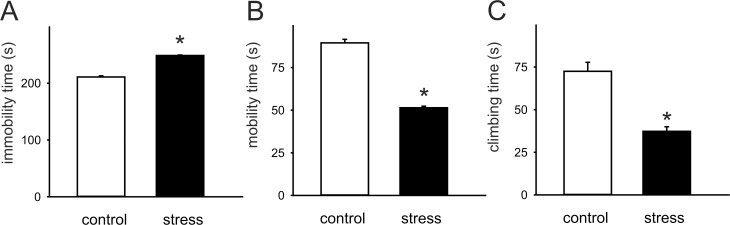
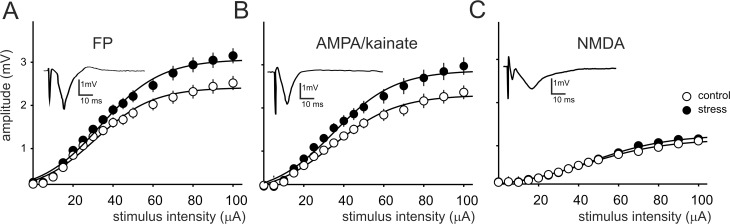
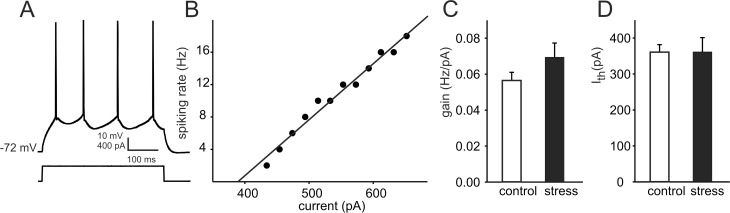
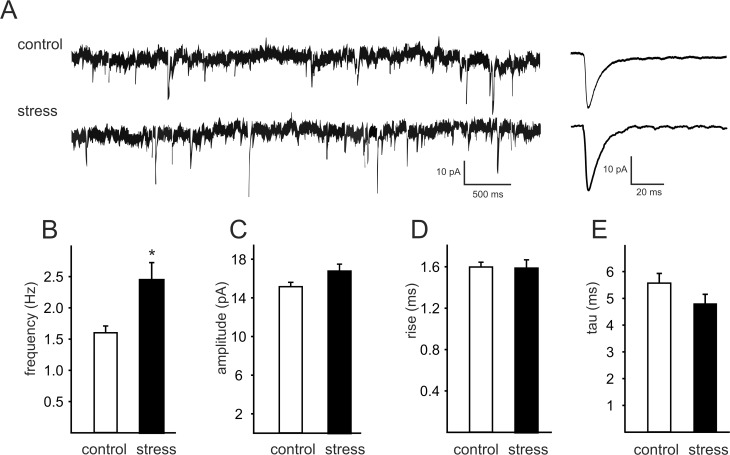
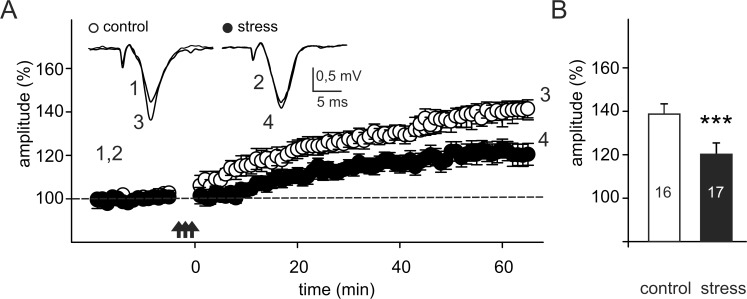
The effects of prenatal stress procedure were investigated in 3 months old male rats. Prenatally stressed rats showed depressive-like behavior in the forced swim test, including increased immobility, decreased mobility and decreased climbing. In ex vivo frontal cortex slices originating from prenatally stressed animals, the amplitude of extracellular field potentials (FPs) recorded in cortical layer II/III was larger, and the mean amplitude ratio of pharmacologically-isolated NMDA to the AMPA/kainate component of the field potential--smaller than in control preparations. Prenatal stress also resulted in a reduced magnitude of long-term potentiation (LTP). These effects were accompanied by an increase in the mean frequency, but not the mean amplitude, of spontaneous excitatory postsynaptic currents (sEPSCs) in layer II/III pyramidal neurons. These data demonstrate that stress during pregnancy may lead not only to behavioral disturbances, but also impairs the glutamatergic transmission and long-term synaptic plasticity in the frontal cortex of the adult offspring.
Conflict of interest statement
Figures
References
-
- Basta-Kaim A, Szczesny E, Glombik K, Stachowicz K, Slusarczyk J, Nalepa I, et al. Prenatal stress affects insulin-like growth factor-1 (IGF-1) level and IGF-1 receptor phosphorylation in the brain of adult rats. Eur Neuropsychopharmacol. 2014;24: 1546–1556. 10.1016/j.euroneuro.2014.07.002 - DOI - PubMed
Publication types
MeSH terms
LinkOut - more resources
Full Text Sources
Other Literature Sources
Miscellaneous
