. 2015 Mar 9:5:8864.
doi: 10.1038/srep08864.

Novel inhibitor discovery and the conformational analysis of inhibitors of listeriolysin O via protein-ligand modeling

Affiliations

Novel inhibitor discovery and the conformational analysis of inhibitors of listeriolysin O via protein-ligand modeling

Jianfeng Wang et al. Sci Rep. .

Abstract

Increasing bacterial resistance to available antibiotics makes the discovery of novel efficacious antibacterial agents a priority. A previous report showed that listeriolysin O (LLO) is a critical virulence factor and suggested that it is a target for developing anti-virulence drugs against Listeria monocytogenes infections. In this study, we report the discovery of LLO natural compound inhibitors with differential activity by using hemolysis assay. The mechanism of action of the inhibitors was consistent with that of fisetin, a natural flavonoid without antimicrobial activity, which we showed in our previous report via molecular simulation. Furthermore, a substantial increase in anti-hemolytic activity was observed when the single bond (C1-C2) was replaced by a double bond (C1-C2) in the inhibitor molecule. This change was based on the decomposition of the ligand-residue interaction, which indicated that the double bond (C1-C2) in the inhibitors was required for their inhibition of LLO. The current MD simulation work provides insights into the mechanism by which the compounds inhibit LLO at the atomic level and will be useful for the development of new, selective LLO inhibitors.


Figures
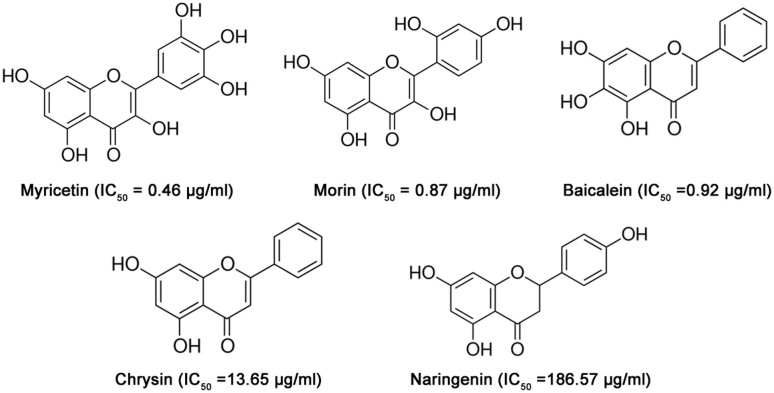
Figure 1
Figure 1. The chemical structures of the LLO inhibitors used for molecular simulation and binding free energy calculations.
Figure 2
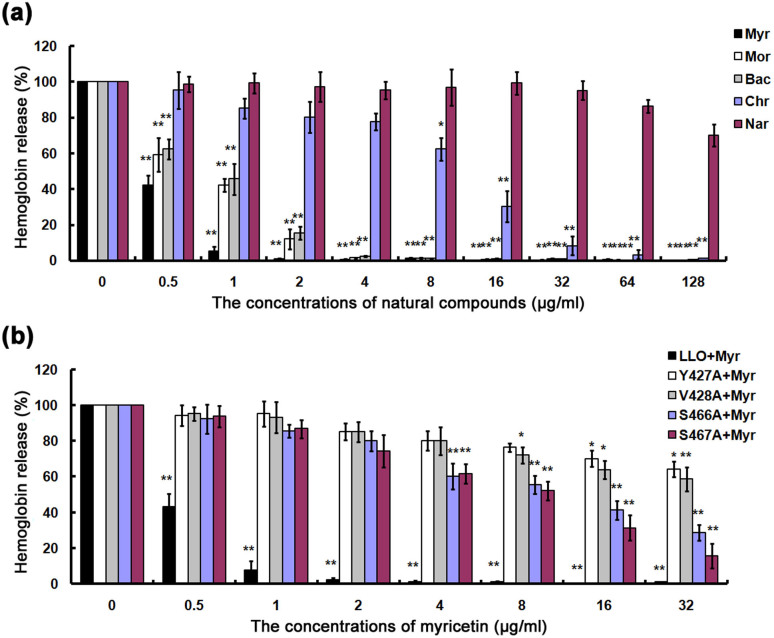
Figure 2. The inhibitory effect of five natural compounds on LLO activity.
(a) Purified rLLO pretreated with the indicated concentrations of natural compounds was incubated with defibrinated sheep erythrocytes and hemolysis activity was determined by the release of hemoglobin at OD543. (b) Hemolysis assay was performed as described above to examine the inhibitory effects of myricetin on the hemolysis induced by LLO and its mutants. Bars represent the standard deviation (*P < 0.05, **P < 0.01; two tailed Student's t-test).
Figure 3
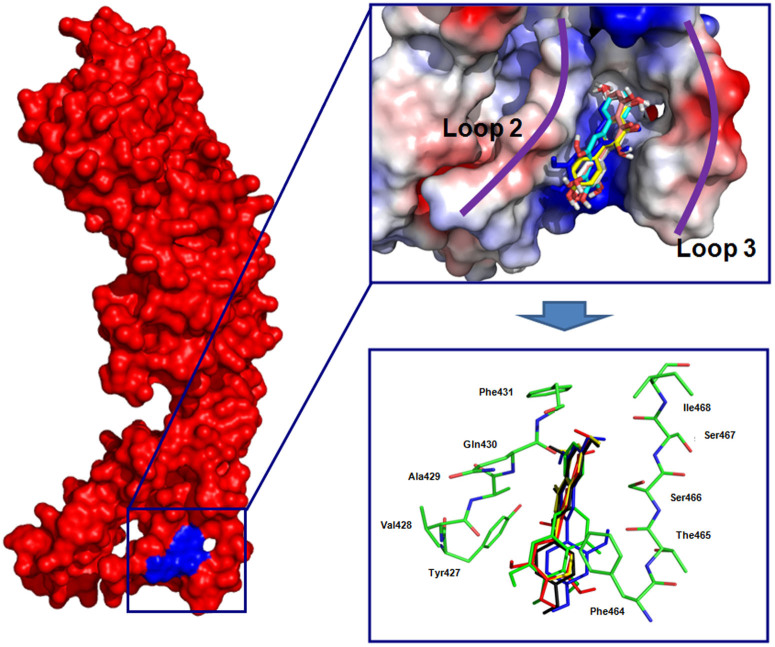
Figure 3. The interactions between inhibitors and LLO predicted by molecular modeling.
Figure 4
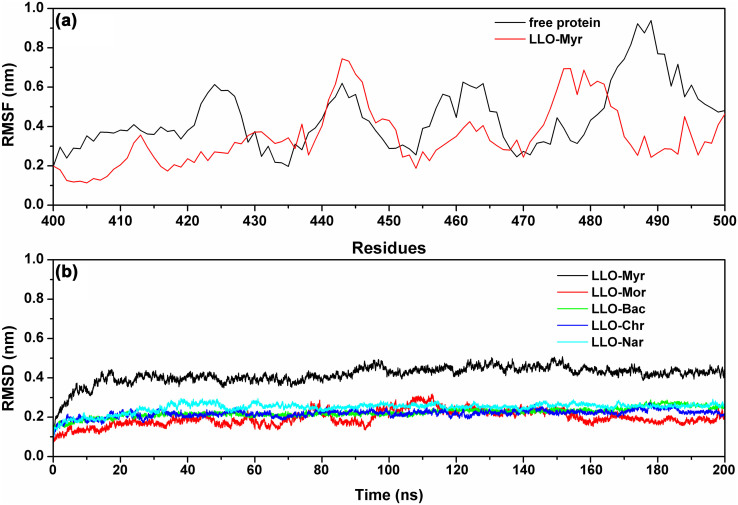
Figure 4
(a) RMSF of the residue positions over the last 50-ns simulations with respect to their initial position for the LLO protein in the free protein and LLO-Myr system. (b) The RMSDs displayed by the backbone atoms of the protein during MD simulations of LLO-Myr, LLO-Mor, LLO-Bac, LLO-Chr and LLO-Nar are presented.
Figure 5
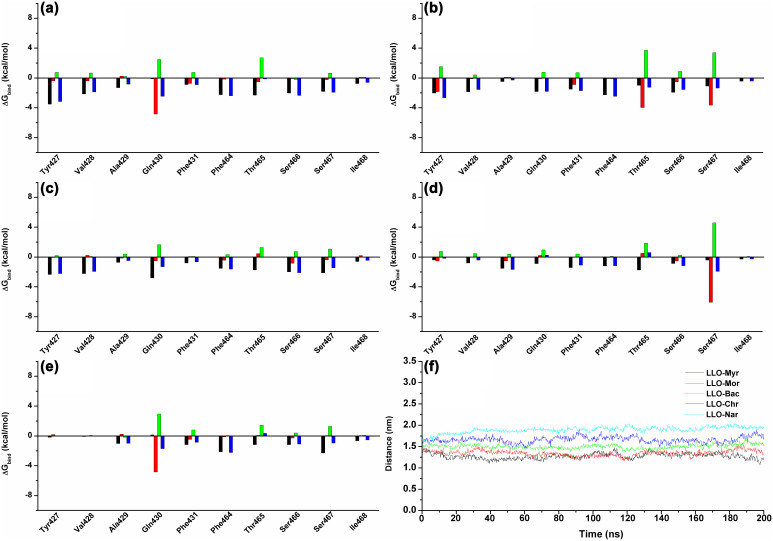
Figure 5
The decomposition of the binding energy on a per-residue basis in the binding sites of the LLO-Myr complex (a), LLO-Mor complex (b), LLO-Bac complex (c), LLO-Chr complex (d) and LLO-Nar complex (e). (black histograms: ΔEvdw; red histograms: ΔEele; green histograms: ΔEsol; blue histograms: ΔEtotal). The distances between Tyr427 and the 4H-chromen-4-one moiety of ligands in the complexes are shown as a function of time (f).

References

    1. Vazquez-Boland J. A. et al. Listeria pathogenesis and molecular virulence determinants. Clin Microbiol Rev 14, 584–640 (2001). - PMC - PubMed
    1. Cossart P. Illuminating the landscape of host-pathogen interactions with the bacterium Listeria monocytogenes. Proc Natl Acad Sci U S A 108, 19484–19491 (2011). - PMC - PubMed
    1. Portnoy D. A., Auerbuch V. & Glomski I. J. The cell biology of Listeria monocytogenes infection: the intersection of bacterial pathogenesis and cell-mediated immunity. J Cell Biol 158, 409–414 (2002). - PMC - PubMed
    1. Kayal S. & Charbit A. Listeriolysin O: a key protein of Listeria monocytogenes with multiple functions. FEMS Microbiol Rev 30, 514–529 (2006). - PubMed
    1. Hamon M. A., Ribet D., Stavru F. & Cossart P. Listeriolysin O: the Swiss army knife of Listeria. Trends Microbiol 20, 360–368 (2012). - PubMed

Publication types

MeSH terms

LinkOut - more resources