


The role of enteric hormone GLP-2 in the response of bone markers to a mixed meal in postmenopausal women with type 2 diabetes mellitus
- PMID: 25750666
- PMCID: PMC4351686
- DOI: 10.1186/s13098-015-0006-7
The role of enteric hormone GLP-2 in the response of bone markers to a mixed meal in postmenopausal women with type 2 diabetes mellitus
Abstract
Background: Type 2 diabetes mellitus (T2D) is a complex disease associated with several chronic complications, including bone fragility and high fracture risk due to mechanisms not yet fully understood. The influence of the gastrointestinal tract and its hormones on bone remodeling has been demonstrated in healthy individuals. Glucagon-like peptide 2 (GLP-2), an enteric hormone secreted in response to nutrient intake, has been implicated as a mediator of nutrient effects on bone remodeling. This study aimed to analyze the dynamics of bone resorption marker C-terminal telopeptide of type I collagen (CTX), bone formation marker osteocalcin, and GLP-2 in response to a mixed meal in diabetic postmenopausal women.
Methods: Forty-three postmenopausal women with osteopenia or osteoporosis (20 controls - group CO - and 23 diabetic - group T2D) were subjected to a standard mixed meal tolerance test, with determination of serum CTX, plasma osteocalcin and serum GLP-2 concentrations at baseline and 30, 60, 120 and 180 minutes after the meal.
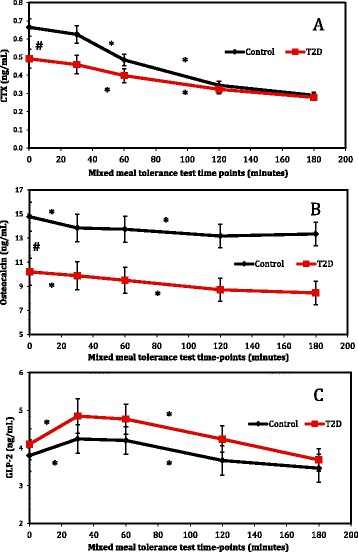
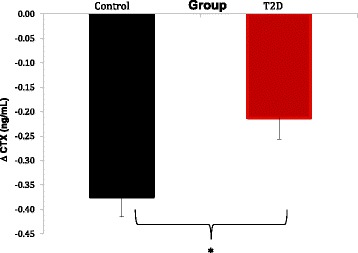
Results: T2D women had higher body mass index as well as higher femoral neck and total hip bone mineral density. At baseline, luteinizing hormone, follicle-stimulating hormone, osteocalcin and CTX levels were lower in group T2D. In response to the mixed meal, CTX and osteocalcin levels decreased and GLP-2 levels increased in both groups. The expected CTX suppression in response to the mixed meal was lower in group T2D.
Conclusions: Bone turnover markers were significantly reduced in T2D women at baseline. Confirming the role of nutrient intake as a stimulating factor, GLP-2 increased in response to the mixed meal in both groups. Importantly, CTX variation in response to the mixed meal was reduced in T2D women, suggesting abnormal response of bone remodeling to nutrient intake in T2D.
Keywords: Bone remodeling; CTX; GLP-2; Mixed meal; Osteocalcin; Type 2 diabetes mellitus.
Figures
References
LinkOut - more resources
Full Text Sources
Other Literature Sources
