


Life history correlates of fecal bacterial species richness in a wild population of the blue tit Cyanistes caeruleus
- PMID: 25750710
- PMCID: PMC4338966
- DOI: 10.1002/ece3.1384
Life history correlates of fecal bacterial species richness in a wild population of the blue tit Cyanistes caeruleus
Abstract
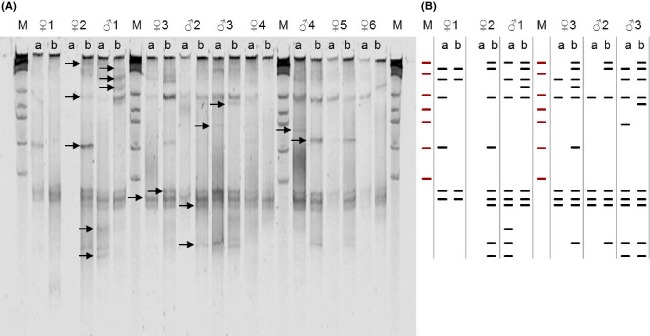
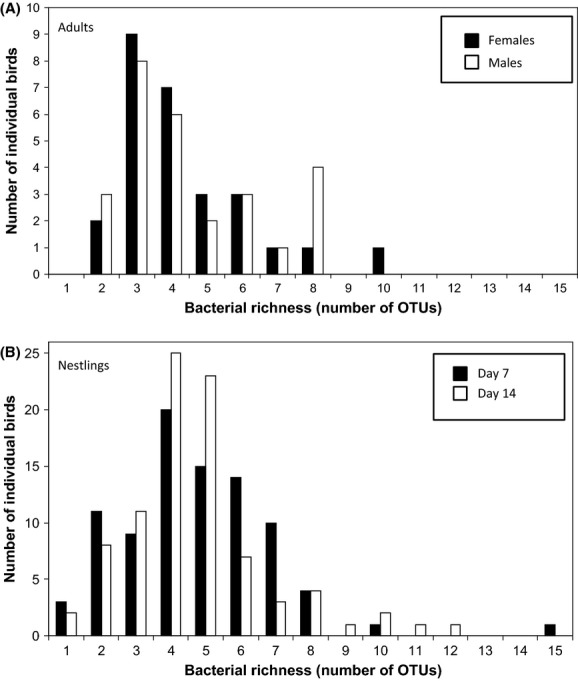
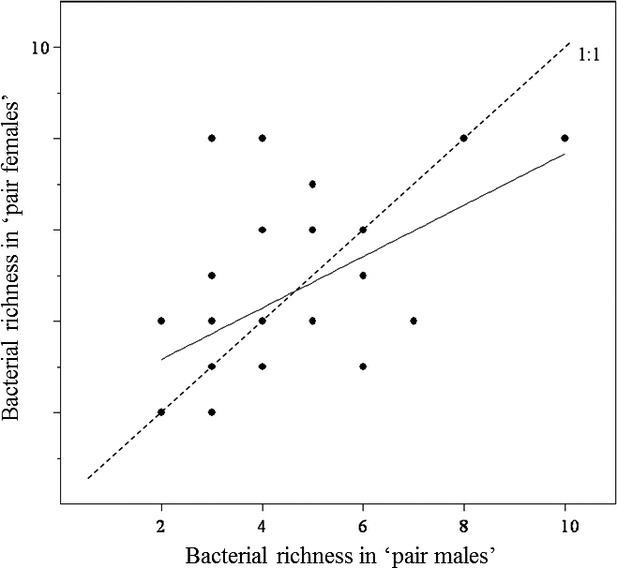
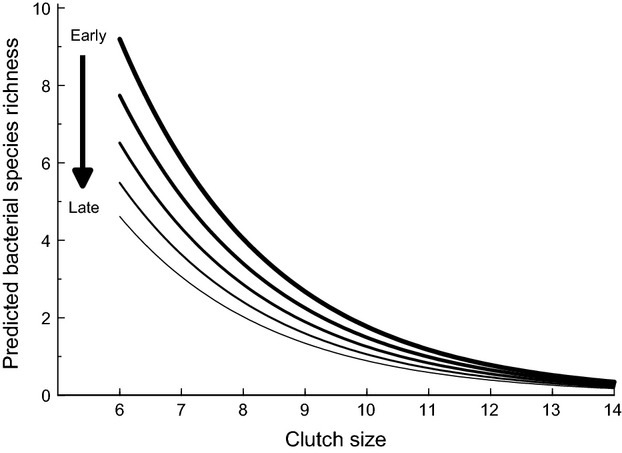
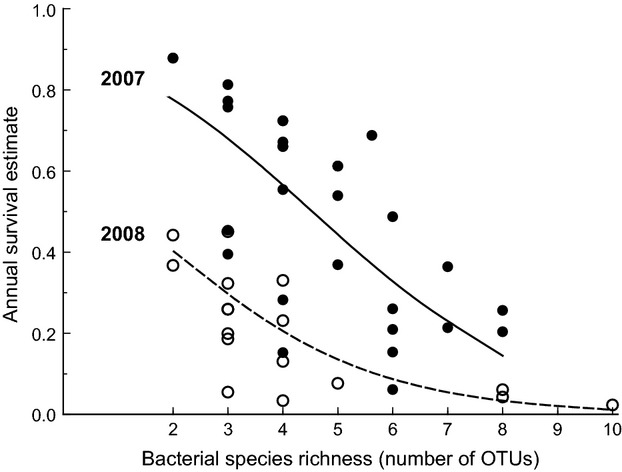
Very little is known about the normal gastrointestinal flora of wild birds, or how it might affect or reflect the host's life-history traits. The aim of this study was to survey the species richness of bacteria in the feces of a wild population of blue tits Cyanistes caeruleus and to explore the relationships between bacterial species richness and various life-history traits, such as age, sex, and reproductive success. Using PCR-TGGE, 55 operational taxonomic units (OTUs) were identified in blue tit feces. DNA sequencing revealed that the 16S rRNA gene was amplified from a diverse range of bacteria, including those that shared closest homology with Bacillus licheniformis, Campylobacter lari, Pseudomonas spp., and Salmonella spp. For adults, there was a significant negative relationship between bacterial species richness and the likelihood of being detected alive the following breeding season; bacterial richness was consistent across years but declined through the breeding season; and breeding pairs had significantly more similar bacterial richness than expected by chance alone. Reduced adult survival was correlated with the presence of an OTU most closely resembling C. lari; enhanced adult survival was associated with an OTU most similar to Arthrobacter spp. For nestlings, there was no significant change in bacterial species richness between the first and second week after hatching, and nestlings sharing the same nest had significantly more similar bacterial richness. Collectively, these results provide compelling evidence that bacterial species richness was associated with several aspects of the life history of their hosts.
Keywords: 16S rRNA; PCR-TGGE; bacterial species richness; fecal microbial community analysis; life-history traits; operational taxonomic unit.
Figures
References
-
- Allos BM. Campylobacter jejuni infections: update on emerging issues and trends. Clin. Infect. Dis. 2001;32:1201–1206. - PubMed
-
- Altschul S, Gish W, Miller W, Myers E. Lipman D. Basic local alignment search tool. J. Mol. Biol. 1990;215:403–410. - PubMed
-
- Atlas R. Bartha R. Microbial ecology: fundamentals and applications. Inc. California: Benjamin-Cummings Publishing Company; 1986.
-
- Bakker TCM. Pomiankowski A. The genetic basis of female mate preferences. J. Evol. Biol. 1995;8:129–171.
-
- Benjamin J, Leaper S, Owen RJ. Skirrow MB. Description of Campylobacter laridis, a new species comprising the nalidixic acid resistant thermophilic Campylobacter (NARTC) group. Curr. Microbiol. 1983;8:231–238.
LinkOut - more resources
Full Text Sources
Other Literature Sources
Miscellaneous
