


Demonstration of asymmetric electron conduction in pseudosymmetrical photosynthetic reaction centre proteins in an electrical circuit
- PMID: 25751412
- PMCID: PMC4366537
- DOI: 10.1038/ncomms7530
Demonstration of asymmetric electron conduction in pseudosymmetrical photosynthetic reaction centre proteins in an electrical circuit
Abstract
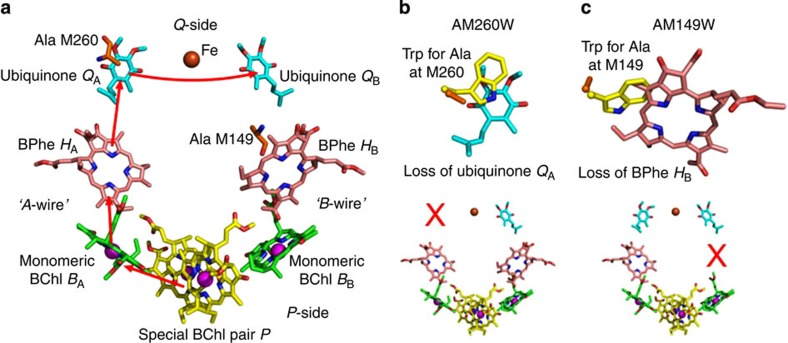
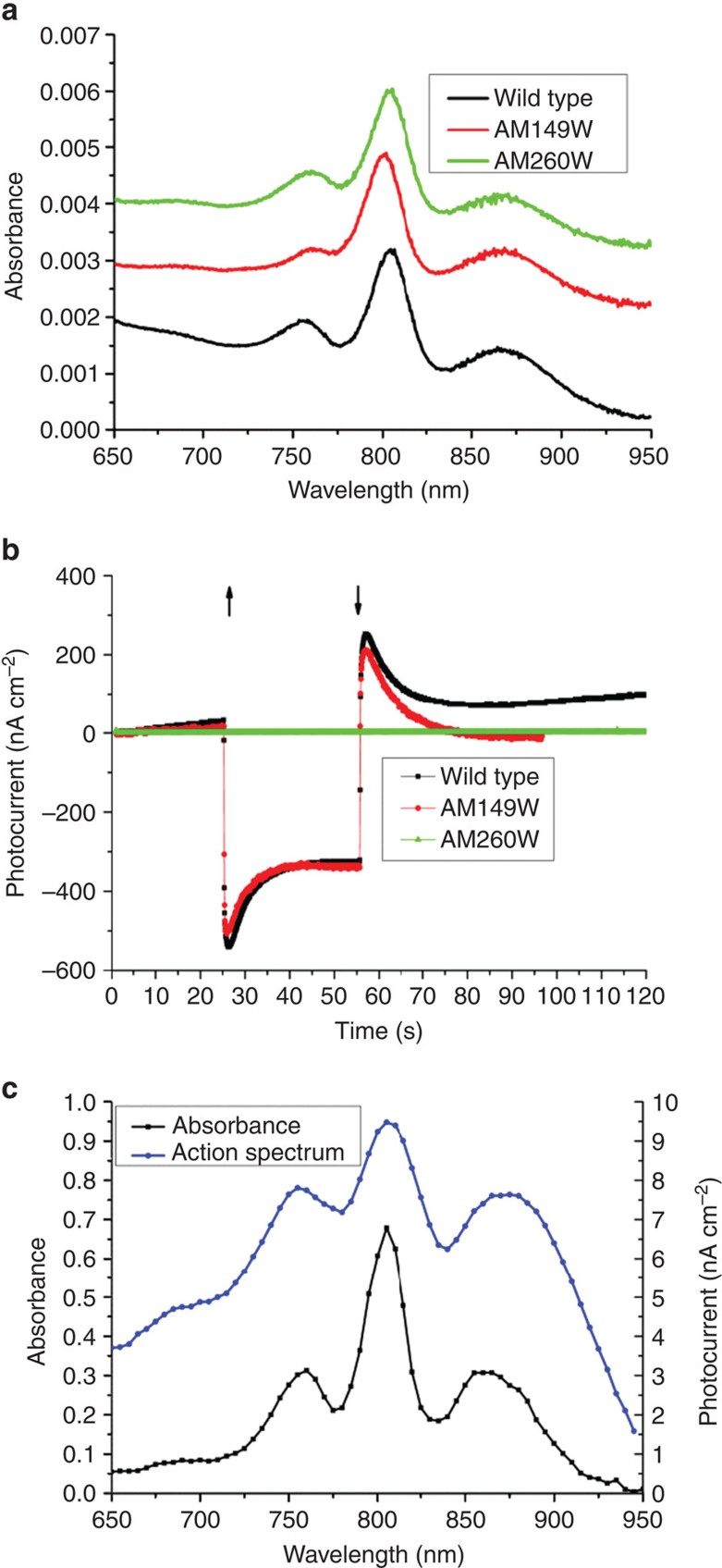
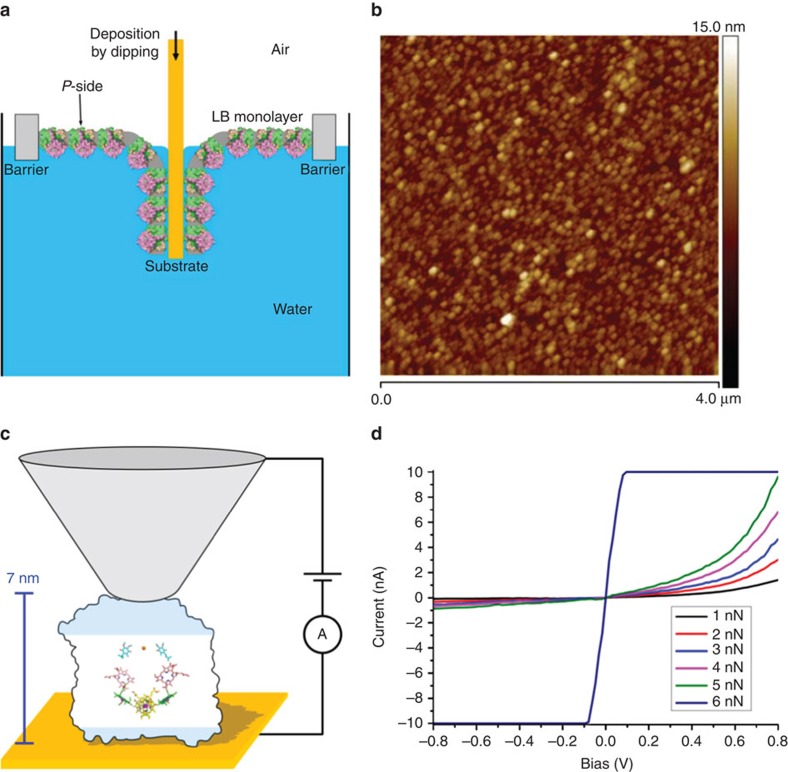
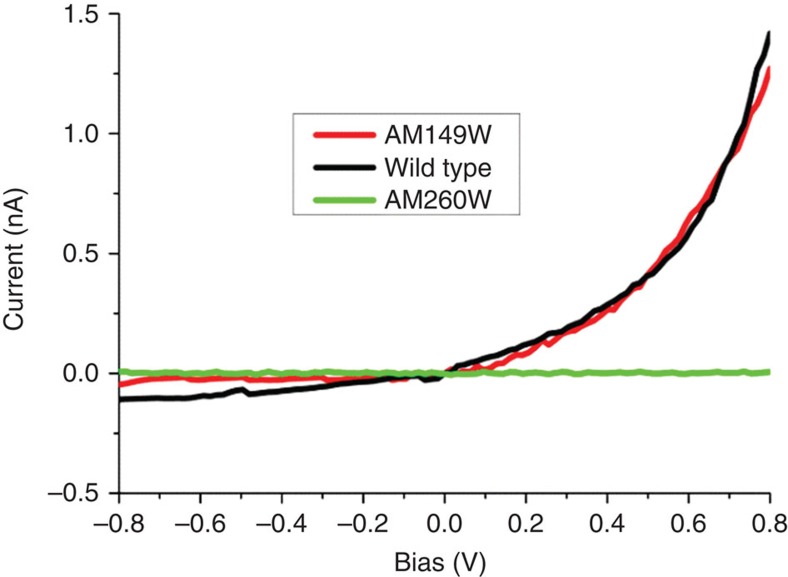
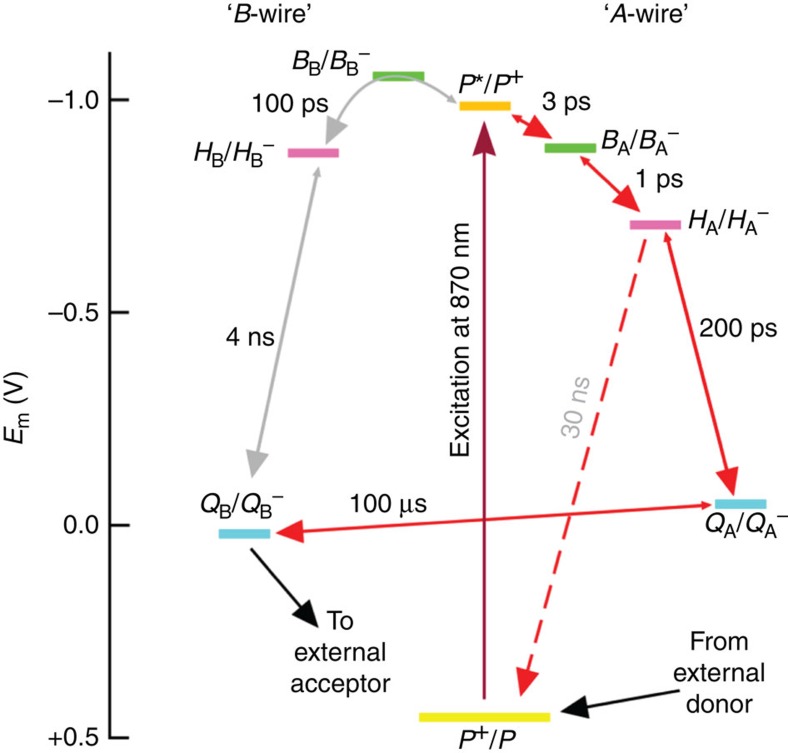
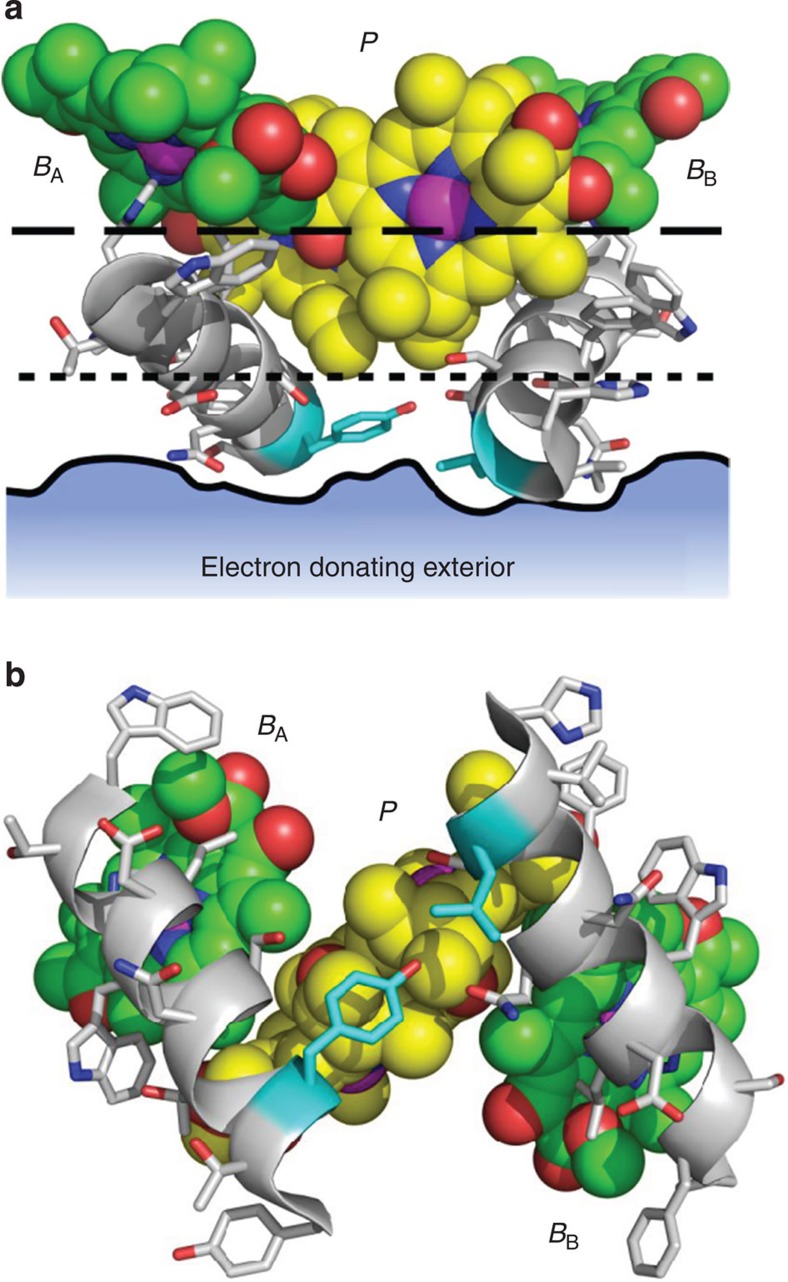
Photosynthetic reaction centres show promise for biomolecular electronics as nanoscale solar-powered batteries and molecular diodes that are amenable to atomic-level re-engineering. In this work the mechanism of electron conduction across the highly tractable Rhodobacter sphaeroides reaction centre is characterized by conductive atomic force microscopy. We find, using engineered proteins of known structure, that only one of the two cofactor wires connecting the positive and negative termini of this reaction centre is capable of conducting unidirectional current under a suitably oriented bias, irrespective of the magnitude of the bias or the applied force at the tunnelling junction. This behaviour, strong functional asymmetry in a largely symmetrical protein-cofactor matrix, recapitulates the strong functional asymmetry characteristic of natural photochemical charge separation, but it is surprising given that the stimulus for electron flow is simply an externally applied bias. Reasons for the electrical resistance displayed by the so-called B-wire of cofactors are explored.
Figures
References
-
- Davis J. J. et al.. Molecular bioelectronics. J. Mat. Chem. 15, 2160–2174 (2005) .
-
- Ron I., Pecht I., Sheves M. & Cahen D. Proteins as solid-state electronic conductors. Acc. Chem. Res. 43, 945–953 (2010) . - PubMed
-
- Sek S. Peptides and proteins wired into the electrical circuits: An SPM-based approach. Biopolymers 100, 71–81 (2013) . - PubMed
-
- Zhang J. D. et al.. Single-molecule electron transfer in electrochemical environments. Chem. Rev. 108, 2737–2791 (2008) . - PubMed
-
- Nitzan A. & Ratner M. A. Electron transport in molecular wire junctions. Science 300, 1384–1389 (2003) . - PubMed
Publication types
MeSH terms
Substances
Grants and funding
LinkOut - more resources
Full Text Sources
Other Literature Sources
