


Fish oil decreases hepatic lipogenic genes in rats fasted and refed on a high fructose diet
- PMID: 25751821
- PMCID: PMC4377871
- DOI: 10.3390/nu7031644
Fish oil decreases hepatic lipogenic genes in rats fasted and refed on a high fructose diet
Abstract
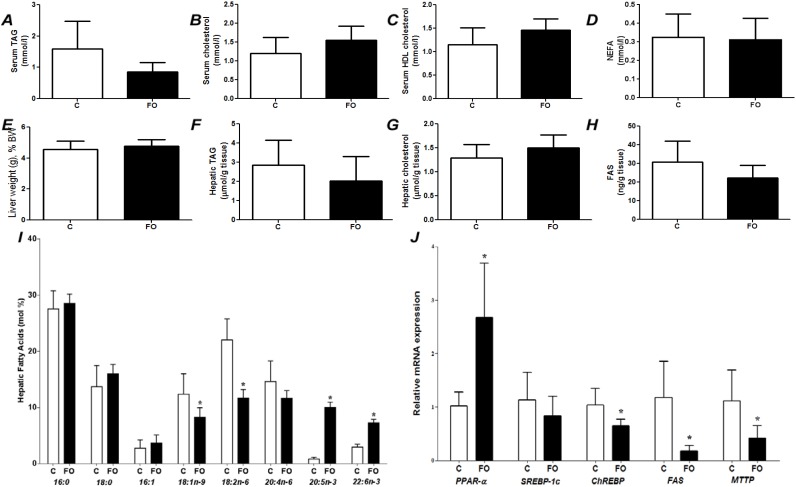
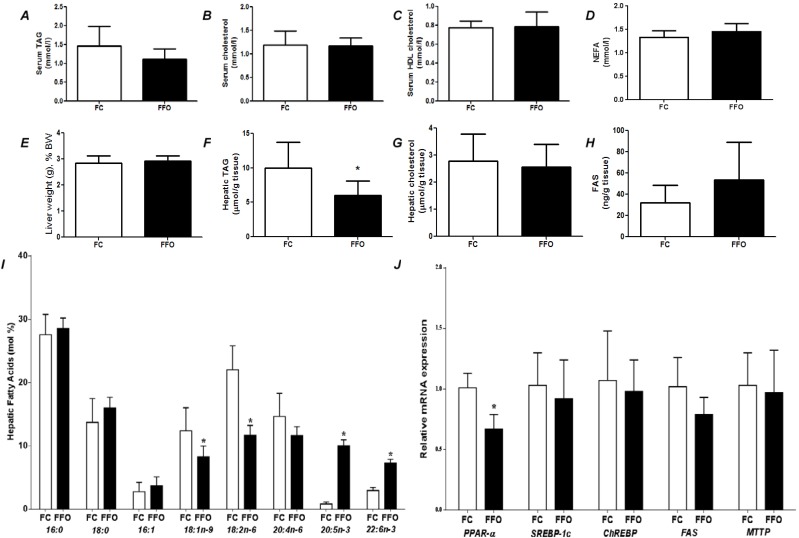
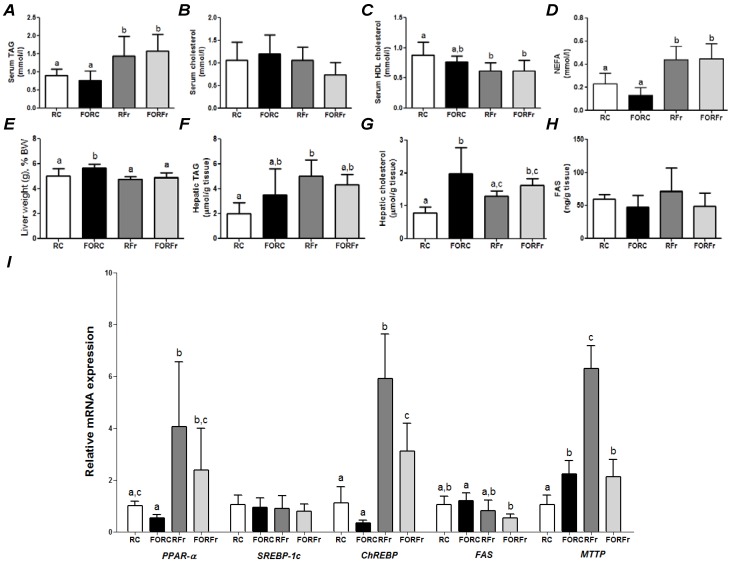
Fasting and then refeeding on a high-carbohydrate diet increases serum and hepatic triacylglycerol (TAG) concentrations compared to standard diets. Fructose is a lipogenic monosaccharide which stimulates de novo fatty acid synthesis. Omega-3 (n-3) fatty acids stimulate hepatic β-oxidation, partitioning fatty acids away from TAG synthesis. This study investigated whether dietary n-3 fatty acids from fish oil (FO) improve the hepatic lipid metabolic response seen in rats fasted and then refed on a high-fructose diet. During the post-prandial (fed) period, rats fed a FO rich diet showed an increase in hepatic peroxisome proliferator-activated receptor α (PPAR-α) gene expression and decreased expression of carbohydrate responsive element binding protein (ChREBP), fatty acid synthase (FAS) and microsomal triglyceride transfer protein (MTTP). Feeding a FO rich diet for 7 days prior to 48 h of fasting resulted in lower hepatic TAG, lower PPAR-α expression and maintenance of hepatic n-3 fatty acid content. Refeeding on a high fructose diet promoted an increase in hepatic and serum TAG and in hepatic PPAR-α, ChREBP and MTTP expression. FO did not prevent the increase in serum and hepatic TAG after fructose refeeding, but did decrease hepatic expression of lipogenic genes and increased the n-3 fatty acid content of the liver. n-3 Fatty acids can modify some components of the hepatic lipid metabolic response to later feeding with a high fructose diet.
Figures
References
-
- Inagaki T., Dutchak P., Zhao G., Ding X., Gautron L., Parameswara V., Li Y., Goetz R., Mohammadi M., Esser V., et al. Endocrine regulation of the fasting response by PPARalpha-mediated induction of fibroblast growth factor 21. Cell Metab. 2007;5:415–425. doi: 10.1016/j.cmet.2007.05.003. - DOI - PubMed
-
- Takahashi M., Tsuboyama-Kasaoka N., Nakatani T., Ishii M., Tsutsumi S., Aburatani H., Ezaki O. Fish oil feeding alters liver gene expressions to defend against PPARalpha activation and ROS production. Am. J. Physiol. Gastrointest. Liver Physiol. 2002;282:338–348. doi: 10.1152/ajpgi.00376.2001. - DOI - PubMed
-
- Yusof H.M., Cawood A.L., Ding R., Williams J.A., Napper F.L., Shearman C.P., Grimble R.F., Payne S.P., Calder P.C. Limited impact of 2 g/day omega-3 fatty acid ethyl esters (Omacor®) on plasma lipids and inflammatory markers in patients awaiting carotid endarterectomy. Mar. Drugs. 2013;11:3569–3581. doi: 10.3390/md11093569. - DOI - PMC - PubMed
Publication types
MeSH terms
Substances
LinkOut - more resources
Full Text Sources
Other Literature Sources
Medical
Research Materials
Miscellaneous
