


Synthetic mimics of the extracellular matrix: how simple is complex enough?
- PMID: 25753017
- PMCID: PMC4380864
- DOI: 10.1007/s10439-015-1297-4
Synthetic mimics of the extracellular matrix: how simple is complex enough?
Abstract
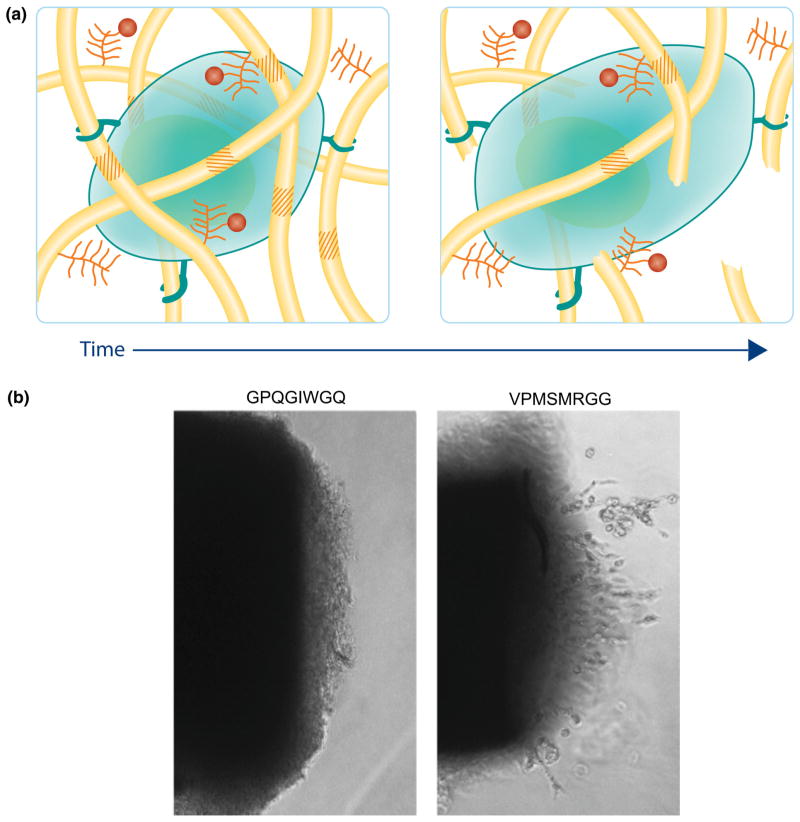
Cells reside in a complex and dynamic extracellular matrix where they interact with a myriad of biophysical and biochemical cues that direct their function and regulate tissue homeostasis, wound repair, and even pathophysiological events. There is a desire in the biomaterials community to develop synthetic hydrogels to recapitulate facets of the ECM for in vitro culture platforms and tissue engineering applications. Advances in synthetic hydrogel design and chemistries, including user-tunable platforms, have broadened the field's understanding of the role of matrix cues in directing cellular processes and enabled the design of improved tissue engineering scaffolds. This review focuses on recent advances in the development and fabrication of hydrogels and discusses what aspects of ECM signals can be incorporated to direct cell function in different contexts.
Figures
References
-
- Brennan AB, Kirschner CM Society for Biomaterials. Bio-Inspired Materials for Biomedical Engineering. New York: Wiley; 2014.
Publication types
MeSH terms
Substances
Grants and funding
LinkOut - more resources
Full Text Sources
Other Literature Sources
