


75% success rate after open debridement, exchange of tibial insert, and antibiotics in knee prosthetic joint infections
- PMID: 25753311
- PMCID: PMC4513601
- DOI: 10.3109/17453674.2015.1026756
75% success rate after open debridement, exchange of tibial insert, and antibiotics in knee prosthetic joint infections
Abstract
Background and purpose: Prosthetic joint infection (PJI) is a leading cause of early revision after total knee arthroplasty (TKA). Open debridement with exchange of tibial insert allows treatment of infection with retention of fixed components. We investigated the success rate of this procedure in the treatment of knee PJIs in a nationwide material, and determined whether the results were affected by microbiology, antibiotic treatment, or timing of debridement.
Patients and methods: 145 primary TKAs revised for the first time, due to infection, with debridement and exchange of the tibial insert were identified in the Swedish Knee Arthroplasty Register (SKAR). Staphylococcus aureus was the most common pathogen (37%) followed by coagulase-negative staphylococci (CNS) (23%). Failure was defined as death before the end of antibiotic treatment, revision of major components due to infection, life-long antibiotic treatment, or chronic infection.
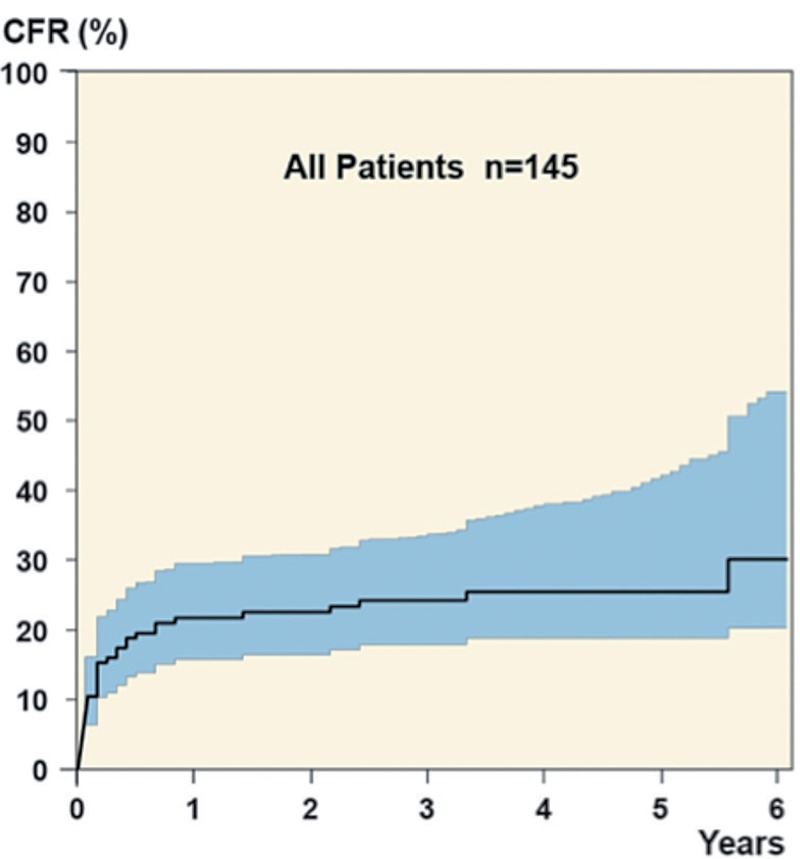
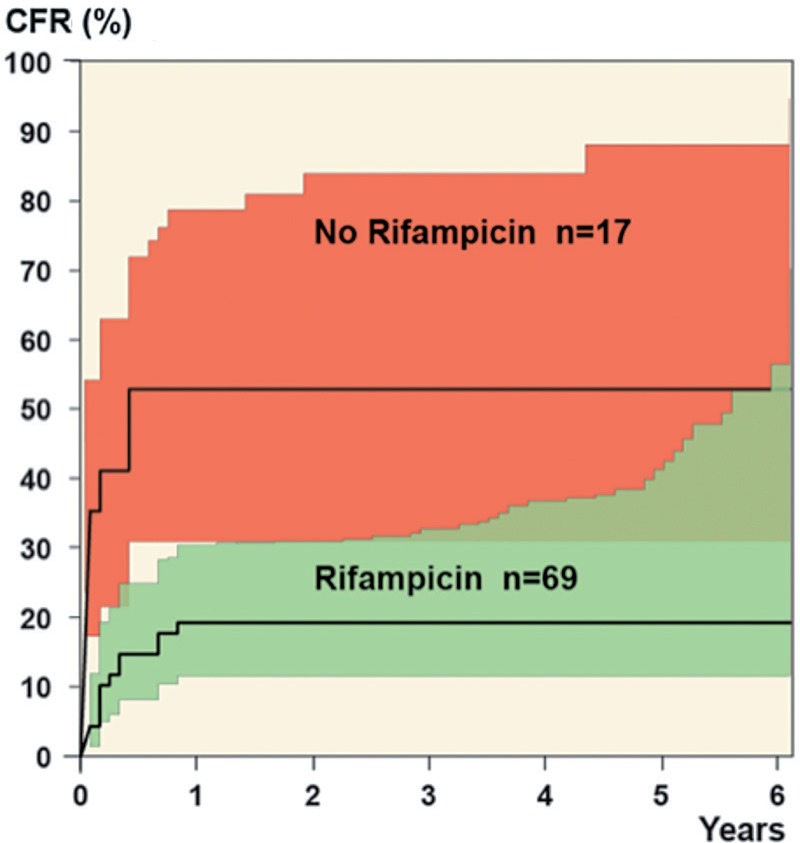
Results: The overall healing rate was 75%. The type of infecting pathogen did not statistically significantly affect outcome. Staphylococcal infections treated without a combination of antibiotics including rifampin had a higher failure rate than those treated with rifampin (RR = 4, 95% CI: 2-10). In the 16 cases with more than 3 weeks of symptoms before treatment, the healing rate was 62%, as compared to 77% in the other cases (p = 0.2). The few patients with a revision model of prosthesis at primary operation had a high failure rate (5 of 8).
Interpretation: Good results can be achieved by open debridement with exchange of tibial insert. It is important to use an antibiotic combination including rifampin in staphylococcal infections.
Figures
References
-
- Aboltins C, Dowsey MM, Buising KL, et al. Gram-negative prosthetic joint infection treated with debridement, prost... . Clin Microbiol Infect. 2011;17(6):862–7. - PubMed
-
- Achermann Y, Eigenmann K, Ledergerber B, et al. Factors associated with rifampin resistance in staphylococcal periprosth... . Infection. 2013;41(2):431–7. - PubMed
-
- Azzam KA, Seeley M, Ghanem E, Austin MS, Purtill JJ, Parvizi J. Irrigation and debridement in the management of prosthetic joint infecti... . J Arthroplasty. 2010;25(7):1022–7. - PubMed
-
- Barberán J, Aguilar L, Carroquino G, et al. Conservative treatment of staphylococcal prosthetic joint infections in ... . Am J Med. 2006;119(11):993e7–10. - PubMed
-
- Byren I, Bejon P, Atkins BL, et al. One hundred and twelve infected arthroplasties treated with “DAIR” (debr... . J Antimicrob Chemother. 2009;63(6):1264–71. - PMC - PubMed
MeSH terms
Substances
LinkOut - more resources
Full Text Sources
Other Literature Sources
Medical