


Serum microRNA-210 as a potential noninvasive biomarker for the diagnosis and prognosis of glioma
- PMID: 25756397
- PMCID: PMC4385967
- DOI: 10.1038/bjc.2015.91
Serum microRNA-210 as a potential noninvasive biomarker for the diagnosis and prognosis of glioma
Abstract
Background: MicroRNA-210 (miR-210) is an oncogenic miRNA previously associated with prognosis in human gliomas, an incurable tumour type of the central nervous system. Here miR-210 was investigated as a potential serum biomarker in the diagnosis and prognosis of glioma.
Methods: Serum was immediately prepared from blood samples collected from patients with glioma grades I-IV at primary diagnosis (n=136) and healthy controls (n=50) from February 2007 to March 2014 in the Department of Neurosurgery of the First Affiliated Hospital of Wannan Medical College (Wuhu, China). Total RNA was isolated from serum. cDNA was synthesised with primers specific for miR-210 and miR-16-1 (internal control), and quantitative real-time RT-PCR was performed. Results were statistically analysed to determine the role of miR-210 in the diagnosis and prognosis of human glioma patients.
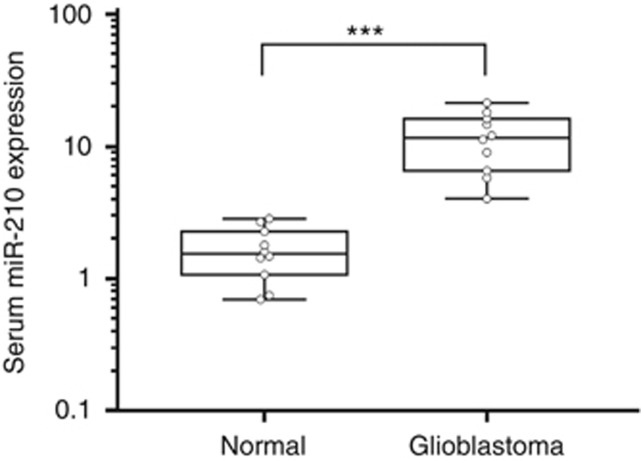
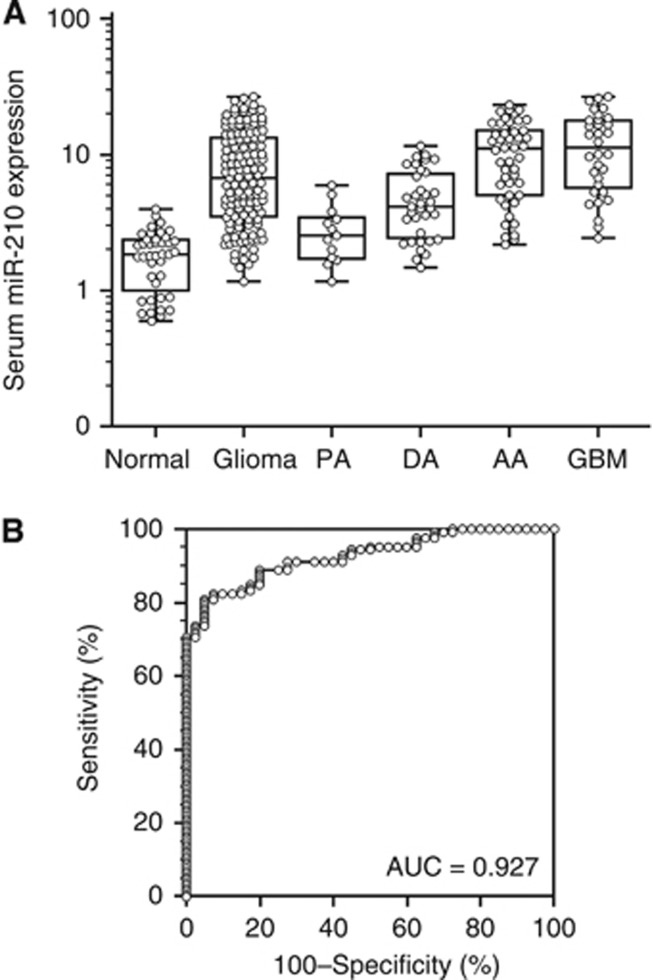
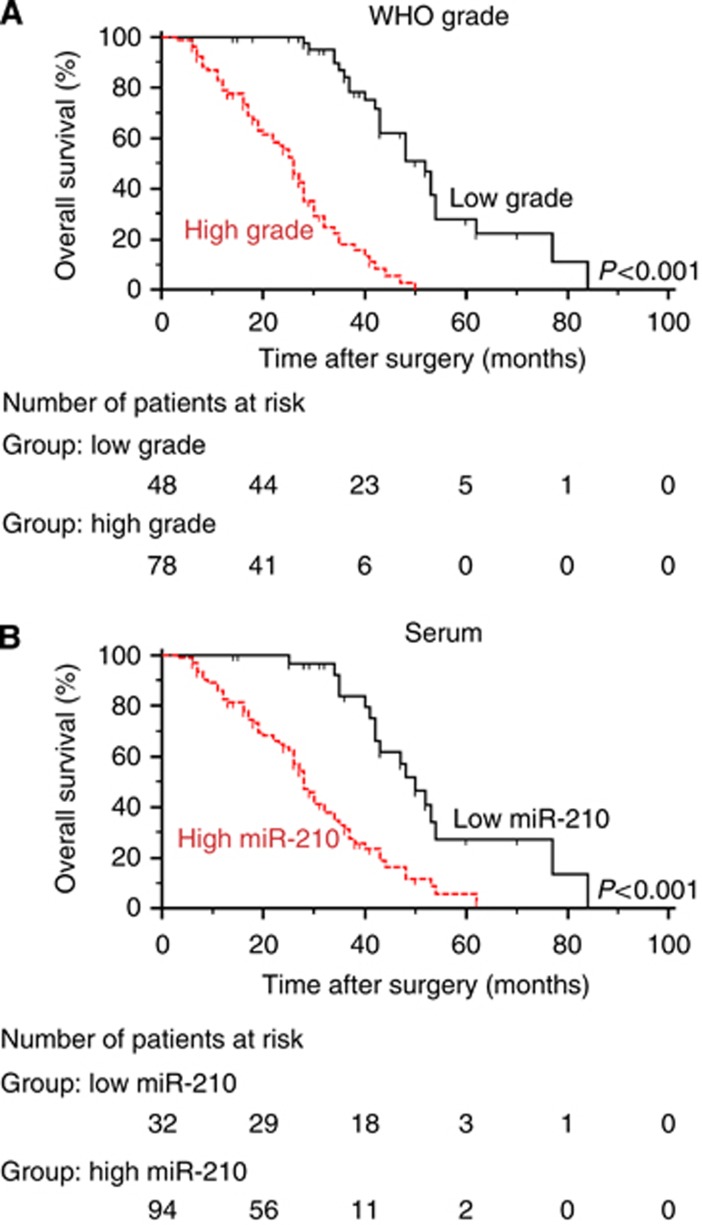
Results: An approximately seven-fold increase in miR-210 expression was detected in serum samples from glioblastoma patients relative to healthy controls. A threshold expression value (2.259) was chosen from receiver operator characteristic curves (ROC), and the low and high miR-210 expression groups were analysed by multivariate Cox proportional hazard regression and Kaplan-Meier analyses. Results revealed an association of high serum miR-210 expression with tumour grade and poor patient outcome (P-values <0.001).
Conclusions: Serum miR-210 is a promising diagnostic and prognostic biomarker that can be detected in the peripheral blood of patients with glioma.
Figures
References
-
- Auffinger B, Thaci B, Ahmed A, Ulasov I, Lesniak MS. MicroRNA targeting as a therapeutic strategy against glioma. Curr Mol Med. 2013;13:535–542. - PubMed
-
- Chen Z, Li Y, Zhang H, Huang P, Luthra R. Hypoxia-regulated microRNA-210 modulates mitochondrial function and decreases ISCU and COX10 expression. Oncogene. 2010;29:4362–4368. - PubMed
-
- Chio CC, Lin JW, Cheng HA, Chiu WT, Wang YH, Wang JJ, Hsing CH, Chen RM. MicroRNA-210 targets antiapoptotic bcl-2 expression and mediates hypoxia-induced apoptosis of neuroblastoma cells. Arch Toxicol. 2013;87:459–468. - PubMed
-
- Cui H, Seubert B, Stahl E, Dietz H, Reuning U, Moreno-Leon L, Ilie M, Hofman P, Nagase H, Mari B, Kruger A. Tissue inhibitor of metalloproteinases-1 induces a pro-tumourigenic increase of miR-210 in lung adenocarcinoma cells and their exosomes. Oncogene. 2014;29:300. - PubMed
Publication types
MeSH terms
Substances
LinkOut - more resources
Full Text Sources
Other Literature Sources
