


Dermatopathologists' concerns and challenges with clinical information in the skin biopsy requisition form: a mixed-methods study
- PMID: 25757028
- PMCID: PMC4701217
- DOI: 10.1111/cup.12485
Dermatopathologists' concerns and challenges with clinical information in the skin biopsy requisition form: a mixed-methods study
Abstract
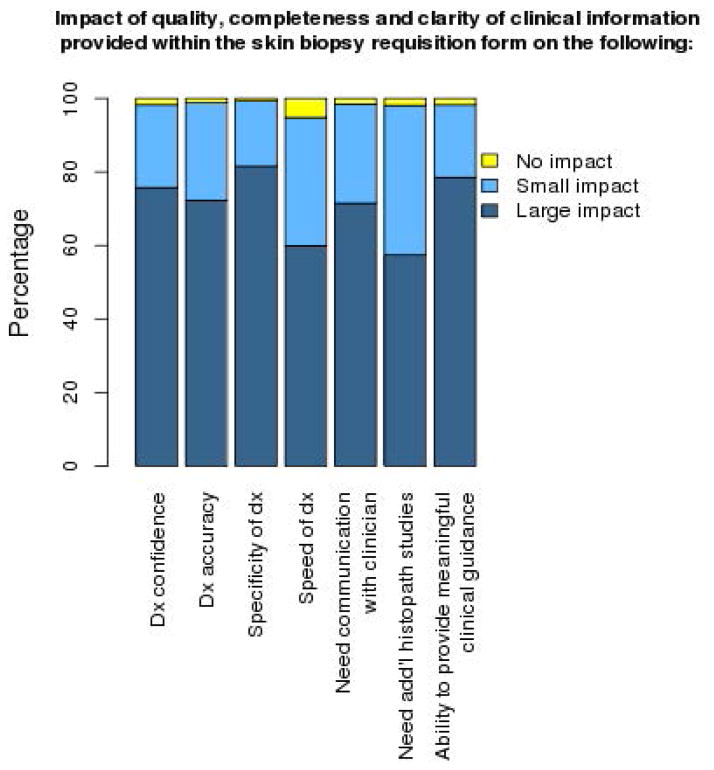
Background: Communication failures between clinicians and dermatopathologists are prevalent. Our primary objective was to characterize the concerns and challenges of dermatopathologists posed by incomplete or inaccurate clinical information in the skin biopsy requisition form.
Methods: An explanatory sequential, mixed-methods study design comprised of a survey sent to 1103 members of the American Society of Dermatopathology (ASDP), followed by two focus group sessions.
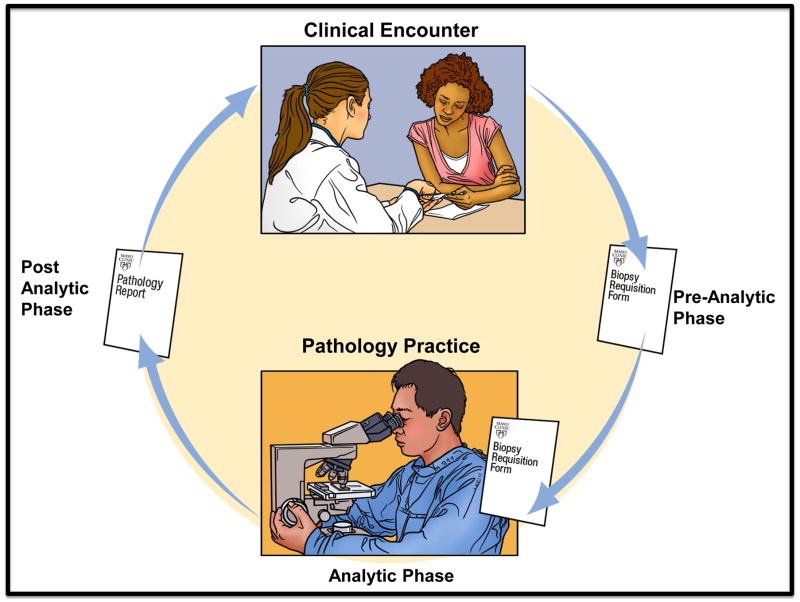
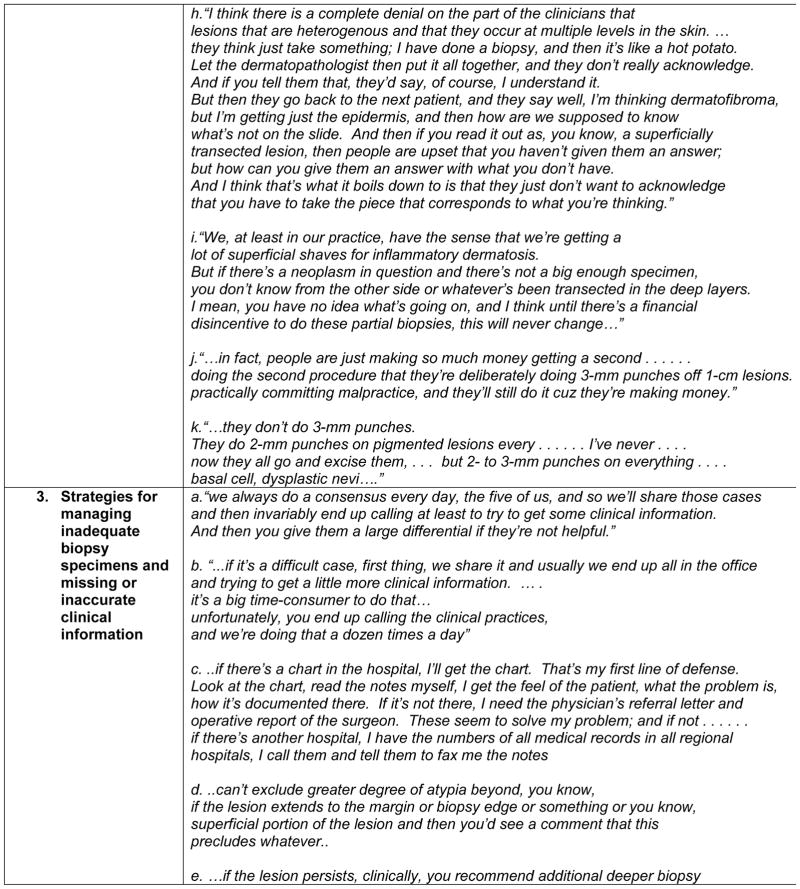
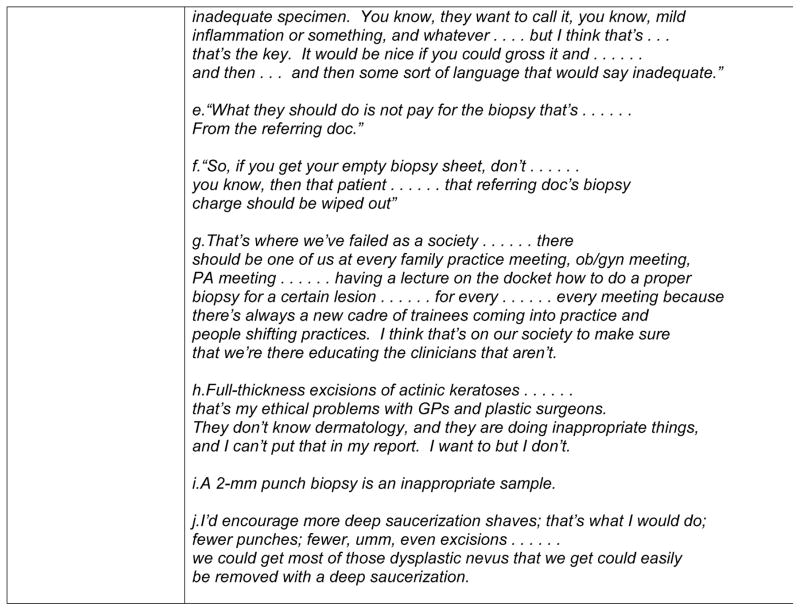
Results: A total of 54% (598/1103) of dermatopathologists completed the questionnaire. Most dermatopathologists (80%; 436/548) viewed their roles to be providers of histopathological diagnosis and a report that is clinically meaningful. Paper or electronic requisition forms were the most common communication method (85%; 458/541) and were associated with the highest rates of dissatisfaction in 36% (193/537) of respondents. Inadequacy of specimens emerged as an important factor influencing judgment of the quality of provided clinical information. 44.7% (261/584) of dermatopathologists spent 30 minutes or more on average every day searching for relevant clinical information to assist with their histopathologic interpretation.
Conclusion: ASDP dermatopathologists expressed significant dissatisfaction with the quality of clinical information in the requisition form and the time spent gathering information necessary for accurate, timely and clinically meaningful diagnosis. These findings have implications for the quality, safety and efficiency of dermatologic care.
Keywords: dermatologist; dermatology; dermatopathology.
© 2015 John Wiley & Sons A/S. Published by John Wiley & Sons Ltd.
Conflict of interest statement
Figures

References
-
- Joint Commission Center for Transforming Healthcare. The Joint Commission Sentinel Event Data Unit. http://www.centerfortransforminghealthcare.org/assets/4/6/CTH_Hand-off_c....
-
- Hollensead SC, Lockwood WB, Elin RJ. Errors in pathology and laboratory medicine: consequences and prevention. J Surg Oncol. 2004;88:161–181. - PubMed
-
- Smith ML, Raab SS, Fernald DH. Evaluating the connections between primary care practice and clinical laboratory testing. Arch Pathol Lab Med. 2013;137:120–125. - PubMed
-
- Graber ML. Next steps: envisioning a research agenda. Adv Health Sci Educ Theory Pract. 2009;14(Suppl 1):107–12. - PubMed
-
- Schiff GD, Hasan O, Kim S, Abrams R, Cosby K, Lambert BL, et al. Diagnostic error in medicine: analysis of 583 physician-reported errors. Arch Intern Med. 2009;169:1881–7. - PubMed
Publication types
MeSH terms
Grants and funding
LinkOut - more resources
Full Text Sources
Other Literature Sources
