Review
. 2015 Nov;32(11):3526-40.
doi: 10.1007/s11095-015-1657-7. Epub 2015 Mar 11.

Current ADC Linker Chemistry

Affiliations
Review

Current ADC Linker Chemistry

Nareshkumar Jain et al. Pharm Res. 2015 Nov.

Abstract

The list of ADCs in the clinic continues to grow, bolstered by the success of first two marketed ADCs: ADCETRIS® and Kadcyla®. Currently, there are 40 ADCs in various phases of clinical development. However, only 34 of these have published their structures. Of the 34 disclosed structures, 24 of them use a linkage to the thiol of cysteines on the monoclonal antibody. The remaining 10 candidates utilize chemistry to surface lysines of the antibody. Due to the inherent heterogeneity of conjugation to the multiple lysines or cysteines found in mAbs, significant research efforts are now being directed toward the production of discrete, homogeneous ADC products, via site-specific conjugation. These site-specific conjugations may involve genetic engineering of the mAb to introduce discrete, available cysteines or non-natural amino acids with an orthogonally-reactive functional group handle such as an aldehyde, ketone, azido, or alkynyl tag. These site-specific approaches not only increase the homogeneity of ADCs but also enable novel bio-orthogonal chemistries that utilize reactive moieties other than thiol or amine. This broadens the diversity of linkers that can be utilized which will lead to better linker design in future generations of ADCs.

Keywords: ADC; ADC clinical candidates; antibody-drug conjugates; bioconjugates; linker chemistry.


Figures
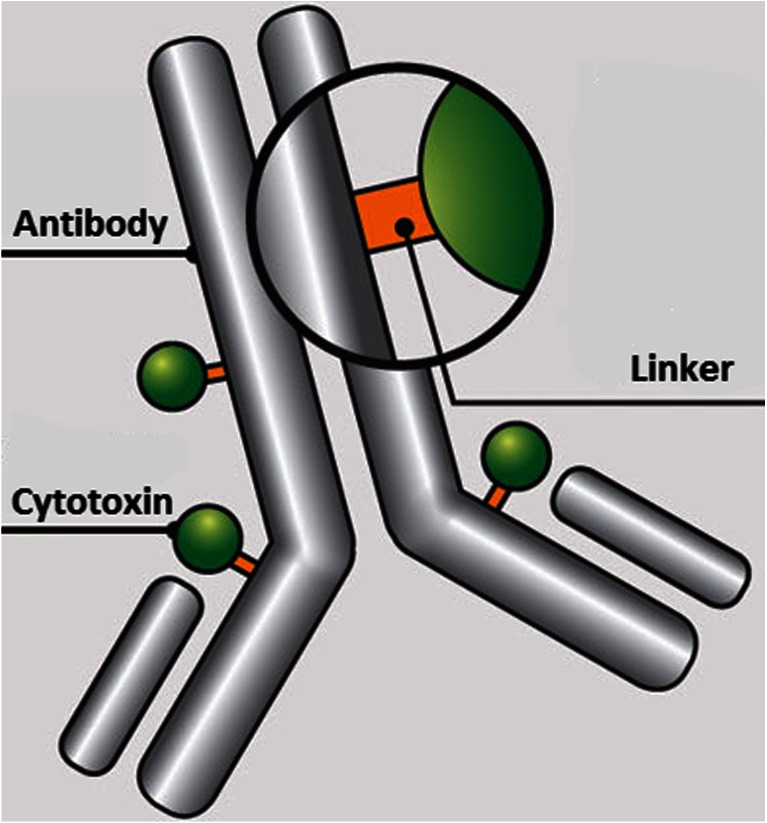
Fig. 1
Fig. 1
Schematic of an ADC containing an antibody onto which is covalently attached a linker which in turn is covalently attached to a cytotoxin.
Fig. 2
Fig. 2
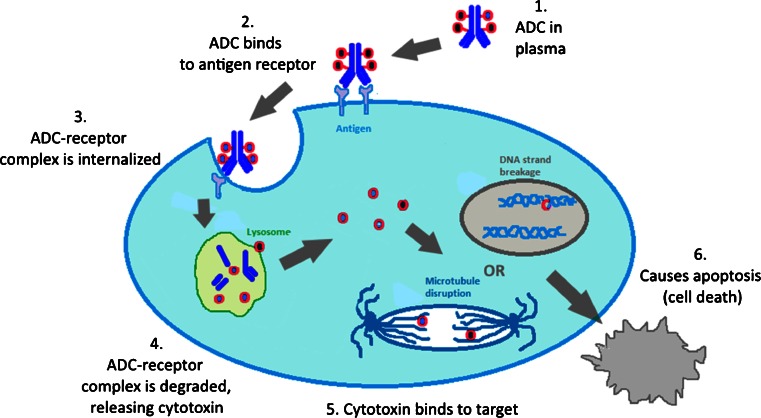
Mechanism of action of ADCs: The antibody portion of an ADC hones onto a cell-surface antigen that is ideally specific to a cancer cell. Upon binding, the ADC-antigen protein complex becomes internalized into the cancer cell. When the complex is degraded, it releases the cytotoxin which then binds to its target to cause cancer cell apoptosis.
Fig. 3
Fig. 3
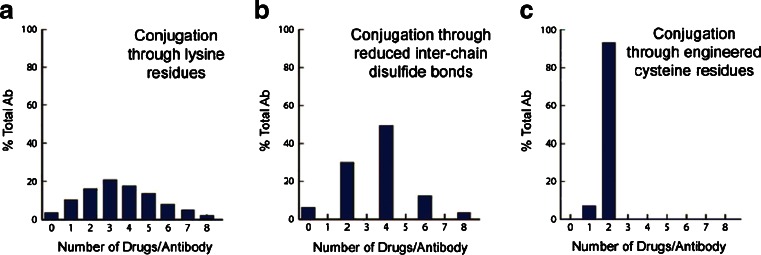
(11) Heterogeneity observed through different means of antibody-payload conjugation. Panel A depicts conjugation through lysines. Since approximately 30 of the 80 lysines on an IgG1 are available for conjugation, several species containing different drug-antibody ratios (DAR) are formed. Panel B depicts the reduced hetereogeneity of conjugation through reduced disulfides. Panel C indicates that a DAR of 1 or 2 is obtained via attachment of the cytotoxin to engineered cysteines
Fig. 4
Fig. 4
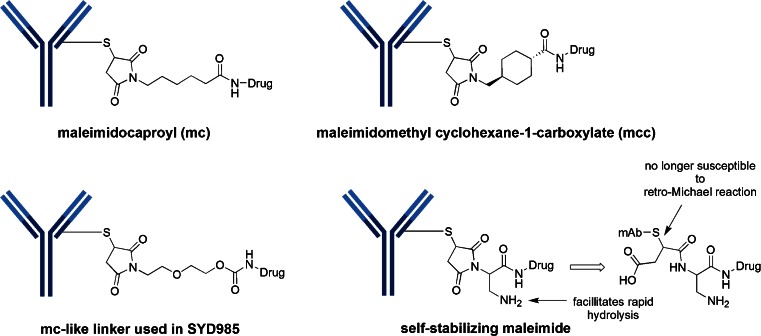
Maleimide chemistry has been the mainstay for linkage to cysteines. Two common variants are the maleimidocaproyl (mc) and maleimidomethyl cyclohexane-1-carboxylate (mcc). Also illustrated is the self-stabilizing maleimide construct designed to prevent early release of the cytotoxin via retro-Michael reaction
Fig. 5
Fig. 5
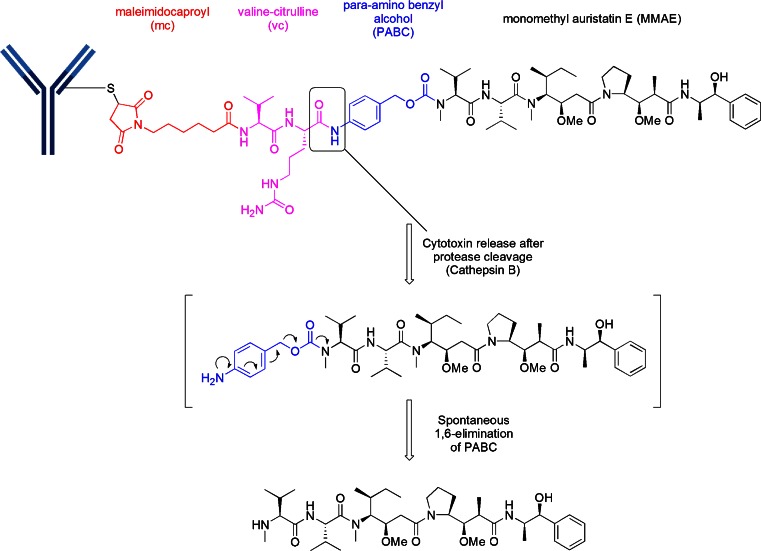
A common structure for MMAE linkage has been the use of “mc” attached to a protease recognition sequence of valine-citrulline (vc), which in turn is attached to a para-amino benzyl alcohol (self-immolative moiety)
Fig. 6
Fig. 6
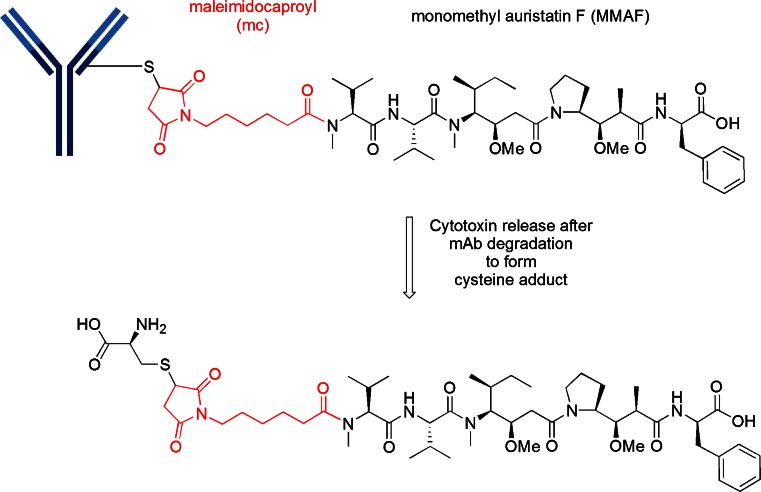
Construct of a mc-MMAF ADC
Fig. 7
Fig. 7
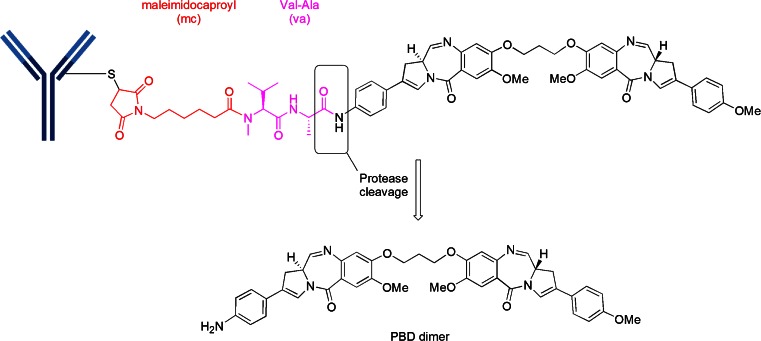
Construct of PBD dimer ADCs. The mc-va-PBD dimer construct is utilized in both clinical ADCs
Fig. 8
Fig. 8
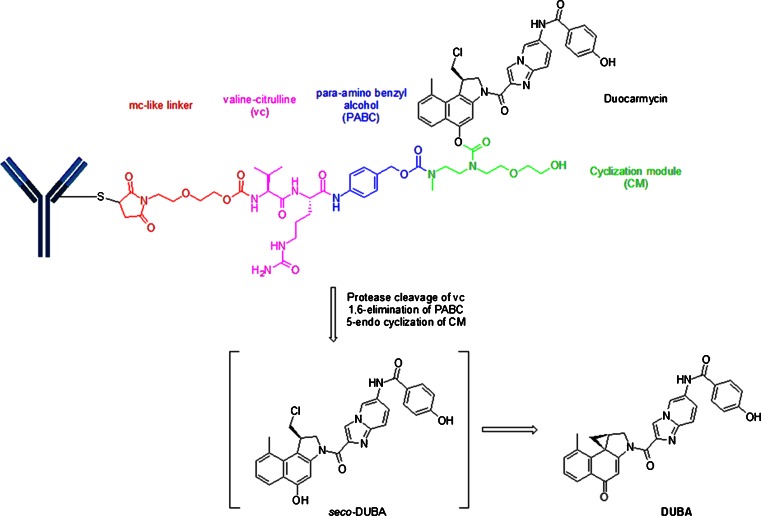
“mc”-vc-PABC-CM-seco-DUBA (SYD985) construct
Fig. 9
Fig. 9
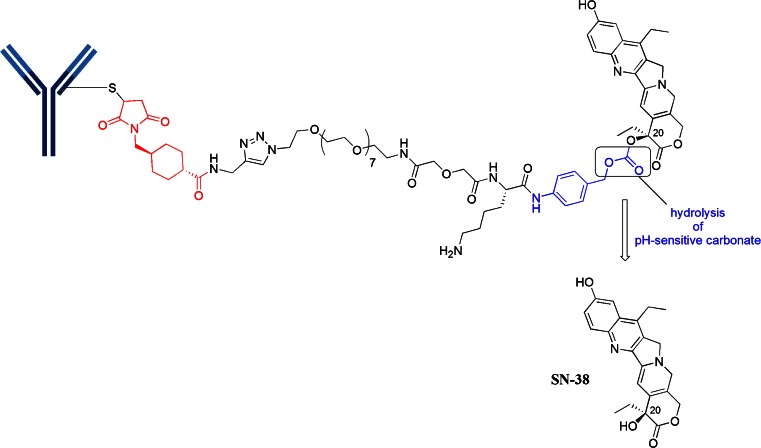
mcc-triazole spacer-PEG7-x-Lys-PABC-SN-38 motif
Fig. 10
Fig. 10
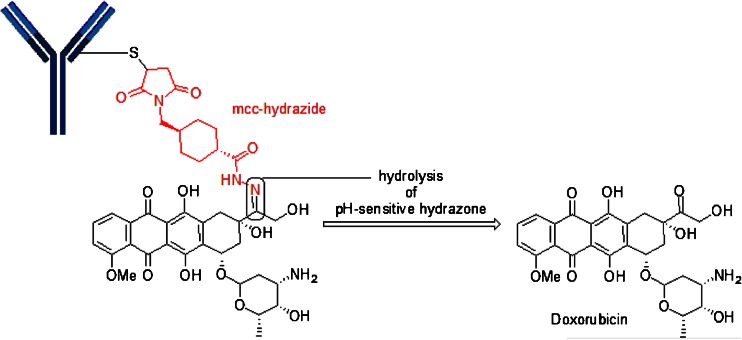
Illustrates the use of mcc in an acyl-hydrazone structure found in Milatuzumab-Doxorubicin
Fig. 11
Fig. 11
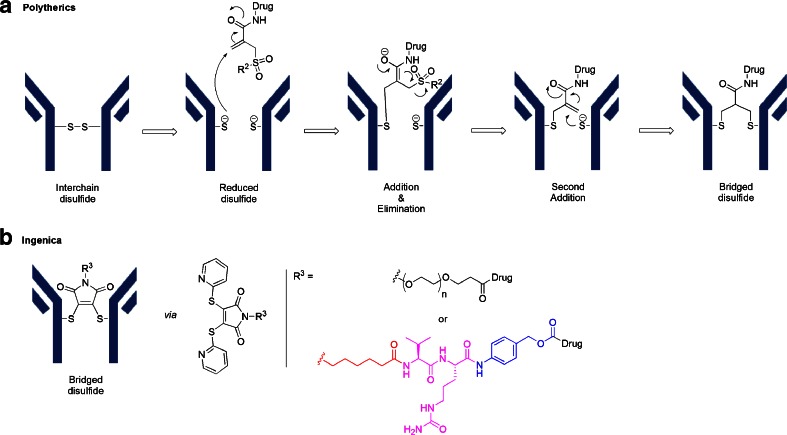
Panel A describes 3-carbon bridge by PolyTherics and Panel B describes 2-carbon bridge by Igenica
Fig. 12
Fig. 12
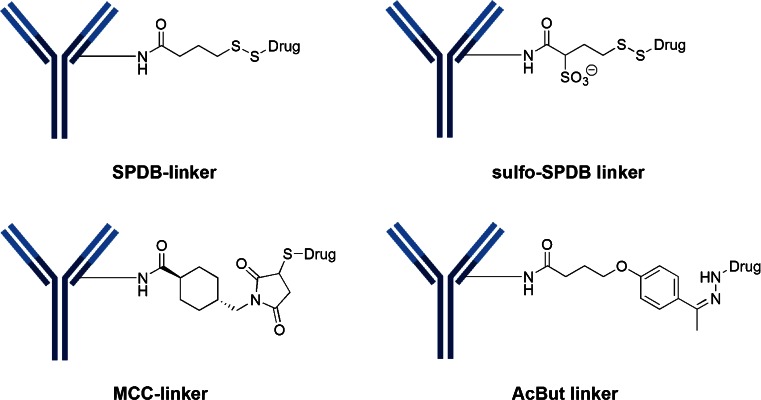
Lysine linkers involve the formation of amides with the ε-amino group of lysine. The most common linkers found in current clinical candidates have been MCC and SPDB, which are both uncharged, lipophilic linkers. Recent research has focused on the introduction of charged, hydrophilic groups, like sulfo-SPDB to minimize aggregation tendencies
Fig. 13
Fig. 13
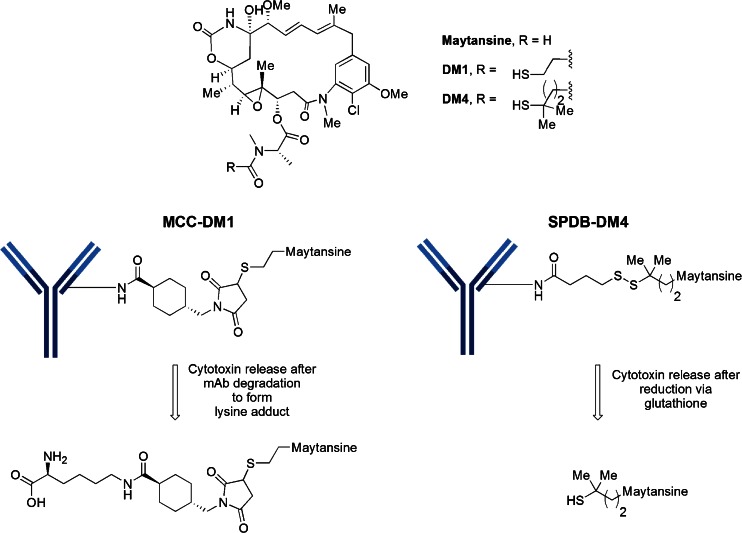
MCC-DM1 and SPDB-DM4 motifs used in the clinical candidates listed in Table IV
Fig. 14
Fig. 14
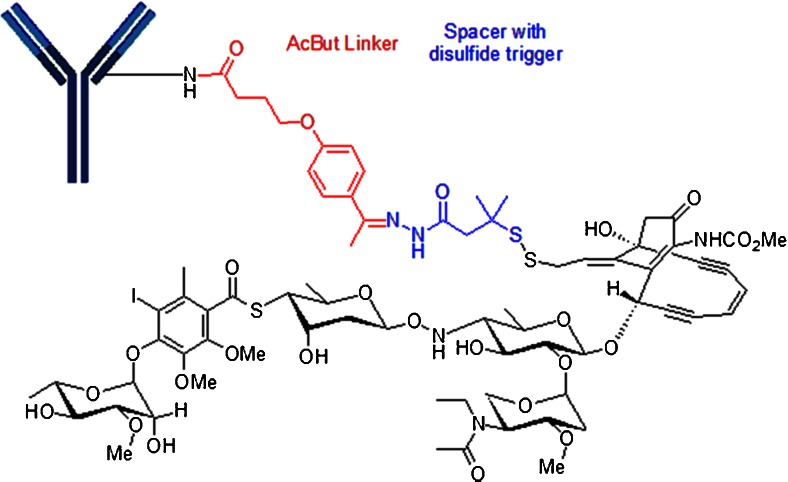
Construct of AcBut-N-Ac-γ-calicheamicin. CMC-544 utilizes an AcBut (4-(4-acetylphenoxy)butanoic acid) linked to an acyl hydrazide derivative of γ-calicheamicin. The acyl hydrazide is produced by the displacement of the methyltrisulfide moiety of γ-calicheamicin with 3-mercapto-3-methylbutyryl hydrazide, termed N-acetyl γ-calicheamicin dimethyl hydrazide.
Fig. 15
Fig. 15
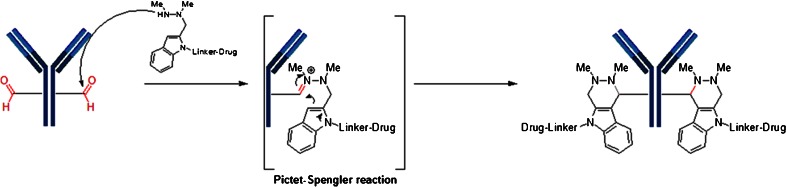
Conjugation based on the production of an aldehyde containing antibody using formylglycine generating enzyme (FGE), an enzyme recognizing the sequence CxPxR and oxidizing the cysteine residue to form formylglycine. The aldehyde is reacted with a cytotoxin-linked indole hydrazine to form a hydrolytically-stable conjugate (Hydrazino-Pictet-Spengler Reaction).
Fig. 16
Fig. 16
Antibody engineered to contain an non-natural amino acid containing an azido group which can undergo click chemistry with an alkyne-containing linker-drug.

References

    1. Schwartz RS. Paul Ehrlich’s magic bullets. N Engl J Med. 2004;350:1079–80. doi: 10.1056/NEJMp048021. - DOI - PubMed
    1. Lapusan S, Vidriales MB, Thomas X, de Botton S, Vekhoff A, Tang R, et al. Phase I studies of AVE9633, an anti-CD33 antibody-maytansinoid conjugate, in adult patients with relapsed/refractory acute myeloid leukemia. Investig New Drugs. 2012;30:1121–31. doi: 10.1007/s10637-011-9670-0. - DOI - PubMed
    1. Lonberg N. Human antibodies from transgenic animals. Nat Biotechnol. 2005;23:1117–25. doi: 10.1038/nbt1135. - DOI - PubMed
    1. Teicher BA, Chari RVJ. Antibody conjugate therapeutics: challenges and potential. Clin Cancer Res. 2011;17:6389–97. doi: 10.1158/1078-0432.CCR-11-1417. - DOI - PubMed
    1. Trail PA. Antibody drug conjugates as cancer therapeutics. Antibodies. 2013;2:113–29. doi: 10.3390/antib2010113. - DOI

MeSH terms