


A mutation in FRIZZLED2 impairs Wnt signaling and causes autosomal dominant omodysplasia
- PMID: 25759469
- PMCID: PMC4834928
- DOI: 10.1093/hmg/ddv088
A mutation in FRIZZLED2 impairs Wnt signaling and causes autosomal dominant omodysplasia
Abstract
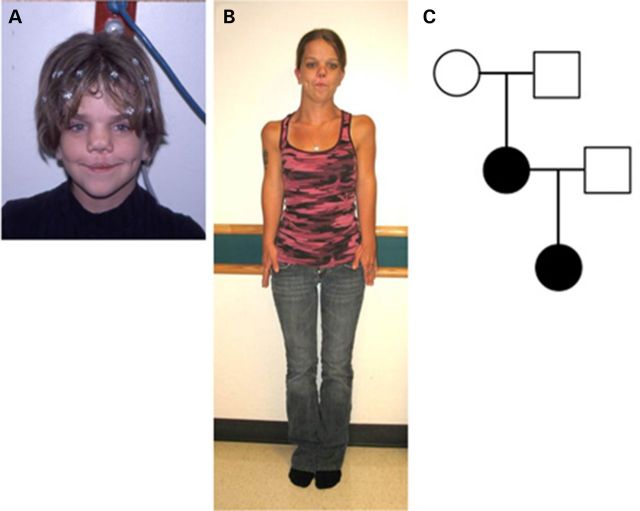
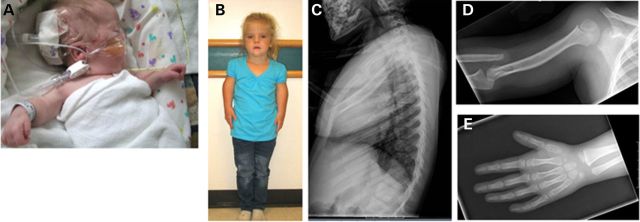
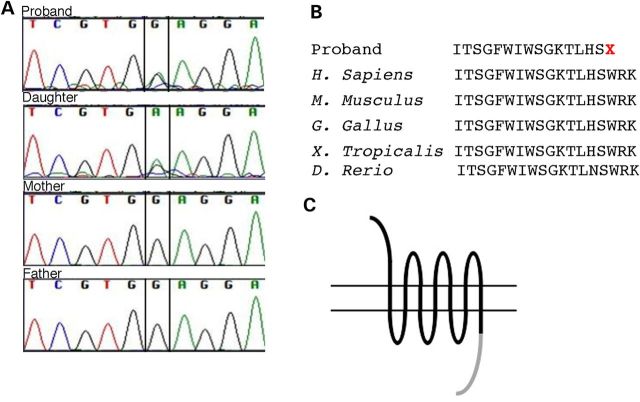
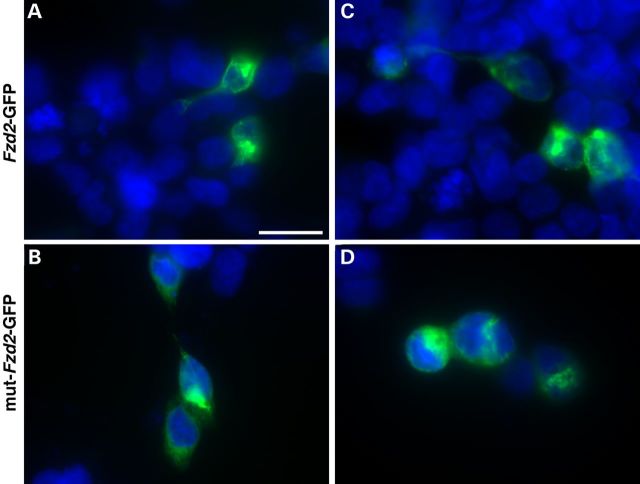
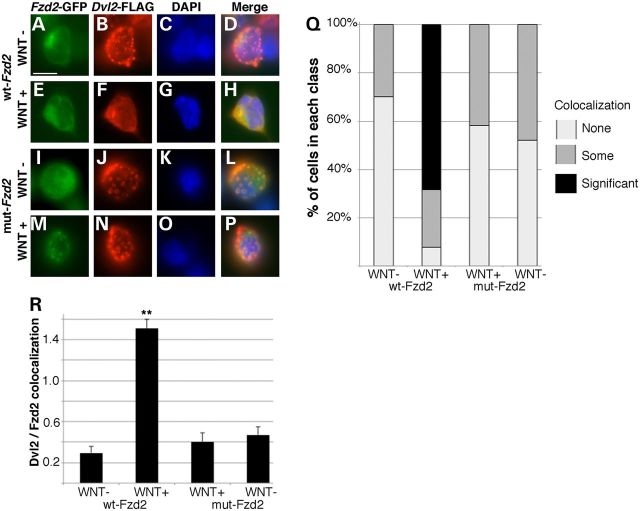
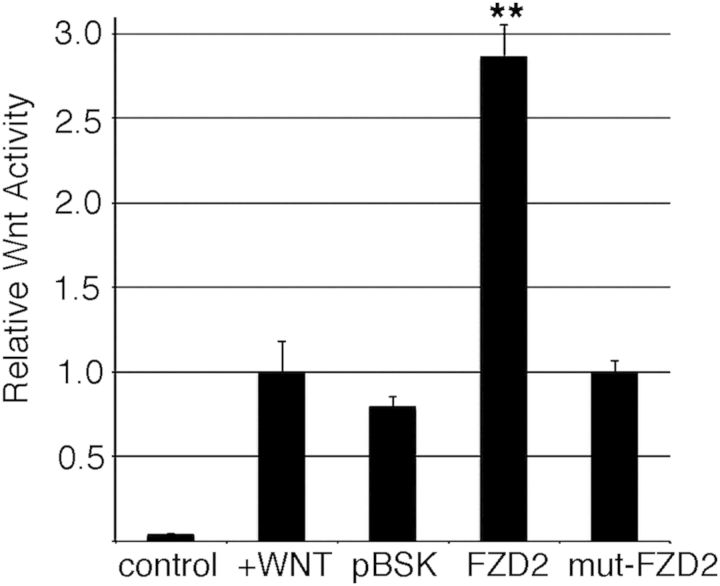
Autosomal dominant omodysplasia is a rare skeletal dysplasia characterized by short humeri, radial head dislocation, short first metacarpals, facial dysmorphism and genitourinary anomalies. We performed next-generation whole-exome sequencing and comparative analysis of a proband with omodysplasia, her unaffected parents and her affected daughter. We identified a de novo mutation in FRIZZLED2 (FZD2) in the proband and her daughter that was not found in unaffected family members. The FZD2 mutation (c.1644G>A) changes a tryptophan residue at amino acid 548 to a premature stop (p.Trp548*). This altered protein is still produced in vitro, but we show reduced ability of this mutant form of FZD2 to interact with its downstream target DISHEVELLED. Furthermore, expressing the mutant form of FZD2 in vitro is not able to facilitate the cellular response to canonical Wnt signaling like wild-type FZD2. We therefore conclude that the FRIZZLED2 mutation is a de novo, novel cause for autosomal dominant omodysplasia.
© The Author 2015. Published by Oxford University Press. All rights reserved. For Permissions, please email: journals.permissions@oup.com.
Figures
References
-
- Maroteaux P., Sauvegrain J., Chrispin A., Farriaux J.P. (1989) Omodysplasia. Am. J. Med. Genet., 32, 371–375. - PubMed
-
- Venditti C.P., Farmer J., Russell K.L., Friedrich C.A., Alter C., Canning D., Whitaker L., Mennuti M.T., Driscoll D.A., Zackai E.H. (2002) Omodysplasia: an affected mother and son. Am. J. Med. Genet., 111, 169–177. - PubMed
-
- Gordon B.L., Champaigne N.L., Rogers R.C., Frias J.L., Leroy J.G. (2014) Long-term observation of a patient with dominant omodysplasia. Am. J. Med. Genet. Part A, 164A, 1234–1238. - PubMed
-
- Olney A., Thomas J., Anderson R., Murphy M., Hastrom J. (1990) Autosomal dominant Robinow syndrome wth rhizomelic brachymelia. Proc. Greenwood Genet. Ctr., 9, 72–73.
-
- Borochowitz Z., Sabo E., Misselevitch I., Boss J.H. (1998) Autosomal-recessive omodysplasia: prenatal diagnosis and histomorphometric assessment of the physeal plates of the long bones. Am. J. Med. Genet., 76, 238–244. - PubMed
Publication types
MeSH terms
Substances
Supplementary concepts
Grants and funding
LinkOut - more resources
Full Text Sources
Other Literature Sources
Molecular Biology Databases
Research Materials
