Bacterial cell wall components regulate adipokine secretion from visceral adipocytes
- PMID: 25759521
- PMCID: PMC4345181
- DOI: 10.3164/jcbn.14-74
Bacterial cell wall components regulate adipokine secretion from visceral adipocytes
Abstract
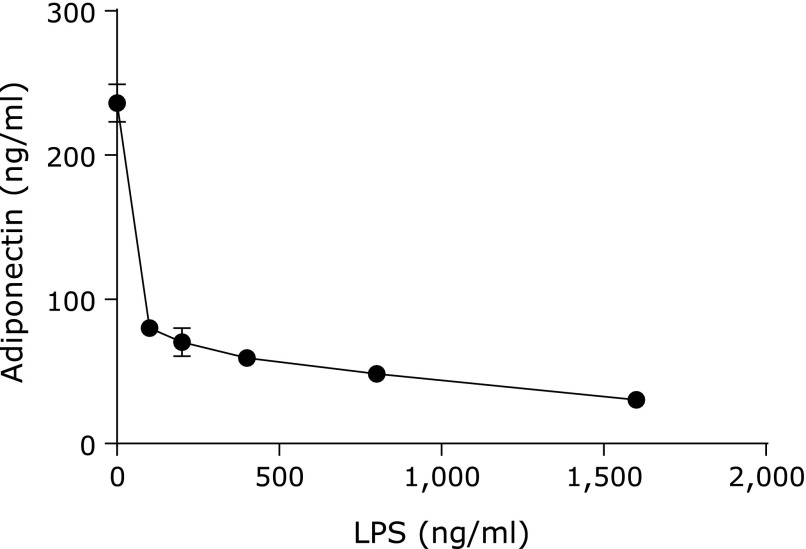
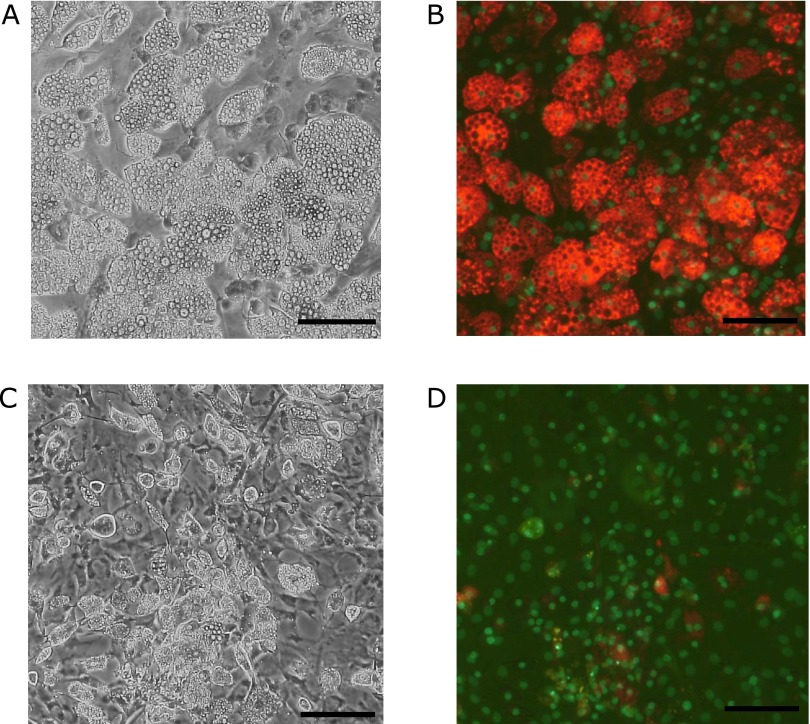
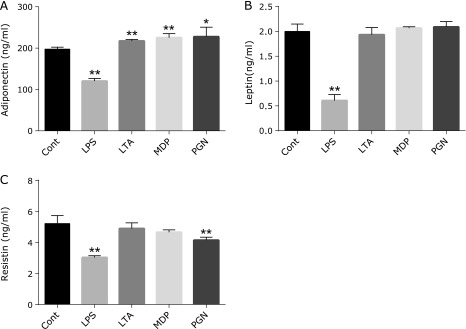
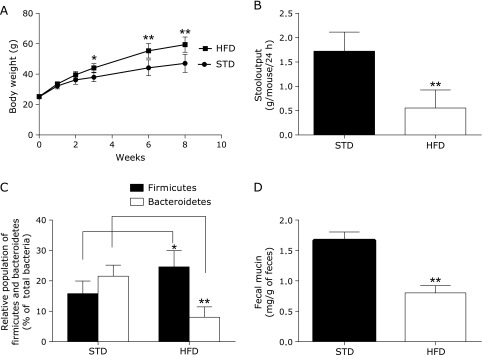
Recent studies suggest a relationship between intestinal microbiota and metabolic syndromes; however, the underlying mechanism remains unclear. To clarify this issue, we assessed the effects of bacterial cell wall components on adiponectin, leptin and resistin secretion from rat visceral adipocytes in vitro. We also measured the relative population of Firmicutes and Bacteroidetes in fecal microbiota and the amount of fecal mucin as an intestinal barrier function, when mice were fed a high-fat diet. In the present study, we demonstrated that bacterial cell wall components affect the secretion of adipokines, depending on the presence of antigens from gram-positive or gram-negative bacteria. Lipopolysaccharide markedly inhibited adiponectin, leptin, and resistin secretion, whereas peptidoglycan increased adiponectin secretion and decreased resistin secretion in vitro. In vivo experiments showed that the high-fat diet increased the population of Firmicutes and decreased that of Bacteroidetes. In contrast, the high-fat diet downregulated the stool output and fecal mucin content. These results demonstrate that bacterial cell wall components affect the onset of metabolic syndromes by mediating the secretion of adipokines from visceral adipose tissue. Furthermore, we believe that metabolic endotoxemia is not due to the increasing dominance of gram-negative bacteria, Bacteroidetes, but due to the depression of intestinal barrier function.
Keywords: adipokine secretion; gut microbiota; lipopolysaccharide; peptidoglycan; visceral adipocyte.
Figures
References
-
- Mitsuoka T. The effect of nutrition on intestinal flora. Nahrung. 1984;28:619–625. - PubMed
-
- Gibson GR, Roberfroid MB. Dietary modulation of the human colonic microbiota: introducing the concept of prebiotics. J Nutr. 1995;125:1401–1412. - PubMed
-
- Membrez M, Blancher F, Jaquet M, et al. Gut microbiota modulation with norfloxacin and ampicillin enhances glucose tolerance in mice. FASEB J. 2008;22:2416–2426. - PubMed
-
- Cani PD, Amar J, Iglesias MA, et al. Metabolic endotoxemia initiates obesity and insulin resistance. Diabetes. 2007;56:1761–1772. - PubMed
LinkOut - more resources
Full Text Sources
Other Literature Sources