. 2015 Mar 11;11(3):e1005043.
doi: 10.1371/journal.pgen.1005043. eCollection 2015 Mar.

Effects on murine behavior and lifespan of selectively decreasing expression of mutant huntingtin allele by supt4h knockdown

Affiliations

Effects on murine behavior and lifespan of selectively decreasing expression of mutant huntingtin allele by supt4h knockdown

Hui-Min Cheng et al. PLoS Genet. .

Abstract

Production of protein containing lengthy stretches of polyglutamine encoded by multiple repeats of the trinucleotide CAG is a hallmark of Huntington's disease (HD) and of a variety of other inherited degenerative neurological and neuromuscular disorders. Earlier work has shown that interference with production of the transcription elongation protein SUPT4H results in decreased cellular capacity to transcribe mutant huntingtin gene (Htt) alleles containing long CAG expansions, but has little effect on expression of genes containing short CAG stretches. zQ175 and R6/2 are genetically engineered mouse strains whose genomes contain human HTT alleles that include greatly expanded CAG repeats and which are used as animal models for HD. Here we show that reduction of SUPT4H expression in brains of zQ175 mice by intracerebroventricular bolus injection of antisense 2'-O-methoxyethyl oligonucleotides (ASOs) directed against Supt4h, or in R6/2 mice by deletion of one copy of the Supt4h gene, results in a decrease in mRNA and protein encoded specifically by mutant Htt alleles. We further show that reduction of SUPT4H in mouse brains is associated with decreased HTT protein aggregation, and in R6/2 mice, also with prolonged lifespan and delay of the motor impairment that normally develops in these animals. Our findings support the view that targeting of SUPT4H function may be useful as a therapeutic countermeasure against HD.


Conflict of interest statement

The authors have declared that no competing interests exist.

Figures
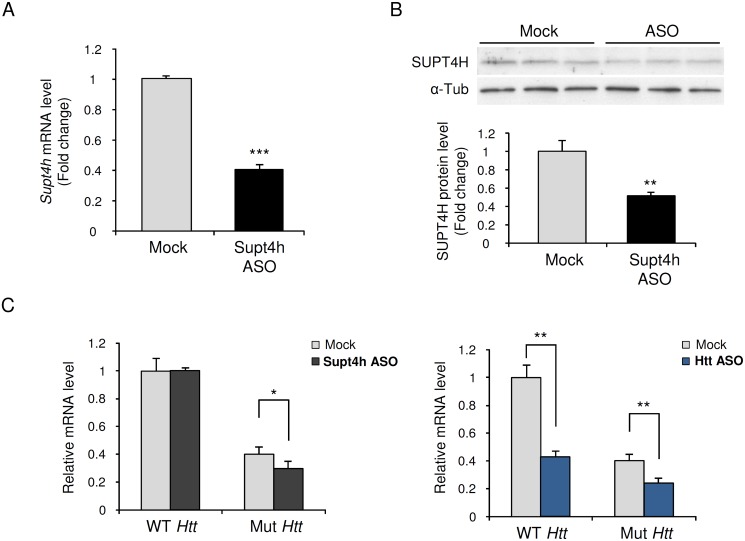
Fig 1
Fig 1. Effect of down regulation by Supt4h ASO on expression of mutant and wild-type Htt alleles in zQ175 HD mice.
Supt4h ASO was delivered to the brain of zQ175 HD mice by intracerebroventricular (ICV) bolus injection. ASO became distributed throughout CNS via cerebral spinal fluid circulation, and as observed previously [18] the spinal cord most susceptible to its effects. Mice were sacrificed 4 weeks after a single injection at the age of 5.5 months and spinal cords were collected for analyses of ASO effects. (A) Supt4h transcript abundance was assessed by quantitative RT-PCR. mRNA level in tissue obtained from PBS-treated zQ175 mice (mock) was set to 1, and relative Supt4h mRNA level in tissue from ASO-treated animals is shown. (B) SUPT4H protein level in tissue analyzed in (A) for mRNA abundance was examined by Western blot analysis. After normalization using α-Tubulin, the protein level was compared to mock control. (C) Left, wild-type (WT) and mutant (Mut) Htt gene expression were assessed by qRT-PCR in Supt4h ASO-treated samples and compared to that of mock samples. The level of WT Htt mRNA in mock samples was set as 1, and Htt transcripts produced from the co-existing Mut allele were approximately 40% of WT mRNA obtained from zQ175 KI mice. Right, production of wild type and mutant Htt mRNAs following intracerebroventricular bolus injection of an ASO [18] that targets both the WT and Mut alleles of Htt. The conditions used for injection and analysis in these experiments were identical for those employed for the ASO targeting Supt4h (n = 3 in each group; *, p <0.05; **, p < 0.01; ***, p <0.001 by Student’s t test).
Fig 2
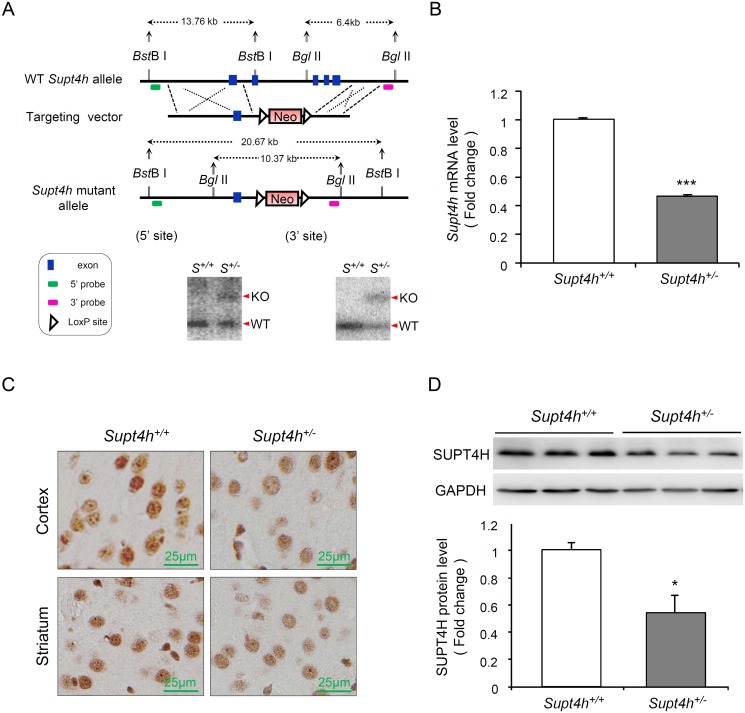
Fig 2. Creation and characterization of Supt4h knockout mice.
(A) Genomic organization of the mouse Supt4h locus (Top) and structure of the targeting vector (Middle). In the allele carrying the Supt4h deletion, a neo cassette specifying resistance to the antibiotic G418 in animal cells replaced the DNA fragment encompassing exon 2 to exon 5 of Supt4h via homologous recombination (Bottom). Positions of 5’ and 3’ flanking probes used in Southern blot analysis, and predicted sizes of restriction fragments detected by these probes are shown. Genomic DNA of C57BL6/129 mice (S +/+) and their Supt4h +/- (S +/-) littermates was subjected to Southern blot analysis using the 5’ and 3’ probes separately. (B) Supt4h mRNA levels were assessed by qRT-PCR using the brain tissue of Supt4h +/+ and Supt4h +/- mice. The abundance in Supt4h +/+ mice was set as 1, after normalization with U6 RNA. (C) SUPT4H protein level in the striatum and cortex of indicated mice was analyzed by immunohistochemistry (IHC) using antibody against SUPT4H. (D) Protein lysates collected from the cerebrum of indicated mice were analyzed by Western blot using anti-SUPT4H antibody. GAPDH served as loading control. Data are presented as the mean ± SEM (n = 3 in each group; *, p < 0.05; ***, p <0.001 by Student’s t-test). The mice were sacrificed at the age of 12 weeks for analyses.
Fig 3
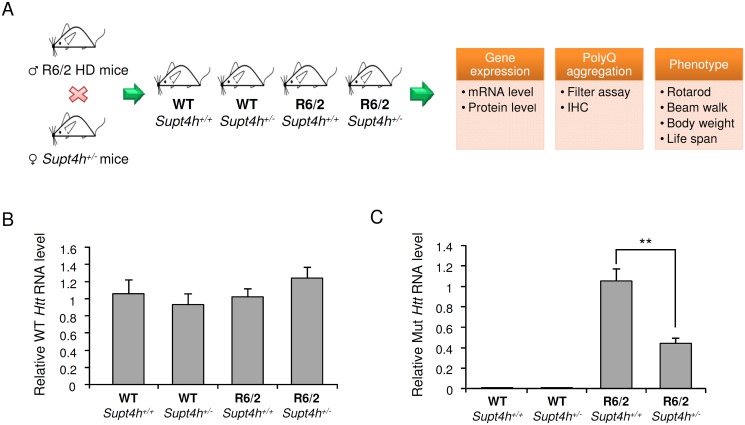
Fig 3. Effect of heterozygous deletion of Supt4h on expression of mutant and wild-type Htt alleles in R6/2 mice.
(A) Outline of procedures used to generate heterozygous deletion of Supt4h in R6/2 HD mice by crossing with Supt4h +/- mice, followed by summary of biochemical and phenotypic analyses of their offspring. (B) Expression of wild-type murine Htt gene was assessed by qRT-PCR using U6 as an internal control. Samples were collected from left cerebrum of indicated animals at the age of 12 weeks, and the gene expression in WT mice containing two functional Supt4h alleles was set as 1. (C) Same as (B), except that expression of mutant Htt allele was analyzed and mutant Htt expression in R6/2 mice containing two functional Supt4h alleles was set as 1. Data are presented as the mean ± SEM (n = 3 in each group; **, p <0.01 by Student’s t-test).
Fig 4
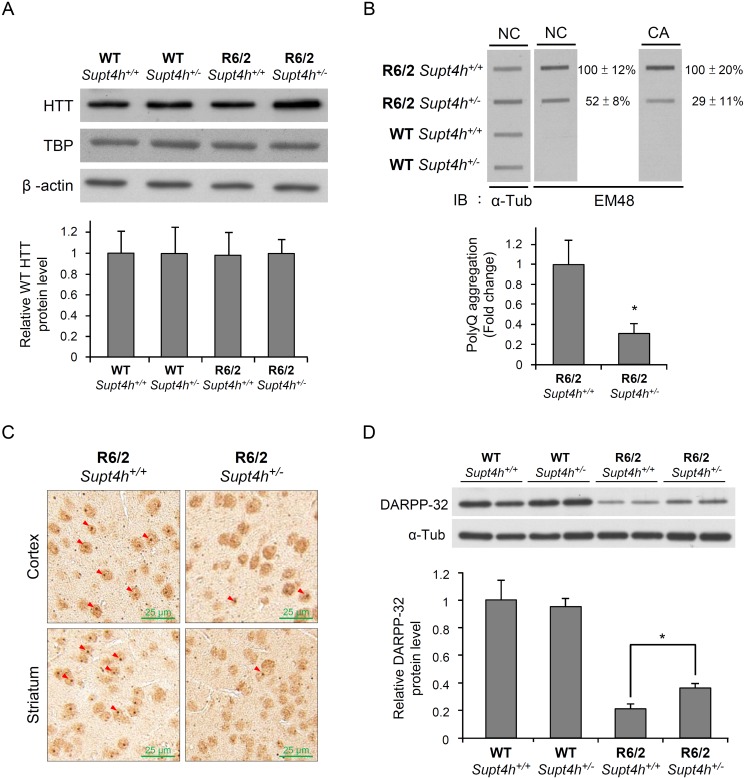
Fig 4. Mutant HTT aggregation in the brain of R6/2 mice deleted for one Supt4h allele.
(A) Wild-type HTT protein levels were examined by Western blot analysis using brain lysates collected from right cerebrum of animals as described in Materials and Methods and in Fig 3B. TATA-binding protein (TBP) produced by a gene containing 13–15 consecutive CAA/CAG repeats was also analyzed. β-actin served as loading control. (B) Brain lysates collected from 12-week-old mice were loaded onto a cellulose acetate CA membrane, which traps only aggregated protein. Mutant HTT protein was detected using EM48 antibody. Nitrocellulose (NC) membranes were employed for slot blot assays to determine protein abundance; α-Tubulin served as a loading control. The values shown are means ± SEM, and the relative protein aggregation in tissues of R6/2 HD mice having two or one allele of Supt4h is presented in the bottom panel. (C) Representative IHC images of cerebral tissue of 12-week-old R6/2 (HD) mice having either one or two alleles of Supt4h are shown. HTT aggregates were detected using an antibody against ubiquitin, which is recruited to and co-localized with aggregates in the brain of HD mice [54]. The positions of aggregates are indicated by arrowheads. (D) DARPP-32 protein abundance was analyzed by Western blot analysis using brain lysates collected from R6/2 mice at the age of 12 weeks either intact in the Supt4h locus or deleted for one Supt4h allele. The level of WT mice having two Supt4h alleles was set to 1, after normalization with α-Tubulin. Data are presented as the mean ± SEM (n = 3 in each group; *, p < 0.05 by Student’s t-test).
Fig 5
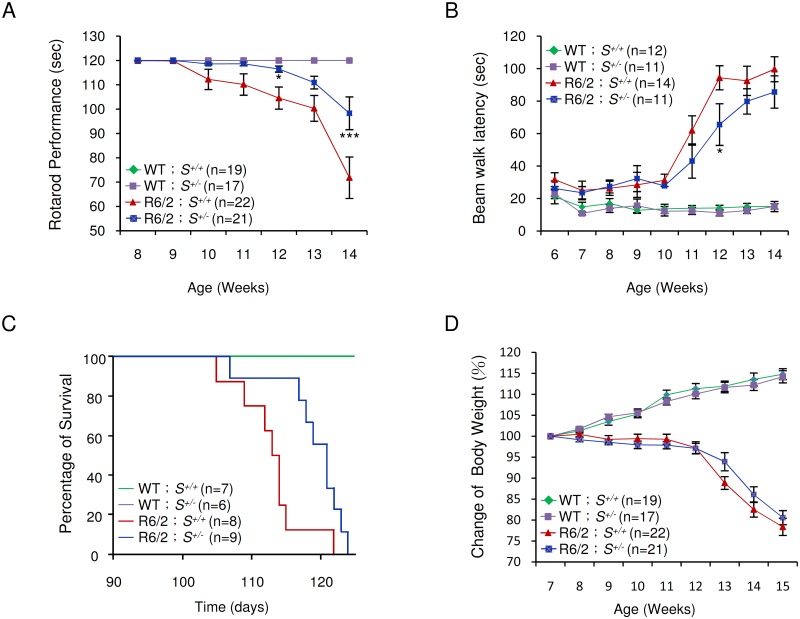
Fig 5. Effect of Supt4h deletion on motor function and lifespan of R6/2 mice.
(A) Mice at the age of 8 to 14 weeks were tested for rotarod performance as described in Materials and Methods. (B) Latency of indicated animals, at the age of 6 to 14 weeks, on beam walking was analyzed. Data are presented as the mean ± SEM. *, p < 0.05; ***, p < 0.001 in comparison with R6/2 S +/+ mice, using two-way ANOVA followed by Bonferroni post hoc test. (C) Longevity of indicated animals was recorded. Compared to R6/2 S +/+ mice, HD animals with a single allele of Supt4h deletion (R6/2 S +/-) showed a longer lifespan (p = 0.0204, Log-rank test). (D) Body weight was measured weekly and its change relative to the body weight at the age of 7 weeks is shown. Results were collected from mice at 7 through 15 weeks of age. The number of mice (n) used in each individual assay is indicated.

References

    1. Ashley CT Jr., Warren ST (1995) Trinucleotide repeat expansion and human disease. Annu Rev Genet 29: 703–728. - PubMed
    1. Orr HT, Zoghbi HY (2007) Trinucleotide repeat disorders. Annu Rev Neurosci 30: 575–621. - PubMed
    1. Lopez Castel A, Cleary JD, Pearson CE (2010) Repeat instability as the basis for human diseases and as a potential target for therapy. Nat Rev Mol Cell Biol 11: 165–170. 10.1038/nrm2854 - DOI - PubMed
    1. Finkbeiner S (2011) Huntington's Disease. Cold Spring Harb Perspect Biol 3. - PMC - PubMed
    1. Group. HsDCR (1993) A novel gene containing a trinucleotide repeat that is expanded and unstable on Huntington's disease chromosomes. The Huntington's Disease Collaborative Research Group. Cell 72: 971–983. - PubMed

Publication types

MeSH terms