


Mental fatigue induced by prolonged self-regulation does not exacerbate central fatigue during subsequent whole-body endurance exercise
- PMID: 25762914
- PMCID: PMC4340216
- DOI: 10.3389/fnhum.2015.00067
Mental fatigue induced by prolonged self-regulation does not exacerbate central fatigue during subsequent whole-body endurance exercise
Abstract
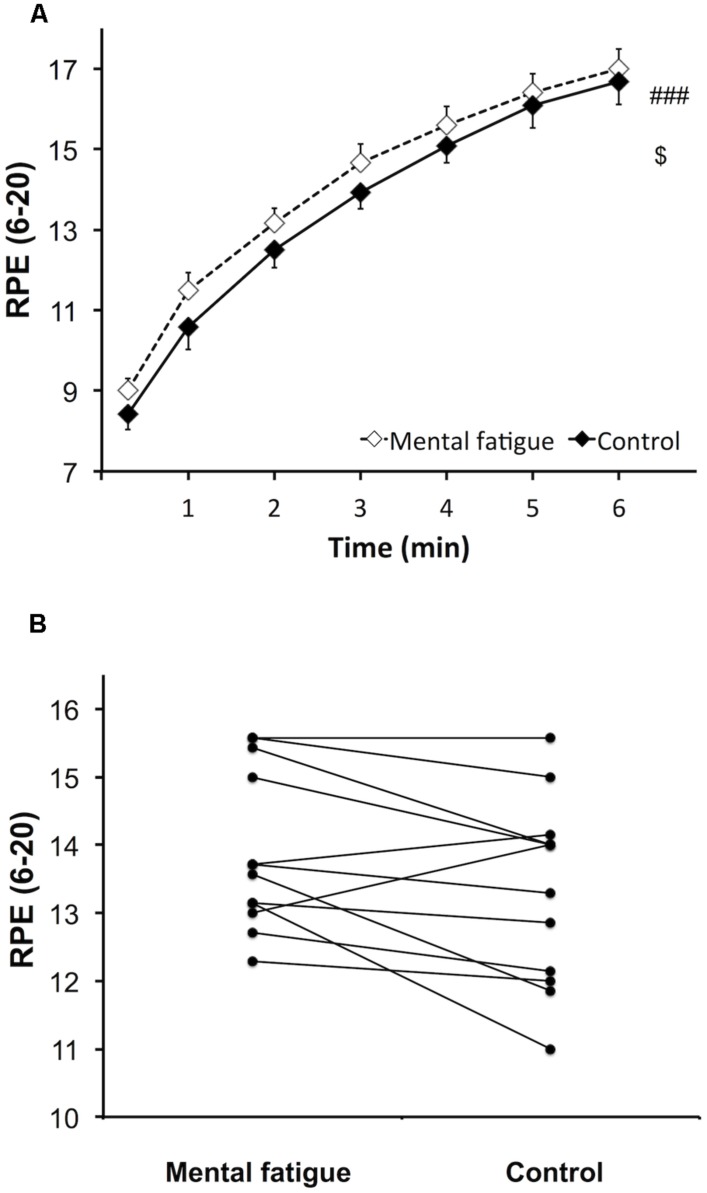
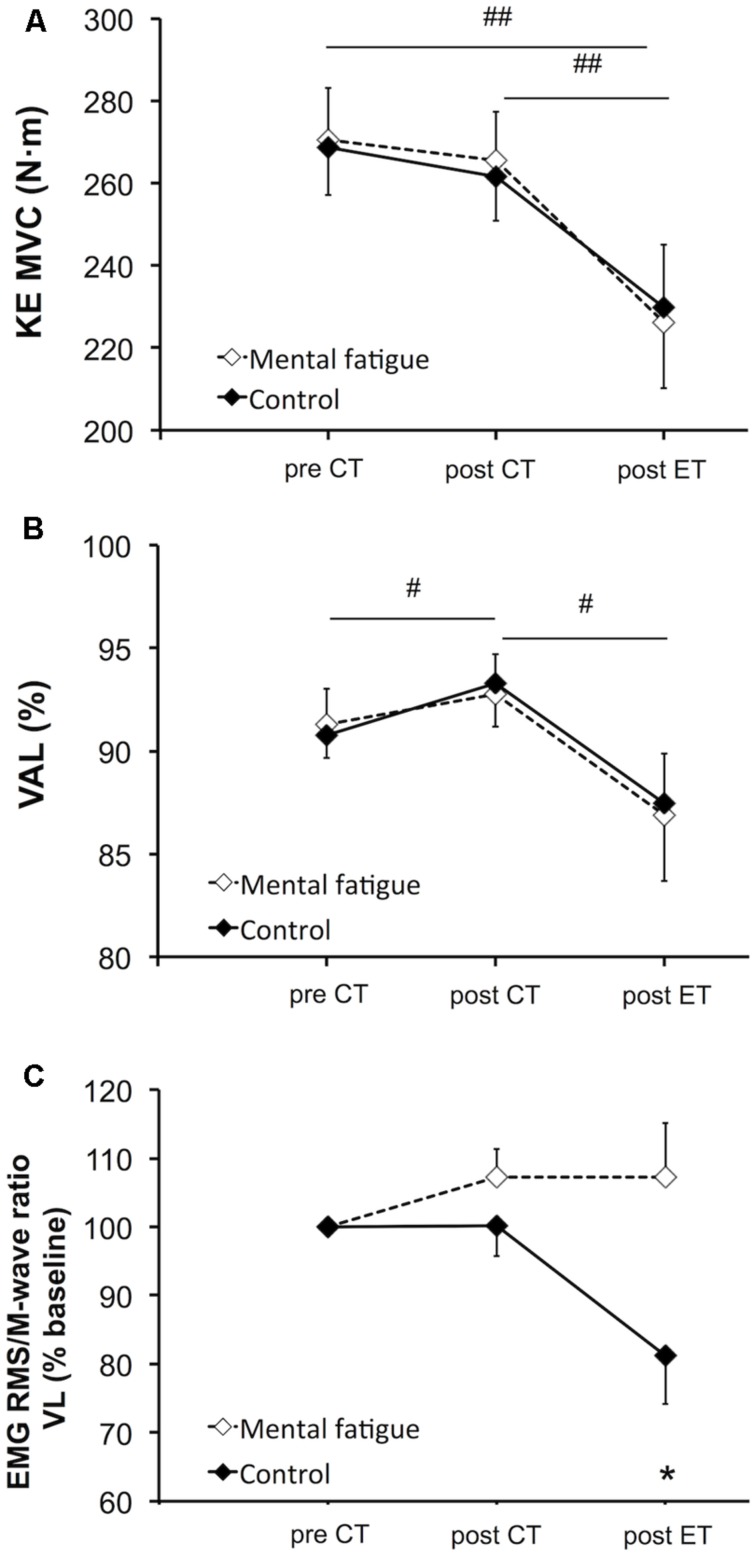
It has been shown that the mental fatigue induced by prolonged self-regulation increases perception of effort and reduces performance during subsequent endurance exercise. However, the physiological mechanisms underlying these negative effects of mental fatigue are unclear. The primary aim of this study was to test the hypothesis that mental fatigue exacerbates central fatigue induced by whole-body endurance exercise. Twelve subjects performed 30 min of either an incongruent Stroop task to induce a condition of mental fatigue or a congruent Stroop task (control condition) in a random and counterbalanced order. Both cognitive tasks (CTs) were followed by a whole-body endurance task (ET) consisting of 6 min of cycling exercise at 80% of peak power output measured during a preliminary incremental test. Neuromuscular function of the knee extensors was assessed before and after CT, and after ET. Rating of perceived exertion (RPE) was measured during ET. Both CTs did not induce any decrease in maximal voluntary contraction (MVC) torque (p = 0.194). During ET, mentally fatigued subjects reported higher RPE (mental fatigue 13.9 ± 3.0, control 13.3 ± 3.2, p = 0.044). ET induced a similar decrease in MVC torque (mental fatigue -17 ± 15%, control -15 ± 11%, p = 0.001), maximal voluntary activation level (mental fatigue -6 ± 9%, control -6 ± 7%, p = 0.013) and resting twitch (mental fatigue -30 ± 14%, control -32 ± 10%, p < 0.001) in both conditions. These findings reject our hypothesis and confirm previous findings that mental fatigue does not reduce the capacity of the central nervous system to recruit the working muscles. The negative effect of mental fatigue on perception of effort does not reflect a greater development of either central or peripheral fatigue. Consequently, mentally fatigued subjects are still able to perform maximal exercise, but they are experiencing an altered performance during submaximal exercise due to higher-than-normal perception of effort.
Keywords: Stroop task; mental exertion; muscle fatigue; neuromuscular fatigue; perceived exertion; perception of effort; response inhibition; sense of effort.
Figures

References
-
- Bigland-Ritchie B., Rice C. L., Garland S. J., Walsh M. L. (1995). “Task-Dependent factors in fatigue of human voluntary contractions,” in Fatigue, eds Gandevia S., Enoka R., Mccomas A., Stuart D., Thomas C., Pierce P. (New York, NY: Springer; ), 361–380. - PubMed
-
- Borg G. (1998). Borg’s Perceived Exertion and Pain Scales. Champaign, IL: Human Kinetics.
LinkOut - more resources
Full Text Sources
Other Literature Sources
Research Materials
