. 2015 Mar 12;11(3):e1005045.
doi: 10.1371/journal.pgen.1005045. eCollection 2015 Mar.

Resistance to gray leaf spot of maize: genetic architecture and mechanisms elucidated through nested association mapping and near-isogenic line analysis

Affiliations

Resistance to gray leaf spot of maize: genetic architecture and mechanisms elucidated through nested association mapping and near-isogenic line analysis

Jacqueline M Benson et al. PLoS Genet. .

Abstract

Gray leaf spot (GLS), caused by Cercospora zeae-maydis and Cercospora zeina, is one of the most important diseases of maize worldwide. The pathogen has a necrotrophic lifestyle and no major genes are known for GLS. Quantitative resistance, although poorly understood, is important for GLS management. We used genetic mapping to refine understanding of the genetic architecture of GLS resistance and to develop hypotheses regarding the mechanisms underlying quantitative disease resistance (QDR) loci. Nested association mapping (NAM) was used to identify 16 quantitative trait loci (QTL) for QDR to GLS, including seven novel QTL, each of which demonstrated allelic series with significant effects above and below the magnitude of the B73 reference allele. Alleles at three QTL, qGLS1.04, qGLS2.09, and qGLS4.05, conferred disease reductions of greater than 10%. Interactions between loci were detected for three pairs of loci, including an interaction between iqGLS4.05 and qGLS7.03. Near-isogenic lines (NILs) were developed to confirm and fine-map three of the 16 QTL, and to develop hypotheses regarding mechanisms of resistance. qGLS1.04 was fine-mapped from an interval of 27.0 Mb to two intervals of 6.5 Mb and 5.2 Mb, consistent with the hypothesis that multiple genes underlie highly significant QTL identified by NAM. qGLS2.09, which was also associated with maturity (days to anthesis) and with resistance to southern leaf blight, was narrowed to a 4-Mb interval. The distance between major leaf veins was strongly associated with resistance to GLS at qGLS4.05. NILs for qGLS1.04 were treated with the C. zeae-maydis toxin cercosporin to test the role of host-specific toxin in QDR. Cercosporin exposure increased expression of a putative flavin-monooxygenase (FMO) gene, a candidate detoxification-related gene underlying qGLS1.04. This integrated approach to confirming QTL and characterizing the potential underlying mechanisms advances the understanding of QDR and will facilitate the development of resistant varieties.


Conflict of interest statement

The authors have declared that no competing interests exist.

Figures
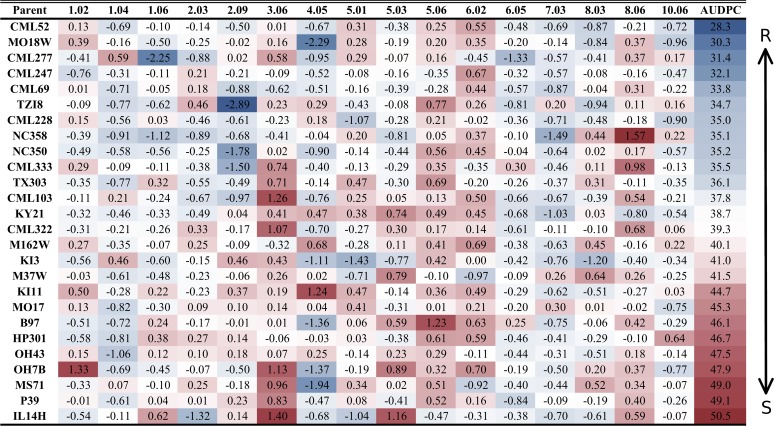
Fig 1
Fig 1. Parental allelic effects at quantitative trait loci.
The bin number is listed in the respective column header between the first and last columns. Two sets of data are presented in this figure. Estimated allelic effects relative to the B73 allele of parental lines at qGLSbin for relative change in disease are listed. The values in the table are the coefficients of the general linear model parameter while the color coding is indicative of area under the disease progress curve. R = resistant; S = susceptible.
Fig 2
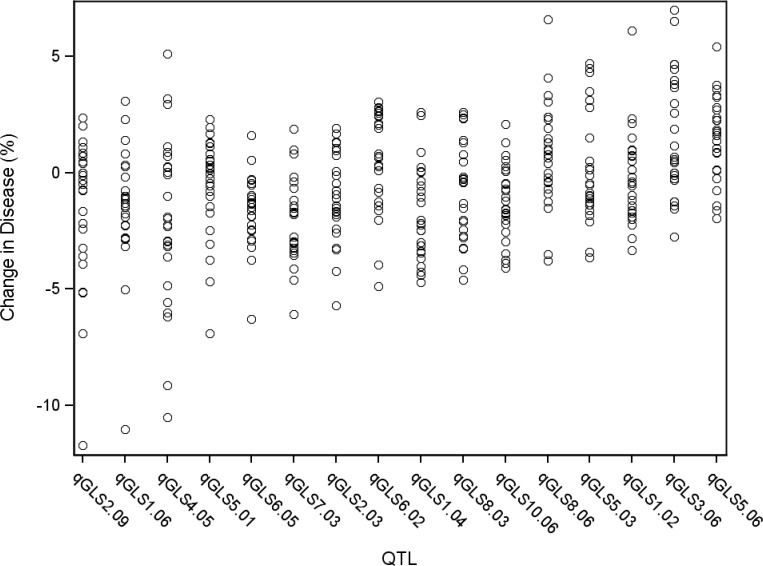
Fig 2. General linear model predicted percent change in disease across significant disease quantitative trait loci (QTL).
Each circle indicates the predicted change in disease of a single allele. There are 26 circles for each QTL, each representating the allele from one of the nested association mapping parental sources.
Fig 3
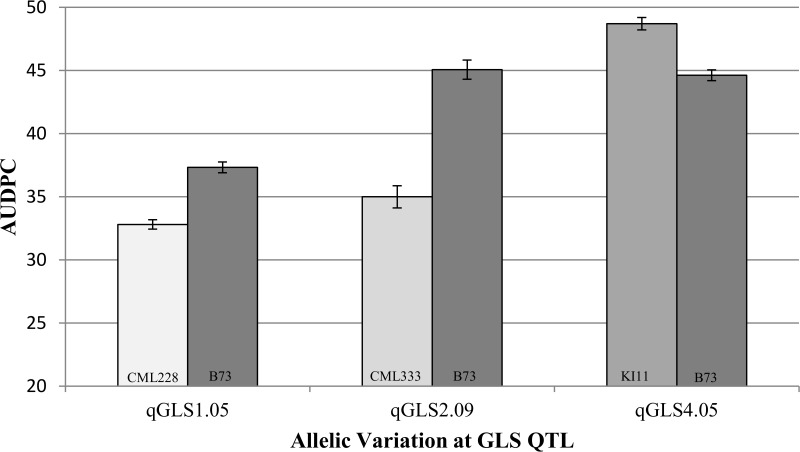
Fig 3. Confirmation of three disease quantitative trait loci using near isogenic lines.
Disease development [area under the disease progress curve (AUDPC)]is indicated among heterogeneous inbred family lines across three gray leaf spot quantitative trait loci.
Fig 4
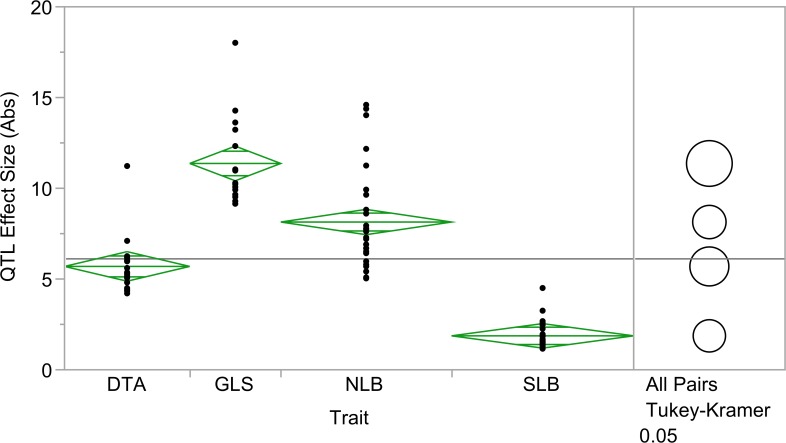
Fig 4. Absolute value of quantitative trait loci (QTL) effect size across three diseases and flowering time.
Effect sizes of QTL for gray leaf spot, northern leaf blight, southern leaf blight and Blacksburg specific days to anthesis were significantly different (p = 6.33x10⁻³⁰).
Fig 5
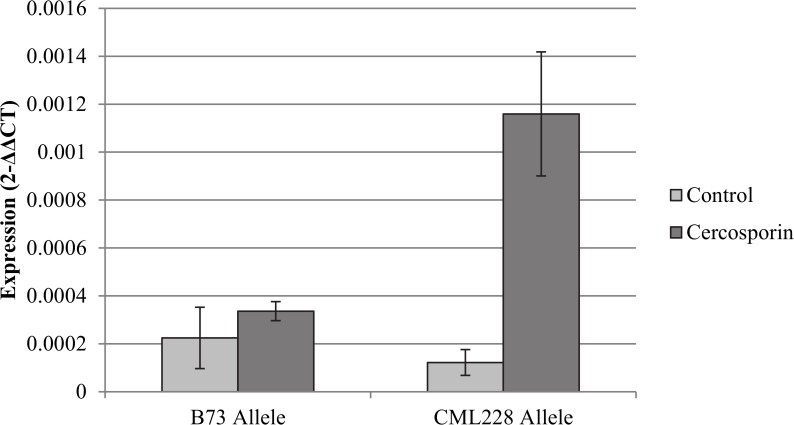
Fig 5. Analysis of flavin-monooxygenase expression at qGLS1.04.
Expression differences were detected for the putative flavin-monooxygenase among heterogeneous inbred family lines segregating at qGLS1.04 for the B73 or CML228 maize alleles. The heterogenous inbred family lines were treated with cercosporin or the acetone control on either side of the maize leaf midrib. There was a significant difference between the CML228 samples treated with cercosporin and the other samples in the experiment (p = 0.0012).
Fig 6
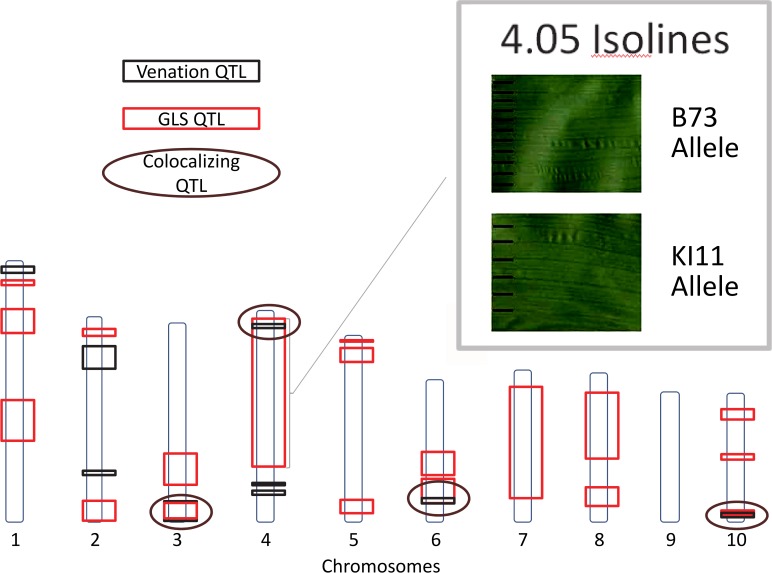
Fig 6. Gray leaf spot (GLS) and venation quantitative trait loci.
Quantitative trait loci for GLS and inter-vein distance (IVD) are indicated. Circles designate co-localizing areas. Scanned leaf images (upper-right corner) demonstrate the difference between IVD from maize leaves with B73 and KI11 alleles at qGLS4.05.
Fig 7
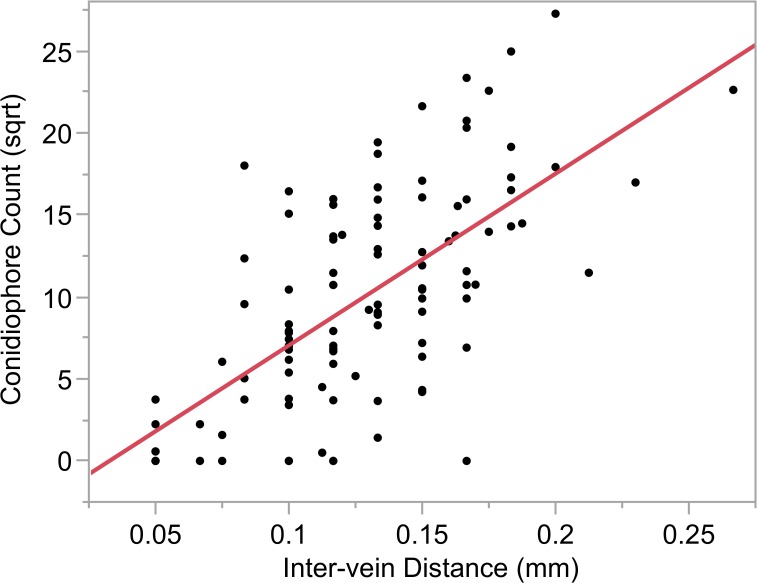
Fig 7. Relationship between conidiophore count and intervein distance.
Significant relationship was detected between inter-vein distance and square root (sqrt) of the conidiophore counts (r 2 = 0.43; p<0.0001).

References

    1. Wen L (2013) Cell death in plant immune response to necrotrophs. J Plant Biochem Physiol 1: 1–3.
    1. Lai Z, Wang F, Zheng Z, Fan B, Chen Z (2011) A critical role of autophagy in plant resistance to necrotrophic fungal pathogens. Plant J 66: 953–968. 10.1111/j.1365-313X.2011.04553.x - DOI - PubMed
    1. Sivasithamparam K, Barbetti MJ, Li H (2005) Recurring challenges from a necrotrophic fungal plant pathogen: a case study with Leptosphaeria maculans (causal agent of blackleg disease in Brassicas) in Western Australia. Ann Bot 96: 363–377. - PMC - PubMed
    1. Crous PW, Groenewald JZ, Groenewald M, Caldwell P, Braun U, et al. (2006) Species of Cercospora associated with grey leaf spot of maize. Stud Mycol: 189–197. - PMC - PubMed
    1. Tehon L, Daniels E (1925) Notes on parasitic fungi of Illinois. Mycologia 71: 240–249.

Publication types