


Longitudinal weight differences, gene expression and blood biomarkers in BMI-discordant identical twins
- PMID: 25765203
- PMCID: PMC4471109
- DOI: 10.1038/ijo.2015.24
Longitudinal weight differences, gene expression and blood biomarkers in BMI-discordant identical twins
Abstract
Background: Body mass index (BMI) discordant monozygotic (MZ) twins allow an examination of the causes and consequences of adiposity in a genetically controlled design. Few studies have examined longitudinal BMI discordance in MZ pairs.
Objectives: The aim of this work was to study the development over time of BMI discordance in adolescent and adult MZ twin pairs and to examine lifestyle, metabolic, inflammatory and gene expression differences associated with concurrent and long-term BMI discordance in MZ pairs.
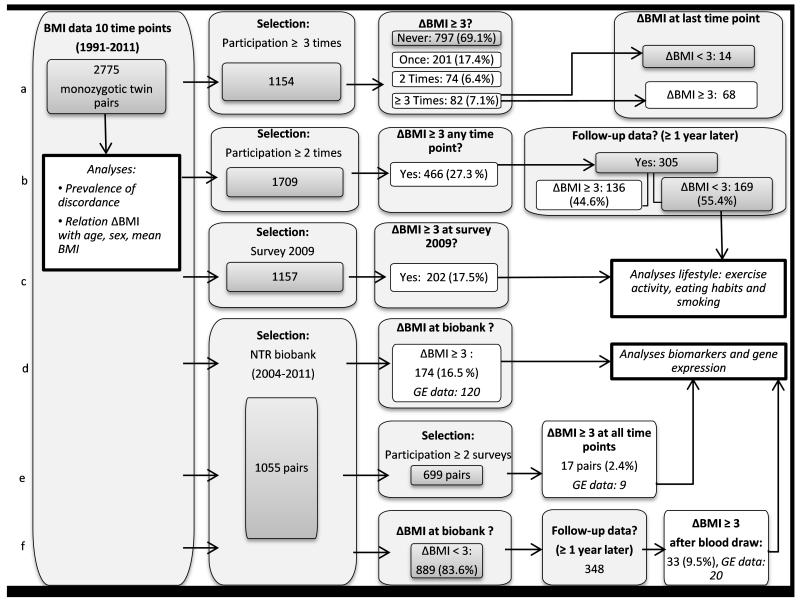
Subjects/methods: BMI data from 2775 MZ twin pairs, collected in eight longitudinal surveys and a biobank project between 1991 and 2011, were analyzed to characterize longitudinal discordance. Lifestyle characteristics were compared within discordant pairs (ΔBMI⩾3 kg m(-2)) and biomarkers (lipids, glucose, insulin, C-reactive protein, fibrinogen, interleukin (IL)-6, tumor necrosis factor-α and soluble IL-6 receptor and liver enzymes aspartate aminotransferase, alanine aminotransferase and gamma glutamyl transferase) and gene expression were compared in peripheral blood from discordant pairs who participated in the Netherlands Twin Register biobank project.
Results: The prevalence of discordance ranged from 3.2% in 1991 (mean age=17, s.d.=2.4) to 17.4% (N=202 pairs) in 2009 (mean age=35, s.d.=15) and was 16.5% (N=174) among pairs participating in the biobank project (mean age=35, s.d.=12). Of the 699 MZ pairs with BMI data from 3 to 5 time points, 17 pairs (2.4%) were long-term discordant (at all available time points; mean follow-up range=6.4 years). Concurrently discordant pairs showed significant differences in self-ratings of which twin eats most (P=2.3 × 10(-13)) but not in leisure time exercise activity (P=0.28) and smoking (P>0.05). Ten out of the 14 biomarkers showed significantly more unfavorable levels in the heavier of twin of the discordant pairs (P-values <0.001); most of these biomarker differences were largest in longitudinally discordant pairs. No significant gene expression differences were identified, although high ranking genes were enriched for Gene Ontology terms highlighting metabolic gene regulation and inflammation pathways.
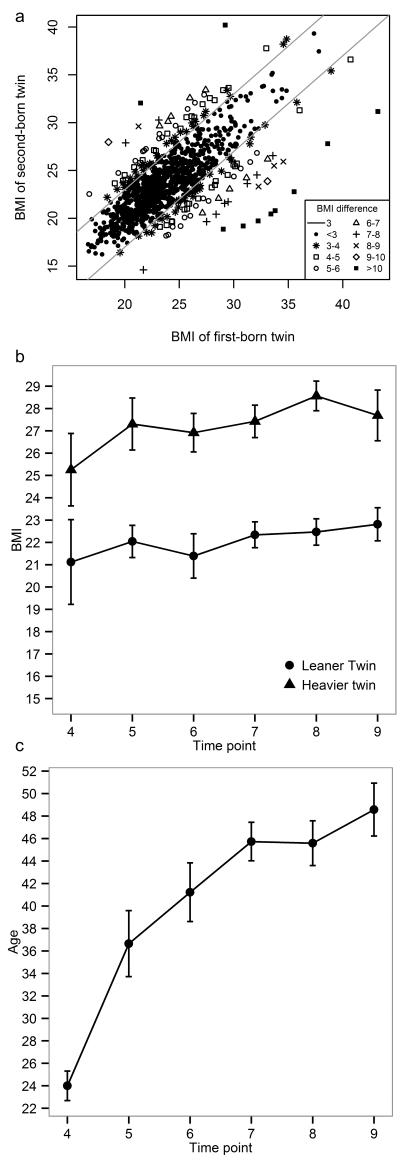
Conclusions: BMI discordance is uncommon in adolescent identical pairs but increases with higher pair-mean of BMI at older ages, although long-term BMI discordance is rare. In discordant pairs, the heavier twin had a more unfavorable blood biomarker profile than the genetically matched leaner twin, in support of causal effects of obesity.
Figures
References
-
- van Dongen J, Slagboom PE, Draisma HH, Martin NG, Boomsma DI. The continuing value of twin studies in the omics era. Nat Rev Genet. 2012;13(9):640–653. - PubMed
-
- Zwijnenburg PJG, Meijers Heijboer H, Boomsma DI. Identical but not the same: The value of discordant monozygotic twins in genetic research. Am J Med Genet B Neuropsychiatr Genet. 2010;153(6):1134–1149. - PubMed
-
- Halfvarson J, Jess T, Magnuson A, Montgomery SM, Orholm M, Tysk C, et al. Environmental factors in inflammatory bowel disease: a co-twin control study of a Swedish-Danish twin population. Inflamm Bowel Dis. 2006;12(10):925–933. - PubMed
-
- Lehn H, Derks EM, Hudziak JJ, Heutink P, van Beijsterveldt TC, Boomsma DI. Attention problems and attention-deficit/hyperactivity disorder in discordant and concordant monozygotic twins: evidence of environmental mediators. J Am Acad Child Adolesc Psychiatry. 2007;46(1):83–91. - PubMed
-
- Vadlamudi L, Dibbens LM, Lawrence KM, Iona X, McMahon JM, Murrell W, et al. Timing of de novo mutagenesis--a twin study of sodium-channel mutations. N Engl J Med. 2010;363(14):1335–1340. - PubMed
Publication types
MeSH terms
Substances
Grants and funding
LinkOut - more resources
Full Text Sources
Other Literature Sources
Medical
Research Materials
