


Epigenetic mechanisms of chronic pain
- PMID: 25765319
- PMCID: PMC4459752
- DOI: 10.1016/j.tins.2015.02.001
Epigenetic mechanisms of chronic pain
Erratum in
- Trends Neurosci. 2015 Sep;38(9):579
Abstract
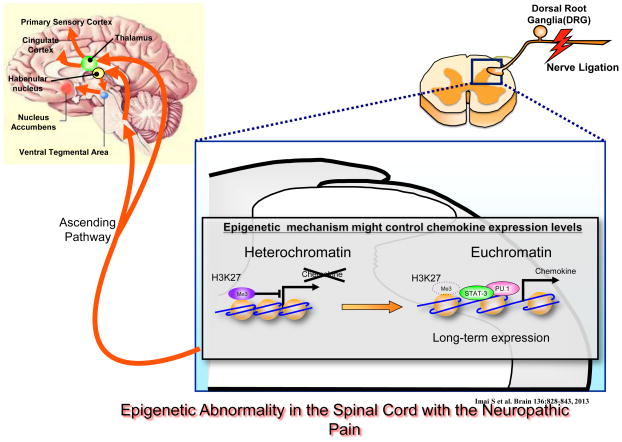
Neuropathic and inflammatory pain promote a large number of persisting adaptations at the cellular and molecular level, allowing even transient tissue or nerve damage to elicit changes in cells that contribute to the development of chronic pain and associated symptoms. There is evidence that injury-induced changes in chromatin structure drive stable changes in gene expression and neural function, which may cause several symptoms, including allodynia, hyperalgesia, anxiety, and depression. Recent findings on epigenetic changes in the spinal cord and brain during chronic pain may guide fundamental advances in new treatments. Here, we provide a brief overview of epigenetic regulation in the nervous system and then discuss the still-limited literature that directly implicates epigenetic modifications in chronic pain syndromes.
Keywords: HDAC; animal models; histone modifications; inflammatory pain; methylation; miRNA; neuropathic pain.
Copyright © 2015 Elsevier Ltd. All rights reserved.
Figures
References
-
- Woolf C, Mannion R. Neuropathic pain: aetiology, symptoms, mechanisms, and management. Lancet. 1999;353:1959–1964. - PubMed
-
- Ji R, et al. Central sensitization and LTP: do pain and memory share similar mechanisms? Trends Neurosci. 2003;26:696–705. - PubMed
-
- Woolf CJ, Salter MW. Neuronal Plasticity: Increasing the Gain in Pain. Science. 2000;288(5472):1765–1768. - PubMed
-
- Institute of Medicine; B.o.H.S. Policy, editor. Relieving pain in America A Blueprint for Transforming Prevention, Care, Education, and Research. The National Academies Press; Washington, D.C: 2011. - PubMed
-
- Mogil JS. Animal models of pain: progress and challenges. Nat Rev Neurosci. 2009;10(4):283–94. - PubMed
