


Reduced vaccination and the risk of measles and other childhood infections post-Ebola
- PMID: 25766232
- PMCID: PMC4691345
- DOI: 10.1126/science.aaa3438
Reduced vaccination and the risk of measles and other childhood infections post-Ebola
Abstract
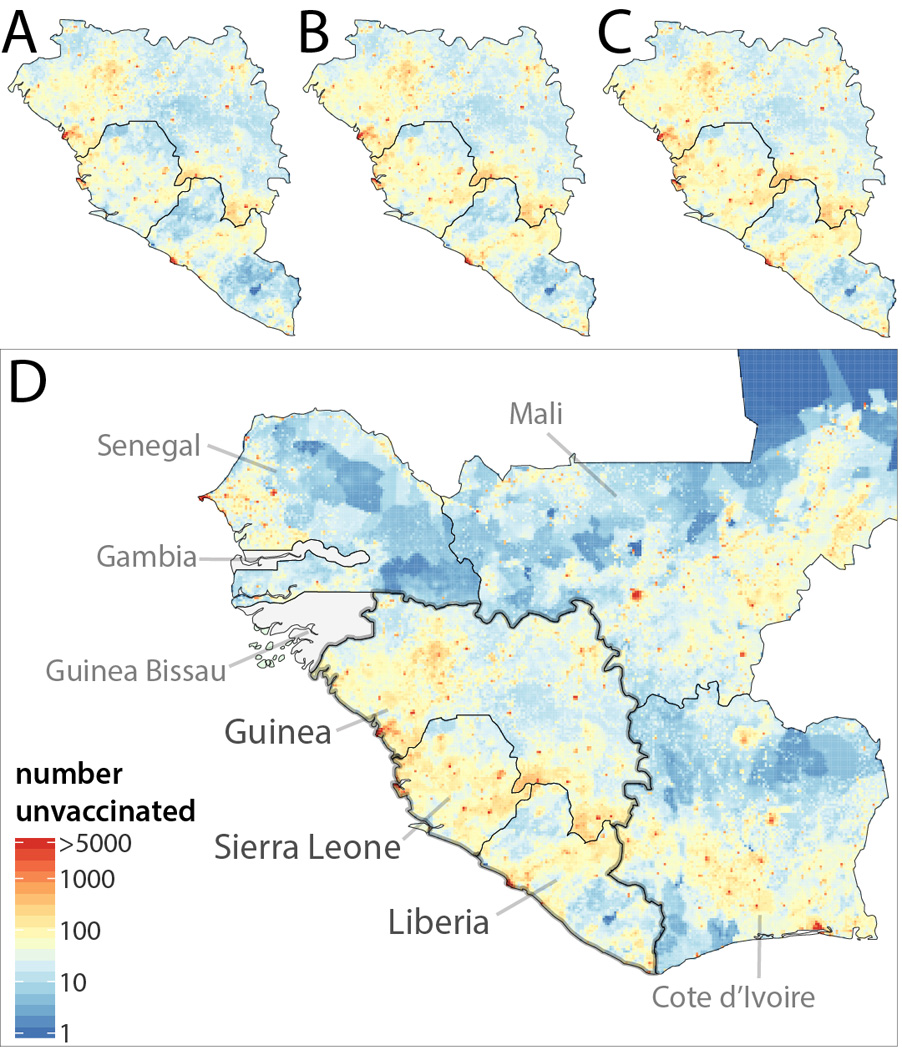
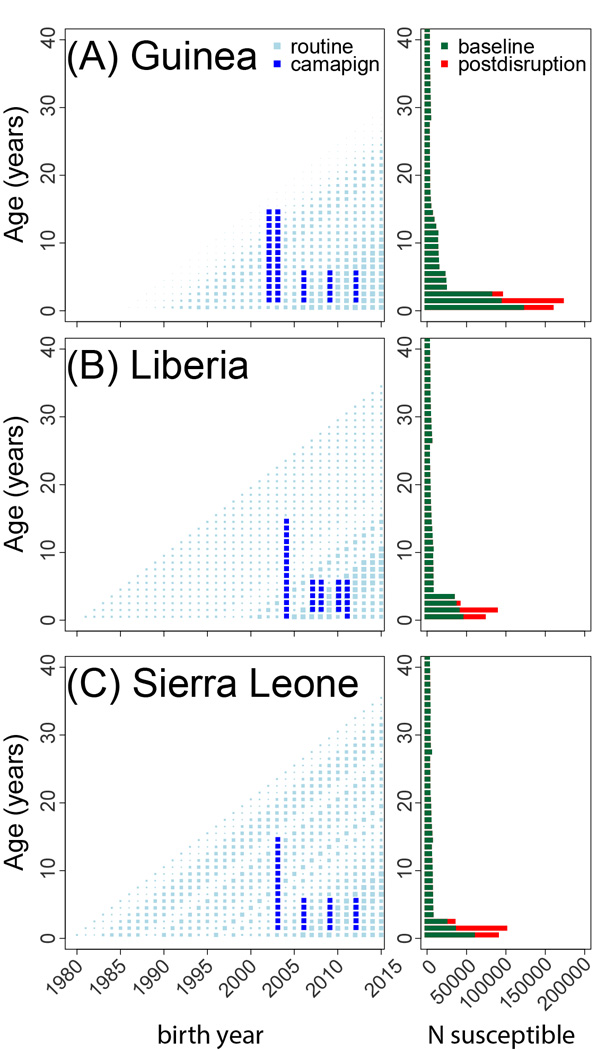
The Ebola epidemic in West Africa has caused substantial morbidity and mortality. The outbreak has also disrupted health care services, including childhood vaccinations, creating a second public health crisis. We project that after 6 to 18 months of disruptions, a large connected cluster of children unvaccinated for measles will accumulate across Guinea, Liberia, and Sierra Leone. This pool of susceptibility increases the expected size of a regional measles outbreak from 127,000 to 227,000 cases after 18 months, resulting in 2000 to 16,000 additional deaths (comparable to the numbers of Ebola deaths reported thus far). There is a clear path to avoiding outbreaks of childhood vaccine-preventable diseases once the threat of Ebola begins to recede: an aggressive regional vaccination campaign aimed at age groups left unprotected because of health care disruptions.
Copyright © 2015, American Association for the Advancement of Science.
Figures
Comment in
-
Infectious Diseases. As Ebola fades, a new threat.Science. 2015 Mar 13;347(6227):1189. doi: 10.1126/science.347.6227.1189. Science. 2015. PMID: 25766214 No abstract available.
References
-
- World Health Organization. Ebola Situation report. 2015 (available at http://www.who.int/csr/disease/ebola/situation-reports/en/).
-
- World Health Organization. Global vaccine action plan 2011–2020. 2013
-
- Liu L, et al. Global, regional, and national causes of child mortality in 2000–13, with projections to inform post-2015 priorities: an updated systematic analysis. Lancet. 2014:6736. - PubMed
-
- Simons E, et al. Assessment of the 2010 global measles mortality reduction goal: results from a model of surveillance data. Lancet. 2012;379:2173–2178. - PubMed
Publication types
MeSH terms
Substances
Grants and funding
LinkOut - more resources
Full Text Sources
Other Literature Sources
Medical
