


Insulin resistance as a key link for the increased risk of cognitive impairment in the metabolic syndrome
- PMID: 25766618
- PMCID: PMC4351418
- DOI: 10.1038/emm.2015.3
Insulin resistance as a key link for the increased risk of cognitive impairment in the metabolic syndrome
Abstract
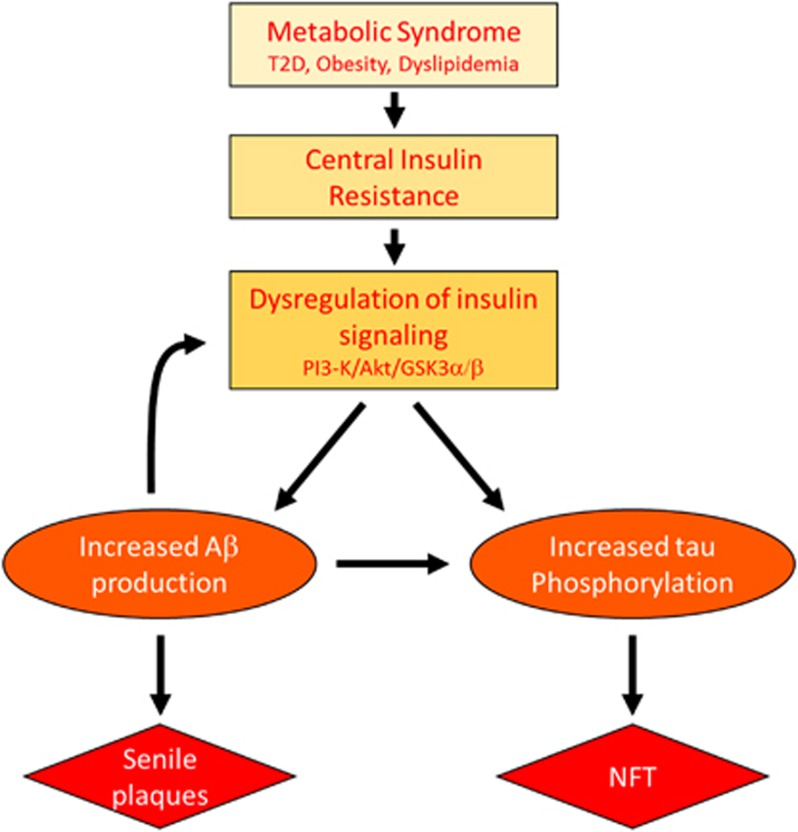
Metabolic syndrome (MetS) is a cluster of cardiovascular risk factors that includes obesity, diabetes, and dyslipidemia. Accumulating evidence implies that MetS contributes to the development and progression of Alzheimer's disease (AD); however, the factors connecting this association have not been determined. Insulin resistance (IR) is at the core of MetS and likely represent the key link between MetS and AD. In the central nervous system, insulin plays key roles in learning and memory, and AD patients exhibit impaired insulin signaling that is similar to that observed in MetS. As we face an alarming increase in obesity and T2D in all age groups, understanding the relationship between MetS and AD is vital for the identification of potential therapeutic targets. Recently, several diabetes therapies that enhance insulin signaling are being tested for a potential therapeutic benefit in AD and dementia. In this review, we will discuss MetS as a risk factor for AD, focusing on IR and the recent progress and future directions of insulin-based therapies.
Figures
References
-
- Duvnjak L, Duvnjak M. The metabolic syndrome—an ongoing story. J Physiol Pharmacol. 2009;60:19–24. - PubMed
-
- Ervin RB. Prevalence of metabolic syndrome among adults 20 years of age and over, by sex, age, race and ethnicity, and body mass index: United States, 2003–2006. Natl Health Stat Report. 2009;5:1–7. - PubMed
-
- Bruce KD, Hanson MA. The developmental origins, mechanisms, and implications of metabolic syndrome. J Nutr. 2010;140:648–652. - PubMed
-
- Sesti G. Pathophysiology of insulin resistance. Best Pract Res Clin Endocrinol Metab. 2006;20:665–679. - PubMed
-
- Ballard C, Gauthier S, Corbett A, Brayne C, Aarsland D, Jones E. Alzheimer's disease. Lancet. 2011;377:1019–1031. - PubMed
Publication types
MeSH terms
Substances
Grants and funding
LinkOut - more resources
Full Text Sources
Other Literature Sources
Medical
Research Materials
