Risk of psychiatric disorders in patients with chronic insomnia and sedative-hypnotic prescription: a nationwide population-based follow-up study
- PMID: 25766696
- PMCID: PMC4410928
- DOI: 10.5664/jcsm.4700
Risk of psychiatric disorders in patients with chronic insomnia and sedative-hypnotic prescription: a nationwide population-based follow-up study
Abstract
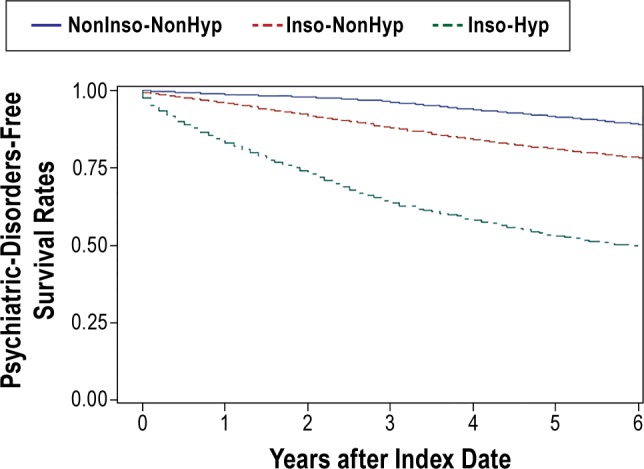
Study objectives: Previous epidemiological studies have established insomnia as a major risk factor for mood, anxiety, and substance use disorders. However, the associations between insomnia with sedative-hypnotic prescriptions and various psychiatric disorders have not been thoroughly examined. The current study involved evaluating the risk of psychiatric disorders, namely schizophrenia, mood, anxiety, somatoform, and substance-related disorders, over a 6-y follow-up period in three groups: patients with insomnia and sedative-hypnotic prescriptions (Inso-Hyp), those with insomnia and without sedative-hypnotic prescriptions (Inso-NonHyp), and those with neither insomnia nor sedative-hypnotic prescriptions (NonInso-NonHyp).
Methods: We used a historical cohort study design to compare the risk of psychiatric disorders among the three groups. Data regarding these patients were derived from reimbursement claims recorded in Taiwan's National Health Insurance Research Database. Cox proportional hazards regression was used to compare the 6-y risk of subsequent psychiatric disorders among the Inso-Hyp, Inso-NonHyp, and NonInso-NonHyp groups.
Results: Compared with the Inso-NonHyp and NonInso-NonHyp group patients, the Inso-Hyp group patients exhibited a higher risk of psychiatric disorders, particularly bipolar disorders (adjusted hazard ratio [AHR]: 7.60; 95% confidence interval [CI]: 5.31-10.89 and AHR: 14.69; 95% CI: 11.11-19.43, respectively). Moreover, among the Inso-Hyp patient group, insomnia prescribed with benzodiazepine, a longer duration of sedative-hypnotic action, and higher doses of sedativehypnotics were significantly associated with a higher risk of depressive and anxiety disorders.
Conclusion: The Inso-Hyp group exhibited a higher risk of developing psychiatric disorders than did the Inso-NonHyp and NonInso-NonHyp groups. The results regarding patients with insomnia and sedative-hypnotic prescriptions associated with the risk of psychiatric disorders can serve as a reference for care providers when managing sleep disturbances.
Keywords: anxiety disorder; bipolar disorder; depressive disorder; insomnia; schizophrenia; sedative-hypnotics; somatoform disorder; substance-related disorder.
© 2015 American Academy of Sleep Medicine.
Figures
References
-
- Kao CC, Huang CJ, Wang MY, Tsai PS. Insomnia: prevalence and its impact on excessive daytime sleepiness and psychological well-being in the adult Taiwanese population. Qual Life Res. 2008;17:1073–80. - PubMed
-
- Kim K, Uchiyama M, Okawa M, Liu X, Ogihara R. An epidemiological study of insomnia among the Japanese general population. Sleep. 2000;23:41–7. - PubMed
-
- Li RHY, Wing YK, Ho SC, Fong SYY. Gender differences in insomnia - A study in the Hong Kong Chinese population. J Psychosom Res. 2002;53:601–9. - PubMed
-
- Ohayon MM. Epidemiology of insomnia: what we know and what we still need to learn. Sleep Med Rev. 2002;6:97–111. - PubMed
Publication types
MeSH terms
Substances
LinkOut - more resources
Full Text Sources
Other Literature Sources
Medical