


Pimpinella anisum in the treatment of functional dyspepsia: A double-blind, randomized clinical trial
- PMID: 25767516
- PMCID: PMC4354059
Pimpinella anisum in the treatment of functional dyspepsia: A double-blind, randomized clinical trial
Abstract
Background: We aimed to evaluate the effects of Pimpinella anisum (anise) from Apiaceae family on relieving the symptoms of postprandial distress syndrome (PDS) in this double-blind randomized clinical trial.
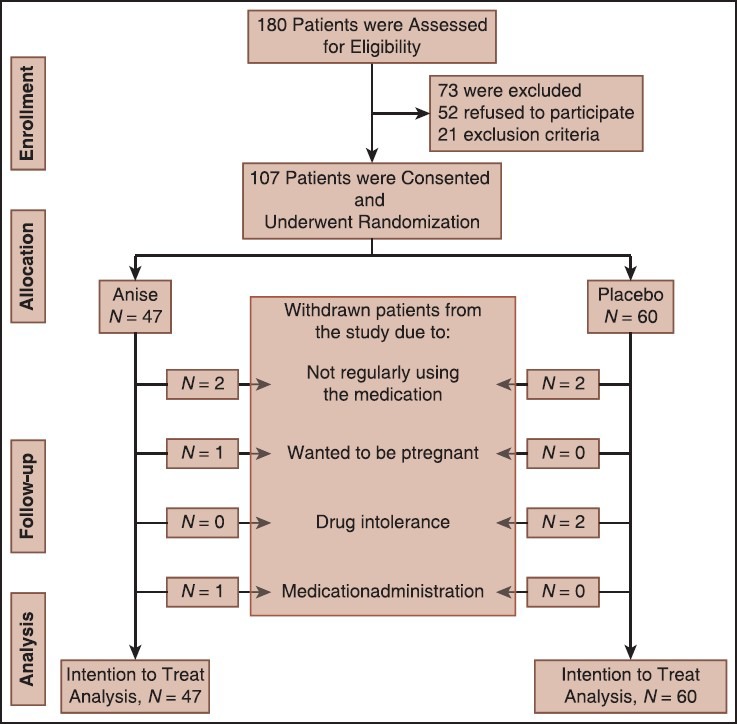
Materials and methods: Totally, 107 patients attending the gastroenterology clinic, aged 18-65 years, diagnosed with PDS according to ROME III criteria and signed a written consent form were enrolled. They were randomized to receive either anise or placebo, blindly, for 4 weeks. Anise group included 47 patients and received anise powders, 3 g after each meal (3 times/day). Control group involved 60 patients and received placebo powders (corn starch), 3 gafter each meal (3 times/day). The severity of Functional dyspepsia (FD) symptoms was assessed by FD severity scale. Assessments were done at baseline and by the end of weeks 2, 4 and 12. Mean scores of severity of FD symptoms and the frequency distribution of patients across the study period were compared.
Results: The age, sex, body mass index, smoking history, and coffee drinking pattern of the intervention and control groups were not significantly different. Mean (standard deviation) total scores of FD severity scale before intervention in the anise and control groups were 10.6 (4.1) and 10.96 (4.1), respectively (P = 0.6). They were 7.04 (4.1) and 12.30 (4.3) by week 2, respectively (P = 0.0001), 2.44 (4.2) and 13.05 (5.2) by week 4, respectively (P = 0.0001), and 1.08 (3.8) and 13.30 (6.2) by week 12, respectively (P = 0.0001).
Conclusion: This study showed the effectiveness of anise in relieving the symptoms of postpartum depression. The findings were consistent across the study period at weeks 2, 4 and 12.
Keywords: Anise; Pimpinella anisum; functional dyspepsia; postprandial distress syndrome.
Conflict of interest statement
References
-
- Chang L, Toner BB, Fukudo S, Guthrie E, Locke GR, Norton NJ, et al. Gender, age, society, culture, and the patient's perspective in the functional gastrointestinal disorders. Gastroenterology. 2006;130:1435–46. - PubMed
-
- Drossman DA, Dumitrascu DL. Rome III: New standard for functional gastrointestinal disorders. J Gastrointestin Liver Dis. 2006;15:237–41. - PubMed
-
- Drossman DA, Corazziari E, Delvaux M, Spiller R, Talley NJ, Thompson WG. Appendix B: Rome III diagnostic criteria for functional gastrointestinal disorders. Rev Gastroenterol Mex. 2010;75:511–6.
-
- Cogliandro RF, Antonucci A, De Giorgio R, Barbara G, Cremon C, Cogliandro L, et al. Patient-reported outcomes and gut dysmotility in functional gastrointestinal disorders. Neurogastroenterol Motil. 2011;23:1084–91. - PubMed
LinkOut - more resources
Full Text Sources
Miscellaneous