


Perinatal substance use: a prospective evaluation of abstinence and relapse
- PMID: 25772437
- PMCID: PMC4387084
- DOI: 10.1016/j.drugalcdep.2015.02.027
Perinatal substance use: a prospective evaluation of abstinence and relapse
Abstract
Background: Substance use decreases in pregnancy but little prospective data are available on the rates of abstinence and relapse for specific substances. This study compared rates of abstinence in pregnancy and relapse postpartum for nicotine cigarettes, alcohol, marijuana, and cocaine.
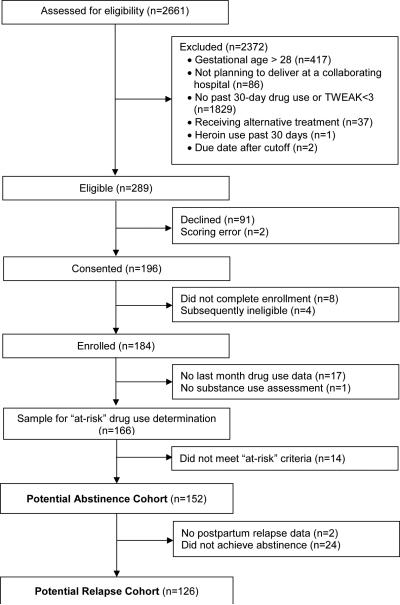
Methods: Data from 152 women drawn from a randomized controlled trial comparing psychological treatments for substance use in pregnancy were analyzed. Self-reports of substance use and urine for toxicology testing throughout pregnancy and 3-months, 12-months and 24-months post-delivery were collected. Multivariate Cox models were used to compare rates of abstinence and relapse across substances.
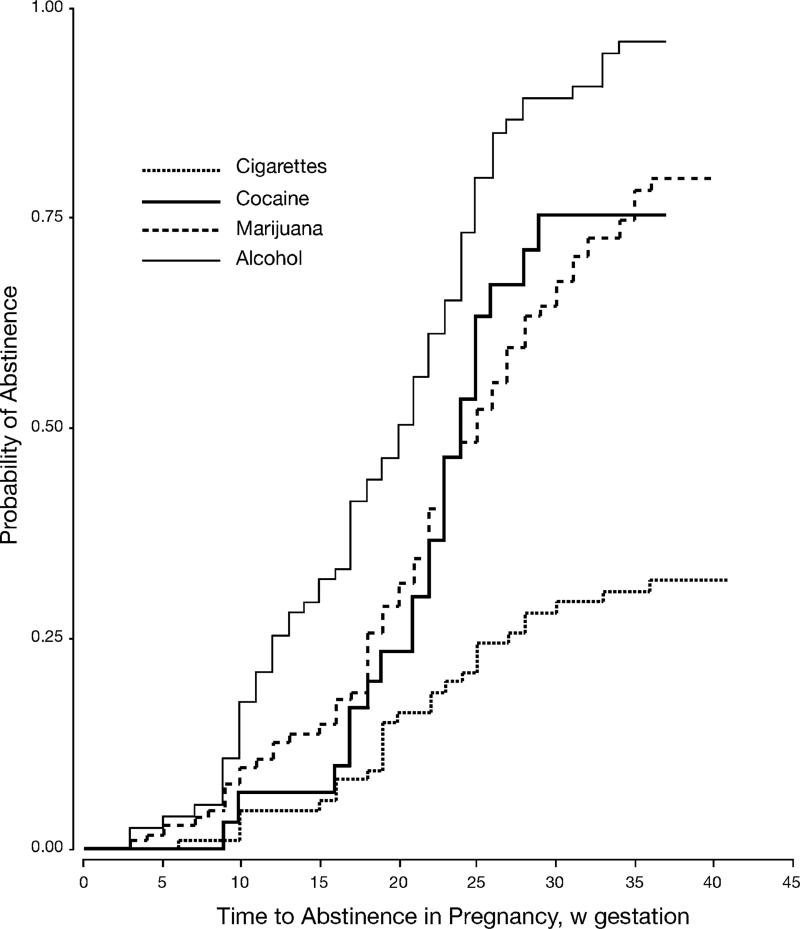
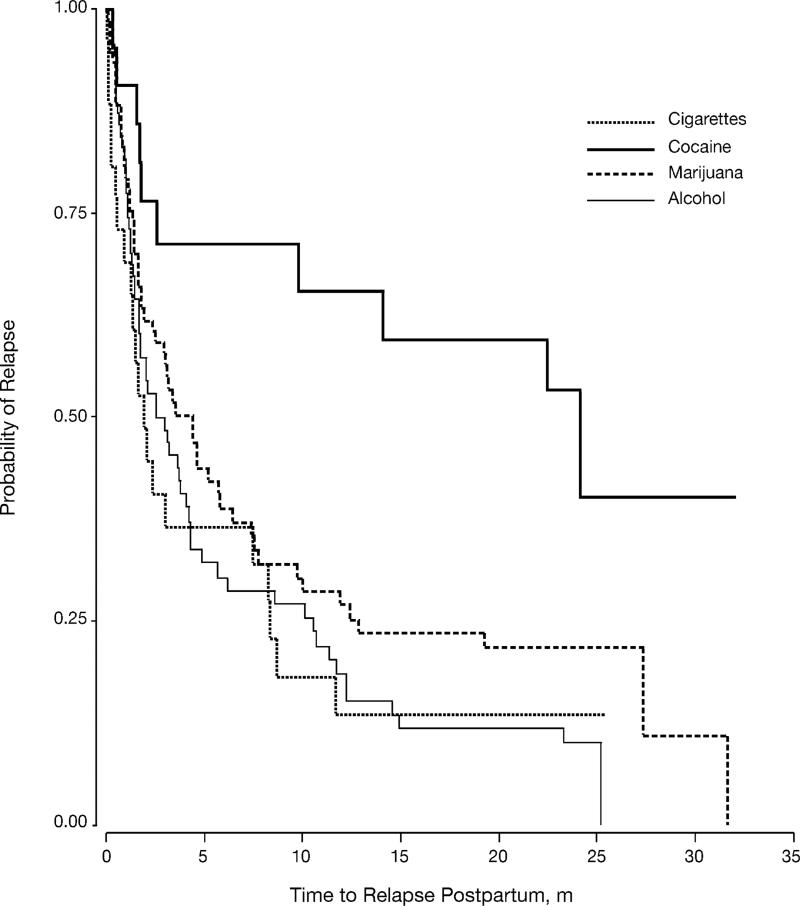
Results: In pregnancy, 83% of all women achieved abstinence to at least one substance. The mean (SE) days to abstinence was 145.81 (9.17), 132.01 (6.17), 151.52 (6.24), and 148.91 (7.68) for cigarettes, alcohol, marijuana and cocaine, respectively. Participants were more likely to achieve abstinence from alcohol (HR 7.24; 95% CI 4.47-11.72), marijuana (HR 4.06; 95% CI 1.87-6.22), and cocaine (HR 3.41; 95% CI 2.53-6.51), than cigarettes. Postpartum, 80% of women abstinent in the last month of pregnancy relapsed to at least one substance. The mean days to relapse was 109.67 (26.34), 127.73 (21.29), 138.35 (25.46), and 287.55 (95.85) for cigarettes, alcohol, marijuana and cocaine, respectively. Relapse to cocaine was only 34% (HR 0.34; 95% CI 0.15-0.77) that of cigarettes.
Conclusions: Pregnancy-related abstinence rates were high for all substances except cigarettes. Postpartum relapse was common, with cocaine using women being less likely to relapse after attaining abstinence compared to women using cigarettes, alcohol or marijuana.
Keywords: Abstinence; Drug use; Postpartum; Pregnancy; Relapse; Smoking.
Copyright © 2015 Elsevier Ireland Ltd. All rights reserved.
Figures
References
-
- Chang G, Wilkins-Haug L, Berman S, Goetz MA. The TWEAK: application in a prenatal setting. J. Stud. Alcohol. 1999;60:306–309. - PubMed
-
- Cnattingius S. The epidemiology of smoking during pregnancy: smoking prevalence, maternal characteristics, and pregnancy outcomes. Nicotine Tob. Res. 2004;6(Suppl. 2):S125–140. - PubMed
-
- Colman GJ, Joyce T. Trends in smoking before, during, and after pregnancy in ten states. Am. J. Prev. Med. 2003;24:29–35. - PubMed
Publication types
MeSH terms
Grants and funding
LinkOut - more resources
Full Text Sources
Other Literature Sources
Medical
