


Medications for type 2 diabetes: how will we be treating patients in 50 years?
- PMID: 25773402
- PMCID: PMC4499484
- DOI: 10.1007/s00125-015-3541-8
Medications for type 2 diabetes: how will we be treating patients in 50 years?
Abstract
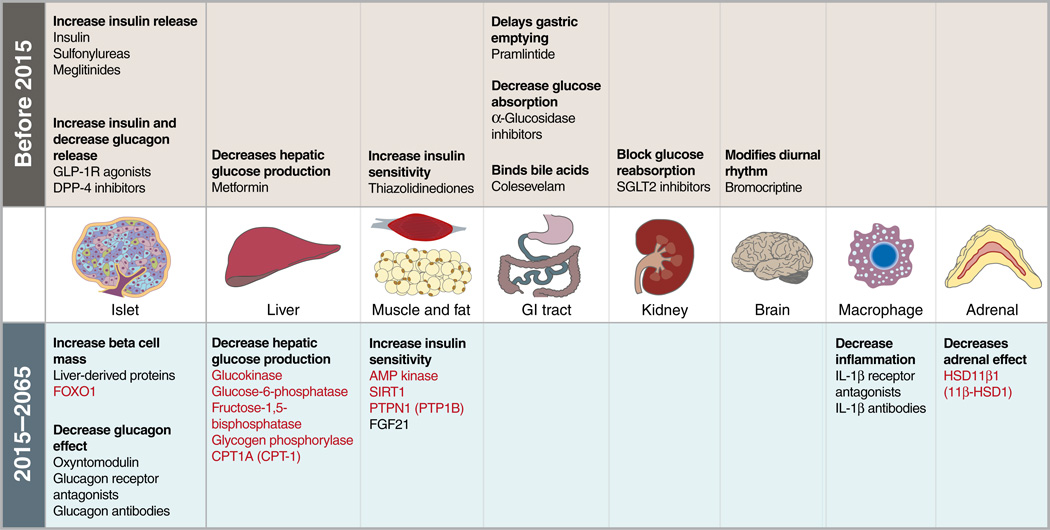
The past 50 years have seen the development of many new options for treating and preventing type 2 diabetes. Despite this success, the individual and societal burden of the disease continues unabated. Thus, the next 50 years will be critical if we are going to quell the major non-communicable disease of our time. The knowledge we will gain in the next few years from clinical studies will inform treatment guidelines with regard to which agents to use in whom and whether more aggressive approaches can slow the development of hyperglycaemia in those at high risk. Beyond that, we anticipate identification of novel targets and techniques for therapeutic intervention. These advances will lead to more personalised approaches to treatment. Most importantly, we will need to focus our political and economic efforts on enhancing and implementing public health approaches aimed at prevention of diabetes and its co-morbidities. This is one of a series of commentaries under the banner '50 years forward', giving personal opinions on future perspectives in diabetes, to celebrate the 50th anniversary of Diabetologia (1965-2015).
Figures
References
-
- Kahn SE. The relative contributions of insulin resistance and beta-cell dysfunction to the pathophysiology of type 2 diabetes. Diabetologia. 2003;46:3–19. - PubMed
-
- Inzucchi SE, Bergenstal RM, Buse JB, et al. Management of hyperglycaemia in type 2 diabetes, 2015: a patient-centred approach. Update to a position statement of the American Diabetes Association and the European Association for the Study of Diabetes. Diabetologia. 2015;58:429–442. - PubMed
-
- Kahn SE, Haffner SM, Heise MA, et al. Glycemic durability of rosiglitazone, metformin, or glyburide monotherapy. N Engl J Med. 2006;355:2427–2443. - PubMed
Publication types
MeSH terms
Substances
Grants and funding
LinkOut - more resources
Full Text Sources
Other Literature Sources
Medical
Miscellaneous
