Characterization of Novel Trichoderma asperellum Isolates to Select Effective Biocontrol Agents Against Tomato Fusarium Wilt
- PMID: 25774110
- PMCID: PMC4356605
- DOI: 10.5423/PPJ.OA.09.2014.0087
Characterization of Novel Trichoderma asperellum Isolates to Select Effective Biocontrol Agents Against Tomato Fusarium Wilt
Abstract
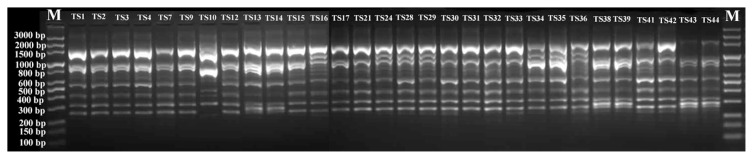
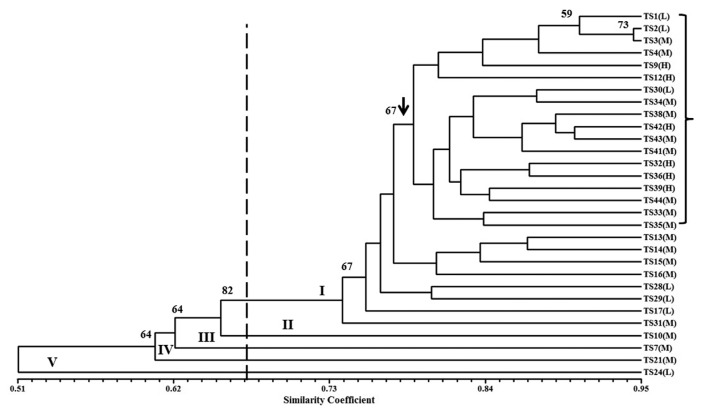
The use of novel isolates of Trichoderma with efficient antagonistic capacity against Fusarium oxysporum f. sp. lycopersici (FOL) is a promising alternative strategy to pesticides for tomato wilt management. We evaluated the antagonistic activity of 30 isolates of T. asperellum against 4 different isolates of FOL. The production of extracellular cell wall degrading enzymes of the antagonistic isolates was also measured. The random amplified polymorphic DNA (RAPD) method was applied to assess the genetic variability among the T. asperellum isolates. All of the T. asperellum isolates significantly reduced the mycelial growth of FOL isolates but the amount of growth reduction varied significantly as well. There was a correlation between the antagonistic capacity of T. asperellum isolates towards FOL and their lytic enzyme production. Isolates showing high levels of chitinase and β-1,3-glucanase activities strongly inhibited the growth of FOL isolates. RAPD analysis showed a high level of genetic variation among T. asperellum isolates. The UPGMA dendrogram revealed that T. asperellum isolates could not be grouped by their anta- gonistic behavior or lytic enzymes production. Six isolates of T. asperellum were highly antagonistic towards FOL and potentially could be used in commercial agriculture to control tomato wilt. Our results are consistent with the conclusion that understanding the genetic variation within Trichoderma isolates and their biochemical capabilities are required for the selection of effective indigenous fungal strains for the use as biocontrol agents.
Keywords: Fusarium wilt; T. asperellum; cell wall degrading enzymes; molecular markers; mycoparasitism.
Figures
References
-
- Abo-Elyousr KAM, Sobhy I, Abdel-Hafez I, Abdel-Rahim I. Isolation of Trichoderma and evaluation of their antagonistic potential against Alternaria porri. J Phytpathol. 2014;162:567–574. doi: 10.1111/jph.12228. - DOI
-
- Avis TJ, Hamelin RC, Bélanger RR. Approaches to molecular characterization of fungal biocontrol agents: some case studies. Can J Plant Pathol. 2001;23:8–12. doi: 10.1080/07060660109506902. - DOI
-
- Benítez T, Rincón AM, Limón MC, Codón AC. Biocontrol mechanisms of Trichoderma strains. Int Microbiol. 2004;7:249–260. - PubMed
LinkOut - more resources
Full Text Sources