


Complete chloroplast genome of the multifunctional crop globe artichoke and comparison with other Asteraceae
- PMID: 25774672
- PMCID: PMC4361619
- DOI: 10.1371/journal.pone.0120589
Complete chloroplast genome of the multifunctional crop globe artichoke and comparison with other Asteraceae
Abstract
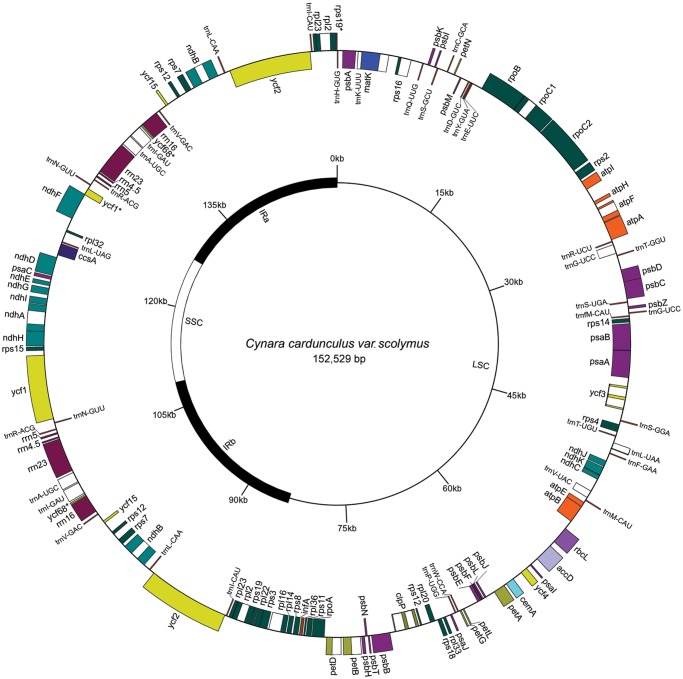
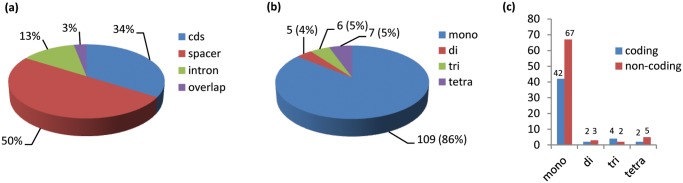
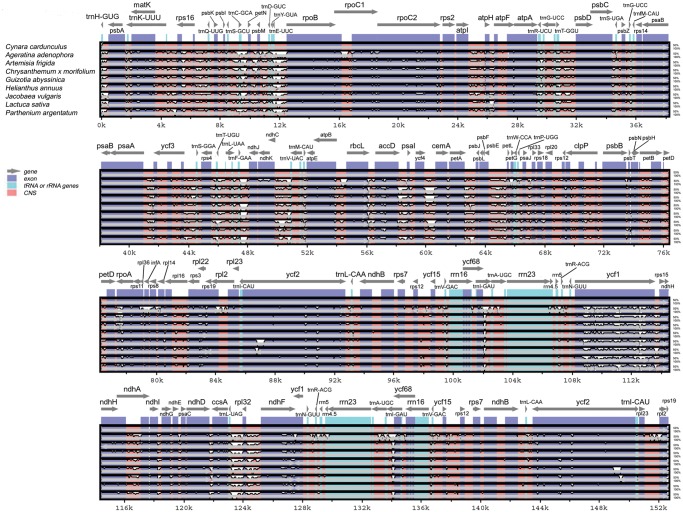
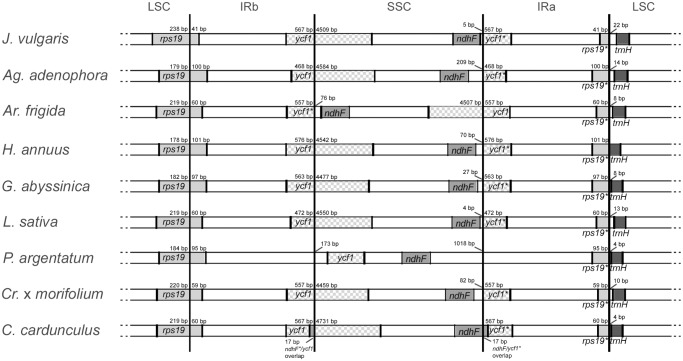
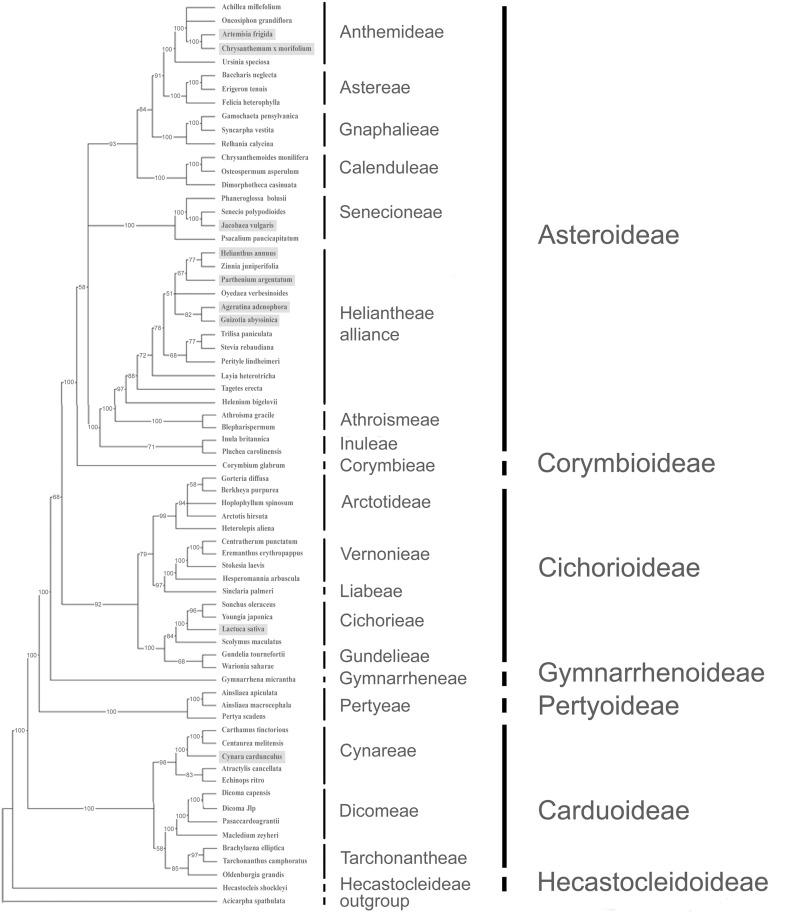
With over 20,000 species, Asteraceae is the second largest plant family. High-throughput sequencing of nuclear and chloroplast genomes has allowed for a better understanding of the evolutionary relationships within large plant families. Here, the globe artichoke chloroplast (cp) genome was obtained by a combination of whole-genome and BAC clone high-throughput sequencing. The artichoke cp genome is 152,529 bp in length, consisting of two single-copy regions separated by a pair of inverted repeats (IRs) of 25,155 bp, representing the longest IRs found in the Asteraceae family so far. The large (LSC) and the small (SSC) single-copy regions span 83,578 bp and 18,641 bp, respectively. The artichoke cp sequence was compared to the other eight Asteraceae complete cp genomes available, revealing an IR expansion at the SSC/IR boundary. This expansion consists of 17 bp of the ndhF gene generating an overlap between the ndhF and ycf1 genes. A total of 127 cp simple sequence repeats (cpSSRs) were identified in the artichoke cp genome, potentially suitable for future population studies in the Cynara genus. Parsimony-informative regions were evaluated and allowed to place a Cynara species within the Asteraceae family tree. The eight most informative coding regions were also considered and tested for "specific barcode" purpose in the Asteraceae family. Our results highlight the usefulness of cp genome sequencing in exploring plant genome diversity and retrieving reliable molecular resources for phylogenetic and evolutionary studies, as well as for specific barcodes in plants.
Conflict of interest statement
Figures
References
-
- Bremer K. Asteraceae: cladistics and classification. Portland, Oregon, USA: Timber Press; 1994.
-
- Rottenberg A, Zohary D. The wild ancestry of the cultivated artichoke. Genet Resour Crop Evol. 1996; 43: 53–58.
-
- Gebhardt R. Antioxidative and protective properties of extracts from leaves of the artichoke (Cynara scolymus L.) against hydroperoxide-induced oxidative stress in cultured rat hepatocytes. Toxicol Appl Pharmacol. 1997; 144: 279–286. - PubMed
Publication types
MeSH terms
Associated data
- Actions
- SRA/SRP049578
- SRA/SRR1648410
LinkOut - more resources
Full Text Sources
Other Literature Sources
Molecular Biology Databases
Miscellaneous
