


Soft, curved electrode systems capable of integration on the auricle as a persistent brain-computer interface
- PMID: 25775550
- PMCID: PMC4386388
- DOI: 10.1073/pnas.1424875112
Soft, curved electrode systems capable of integration on the auricle as a persistent brain-computer interface
Abstract
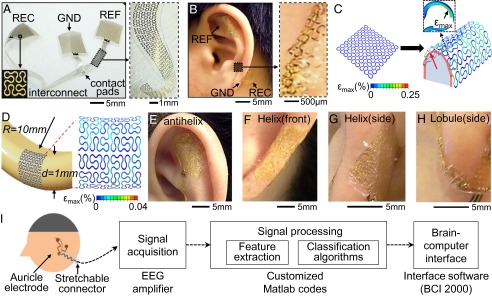
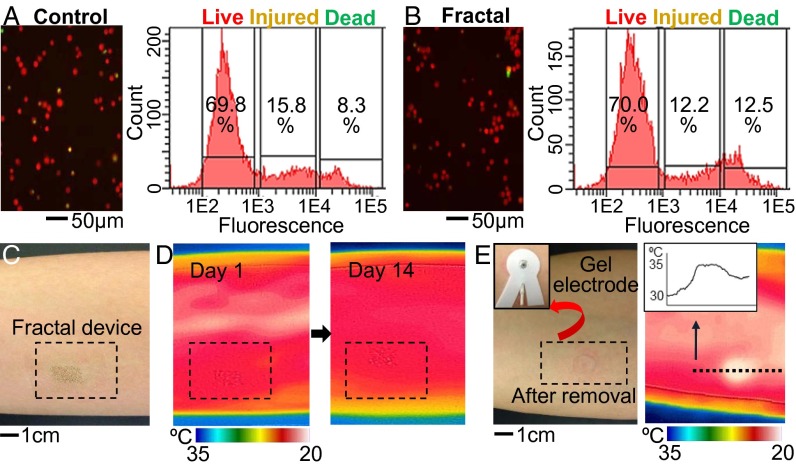
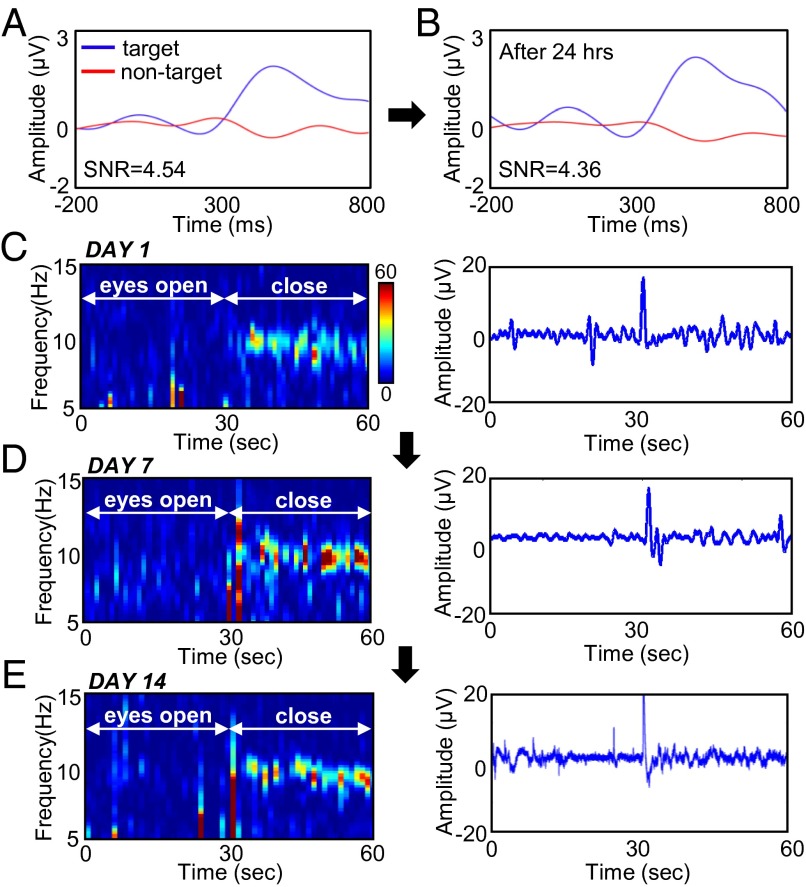
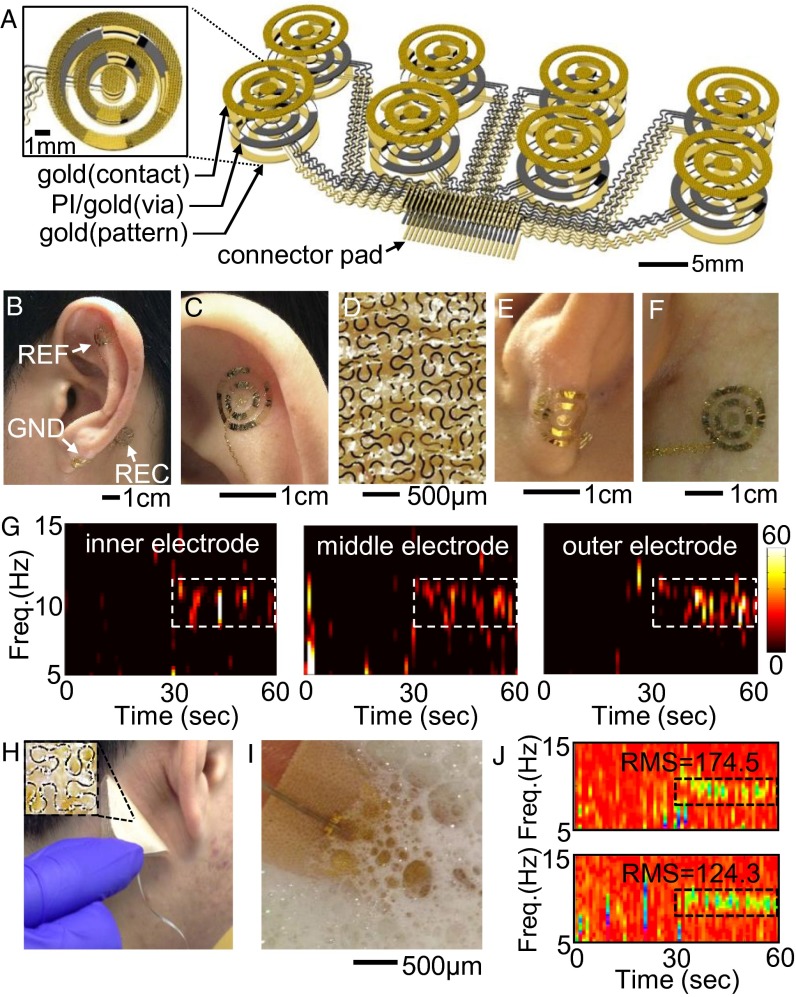
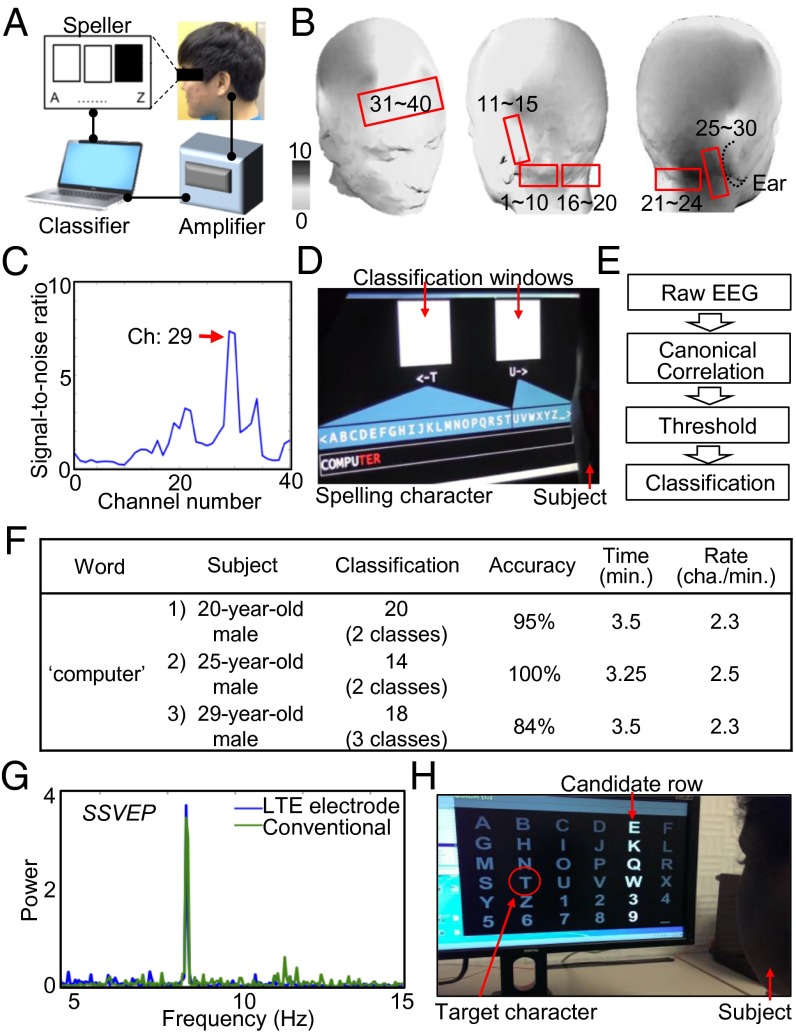
Recent advances in electrodes for noninvasive recording of electroencephalograms expand opportunities collecting such data for diagnosis of neurological disorders and brain-computer interfaces. Existing technologies, however, cannot be used effectively in continuous, uninterrupted modes for more than a few days due to irritation and irreversible degradation in the electrical and mechanical properties of the skin interface. Here we introduce a soft, foldable collection of electrodes in open, fractal mesh geometries that can mount directly and chronically on the complex surface topology of the auricle and the mastoid, to provide high-fidelity and long-term capture of electroencephalograms in ways that avoid any significant thermal, electrical, or mechanical loading of the skin. Experimental and computational studies establish the fundamental aspects of the bending and stretching mechanics that enable this type of intimate integration on the highly irregular and textured surfaces of the auricle. Cell level tests and thermal imaging studies establish the biocompatibility and wearability of such systems, with examples of high-quality measurements over periods of 2 wk with devices that remain mounted throughout daily activities including vigorous exercise, swimming, sleeping, and bathing. Demonstrations include a text speller with a steady-state visually evoked potential-based brain-computer interface and elicitation of an event-related potential (P300 wave).
Keywords: auricle integration; brain–computer interface; soft electronics; text speller.
Conflict of interest statement
The authors declare no conflict of interest.
Figures
References
-
- Kutas M, Federmeier KD. Electrophysiology reveals semantic memory use in language comprehension. Trends Cogn Sci. 2000;4(12):463–470. - PubMed
-
- Babiloni C, et al. Cortical EEG alpha rhythms reflect task-specific somatosensory and motor interactions in humans. Clin Neurophysiol. 2014;125(10):1936–1945. - PubMed
-
- Searle A, Kirkup L. A direct comparison of wet, dry and insulating bioelectric recording electrodes. Physiol Meas. 2000;21(2):271–283. - PubMed
Publication types
MeSH terms
LinkOut - more resources
Full Text Sources
Other Literature Sources
Miscellaneous
