


Speech repetition as a window on the neurobiology of auditory-motor integration for speech: A voxel-based lesion symptom mapping study
- PMID: 25777496
- PMCID: PMC4417364
- DOI: 10.1016/j.neuropsychologia.2015.03.012
Speech repetition as a window on the neurobiology of auditory-motor integration for speech: A voxel-based lesion symptom mapping study
Abstract
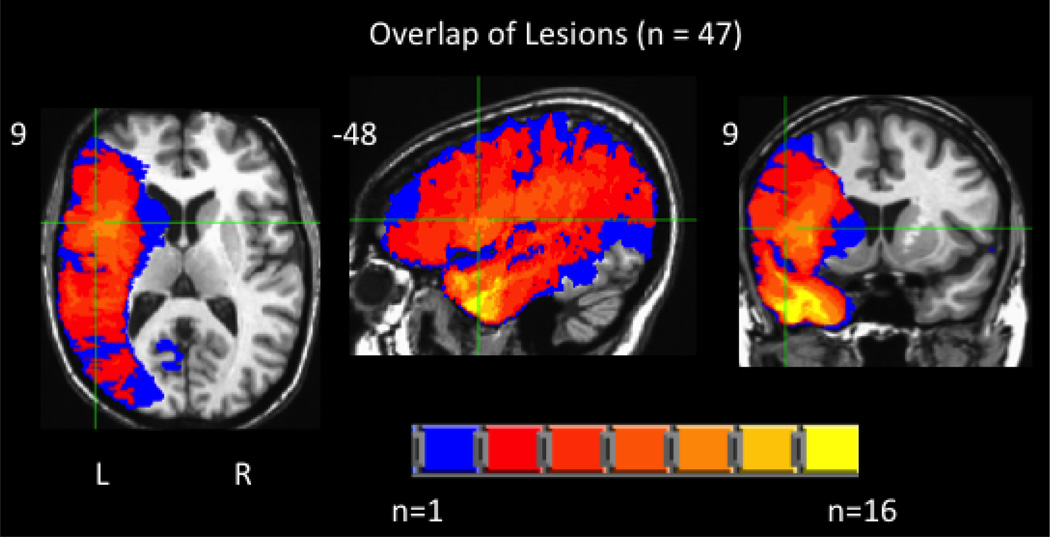
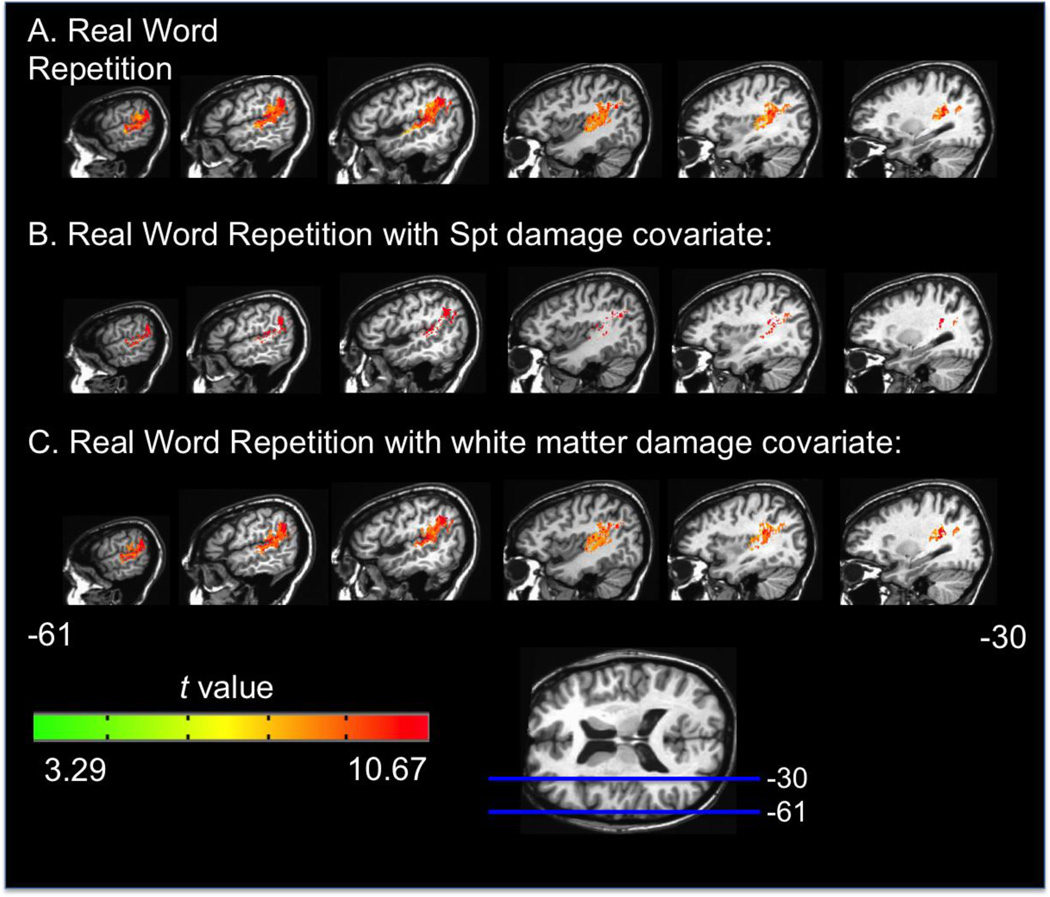
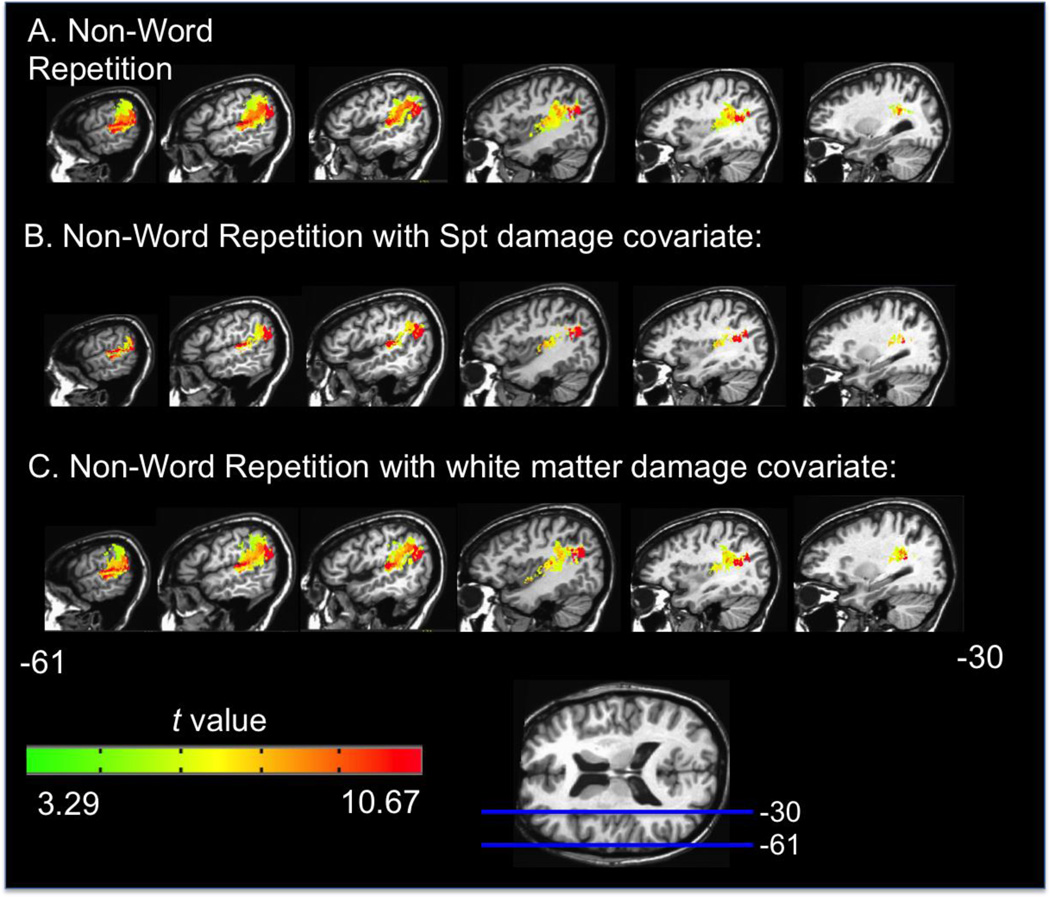
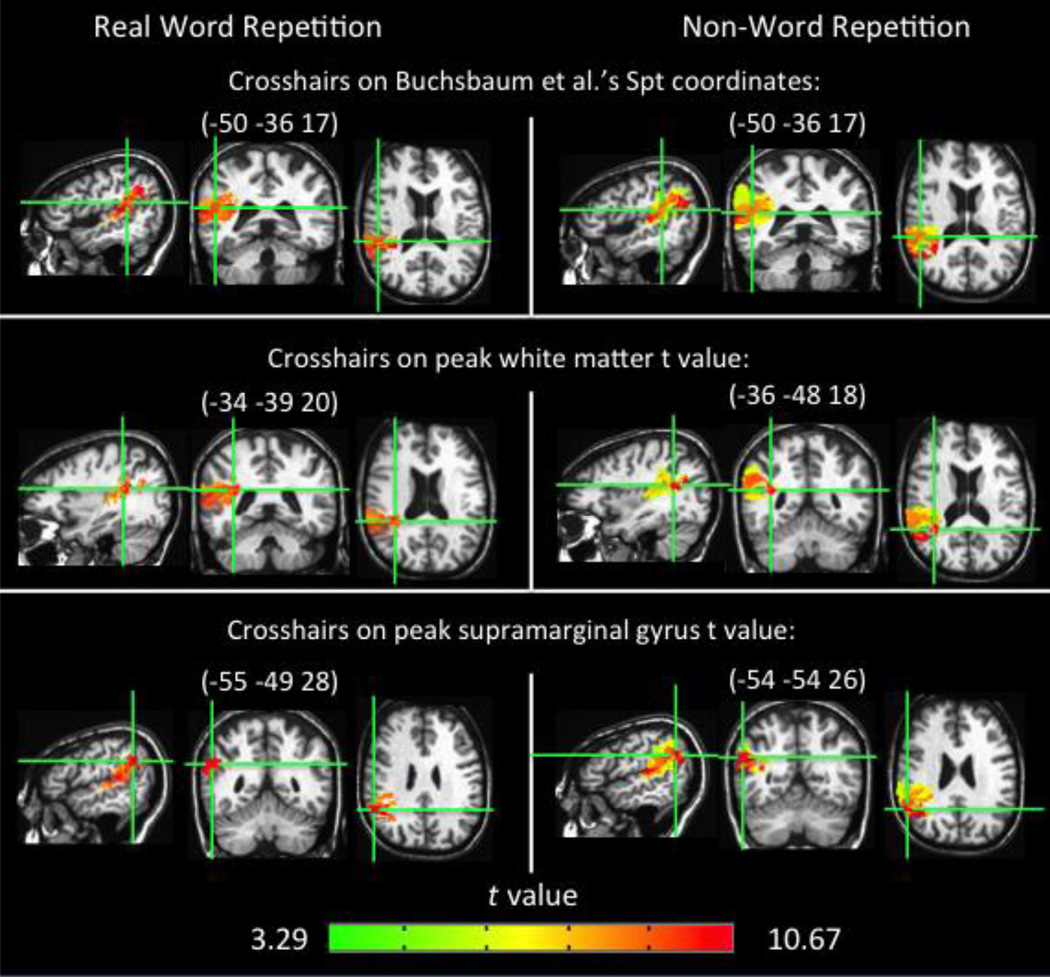
For more than a century, speech repetition has been used as an assay for gauging the integrity of the auditory-motor pathway in aphasia, thought classically to involve a linkage between Wernicke's area and Broca's area via the arcuate fasciculus. During the last decade, evidence primarily from functional imaging in healthy individuals has refined this picture both computationally and anatomically, suggesting the existence of a cortical hub located at the parietal-temporal boundary (area Spt) that functions to integrate auditory and motor speech networks for both repetition and spontaneous speech production. While functional imaging research can pinpoint the regions activated in repetition/auditory-motor integration, lesion-based studies are needed to infer causal involvement. Previous lesion studies of repetition have yielded mixed results with respect to Spt's critical involvement in speech repetition. The present study used voxel-based lesion symptom mapping (VLSM) to investigate the neuroanatomy of repetition of both real words and non-words in a sample of 47 patients with focal left hemisphere brain damage. VLSMs identified a large voxel cluster spanning gray and white matter in the left temporal-parietal junction, including area Spt, where damage was significantly related to poor non-word repetition. Repetition of real words implicated a very similar dorsal network including area Spt. Cortical regions including Spt were implicated in repetition performance even when white matter damage was factored out. In addition, removing variance associated with speech perception abilities did not alter the overall lesion pattern for either task. Together with past functional imaging work, our results suggest that area Spt is integral in both word and non-word repetition, that its contribution is above and beyond that made by white matter pathways, and is not driven by perceptual processes alone. These findings are highly consistent with the claim that Spt is an area of sensory-motor translation in speech processing.
Keywords: Area Spt; Sensory-motor integration; Speech production; Speech repetition; Voxel-based lesion symptom mapping.
Copyright © 2015 Elsevier Ltd. All rights reserved.
Figures
References
-
- Anderson JM, Gilmore R, Roper S, Crosson B, Bauer RM, Nadeau S, et al. Conduction aphasia and the arcuate fasciculus: A reexamination of the Wernicke-Geschwind model. Brain and Language. 1999;70(1):1–12. - PubMed
-
- Axer H, von Keyserlingk AG, Berks G, von Keyserlingk DG. Supra- and infrasylvian conduction aphasia. Brain and Language. 2001;76(3):317–331. - PubMed
-
- Baker E, Blumstein SE, Goodglass H. Interaction between phonological and semantic factors in auditory comprehension. Neuropsychology. 1981;19(1):1–15. - PubMed
-
- Baldo JV, Klostermann EC, Dronkers NF. It’s either a cook or a baker: patients with conduction aphasia get the gist but lose the trace. Brain and Language. 2008;105(2):134–140. - PubMed
Publication types
MeSH terms
Grants and funding
LinkOut - more resources
Full Text Sources
Other Literature Sources
Miscellaneous
