Degradation of the endothelial glycocalyx in clinical settings: searching for the sheddases
- PMID: 25778676
- PMCID: PMC4574825
- DOI: 10.1111/bcp.12629
Degradation of the endothelial glycocalyx in clinical settings: searching for the sheddases
Abstract
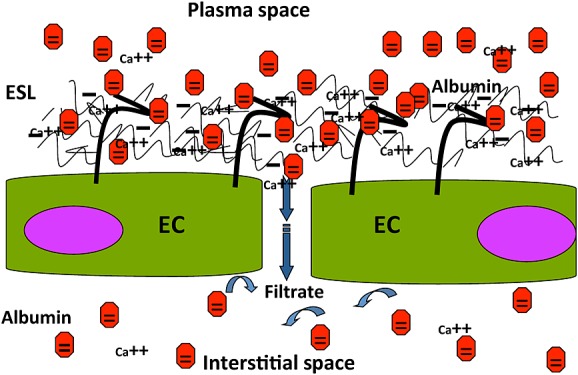
The endothelial glycocalyx has a profound influence at the vascular wall on the transmission of shear stress, on the maintenance of a selective permeability barrier and a low hydraulic conductivity, and on attenuating firm adhesion of blood leukocytes and platelets. Major constituents of the glycocalyx, including syndecans, heparan sulphates and hyaluronan, are shed from the endothelial surface under various acute and chronic clinical conditions, the best characterized being ischaemia and hypoxia, sepsis and inflammation, atherosclerosis, diabetes, renal disease and haemorrhagic viral infections. Damage has also been detected by in vivo microscopic techniques. Matrix metalloproteases may shed syndecans and heparanase, released from activated mast cells, cleaves heparan sulphates from core proteins. According to new data, not only hyaluronidase but also the serine proteases thrombin, elastase, proteinase 3 and plasminogen, as well as cathepsin B lead to loss of hyaluronan from the endothelial surface layer, suggesting a wide array of potentially destructive conditions. Appropriately, pharmacological agents such as inhibitors of inflammation, antithrombin and inhibitors of metalloproteases display potential to attenuate shedding of the glycocalyx in various experimental models. Also, plasma components, especially albumin, stabilize the glycocalyx and contribute to the endothelial surface layer. Though symptoms of the above listed diseases and conditions correlate with sequelae expected from disturbance of the endothelial glycocalyx (oedema, inflammation, leukocyte and platelet adhesion, low reflow), therapeutic studies to prove a causal connection have yet to be designed. With respect to studies on humans, some clinical evidence exists for benefits from application of sulodexide, a preparation delivering precursors of the glycocalyx constituent heparan sulphate. At present, the simplest option for protecting the glycocalyx seems to be to ensure an adequate level of albumin. However, also in this case, definite proof of causality needs to be delivered.
Keywords: diabetes; inflammation; ischaemia; protease; renal failure; sepsis.
© 2015 The British Pharmacological Society.
Figures
References
-
- Pries AR, Secomb TW, Gaehtgens P. The endothelial surface layer. Pflugers Archiv: Eur J Physiol. 2000;440:653–66. - PubMed
-
- Becker BF, Chappell D, Bruegger D, Annecke T, Jacob M. Therapeutic strategies targeting the endothelial glycocalyx: acute deficits, but great potential. Cardiovasc Res. 2010;87:300–10. - PubMed
-
- Jacob M, Chappell D, Stoeckelhuber M, Welsch U, Rehm M, Bruegger D, Kaczmarek I, Conzen P, Becker BF. Perspectives in microvascular fluid handling: does the distribution of coagulation factors in human myocardium comply with plasma extravasation in venular coronary segments? J Vasc Res. 2011;48:219–26. - PubMed
-
- Vink H, Duling BR. Capillary endothelial surface layer selectively reduces plasma solute distribution volume. Am J Physiol Heart Circ Physiol. 2000;278:H285–9. - PubMed
-
- Weinbaum S, Tarbell JM, Damiano ER. The structure and function of the endothelial glycocalyx layer. Annu Rev Biomed Eng. 2007;9:121–67. - PubMed
Publication types
MeSH terms
Substances
Grants and funding
LinkOut - more resources
Full Text Sources
Other Literature Sources
Medical