


Antibiotic prevention of postcataract endophthalmitis: a systematic review and meta-analysis
- PMID: 25779209
- PMCID: PMC6680152
- DOI: 10.1111/aos.12684
Antibiotic prevention of postcataract endophthalmitis: a systematic review and meta-analysis
Abstract
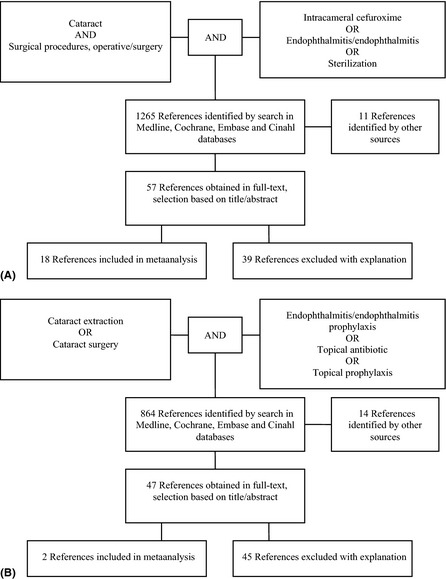
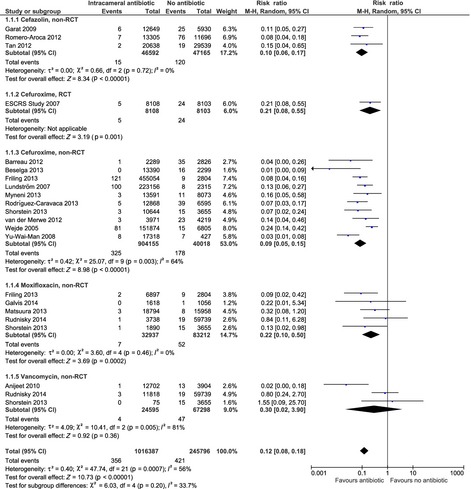
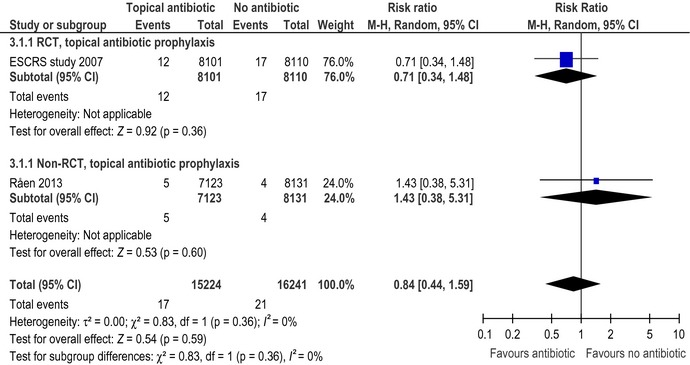
Endophthalmitis is one of the most feared complications after cataract surgery. The aim of this systematic review was to evaluate the effect of intracameral and topical antibiotics on the prevention of endophthalmitis after cataract surgery. A systematic literature review in the MEDLINE, CINAHL, Cochrane Library and EMBASE databases revealed one randomized trial and 17 observational studies concerning the prophylactic effect of intracameral antibiotic administration on the rate of endophthalmitis after cataract surgery. The effect of topical antibiotics on endophthalmitis rate was reported by one randomized trial and one observational study. The quality and design of the included studies were analysed using the Cochrane risk of bias tool. The quality of the evidence was evaluated using the GRADE approach. We found high-to-moderate quality evidence for a marked reduction in the risk of endophthalmitis with the use of intracameral antibiotic administration of cefazolin, cefuroxime and moxifloxacin, whereas no effect was found with the use of topical antibiotics or intracameral vancomycin. Endophthalmitis occurred on average in one of 2855 surgeries when intracameral antibiotics were used compared to one of 485 surgeries when intracameral antibiotics were not used. The relative risk (95% CI) of endophthalmitis was reduced to 0.12 (0.08; 0.18) when intracameral antibiotics were used. The difference was highly significant (p < 0.00001). Intracameral antibiotic therapy is the best choice for preventing endophthalmitis after cataract surgery. We did not find evidence to conclude that topical antibiotic therapy prevents endophthalmitis.
Keywords: antibiotic therapy; cataract surgery; cefuroxime; endophthalmitis; prevention.
© 2015 The Authors Acta Ophthalmologica published by John Wiley & Sons Ltd on behalf of Acta Ophthalmologica Scandinavica Foundation.
Figures
Comment in
-
Can endophthalmitis be prevented?Acta Ophthalmol. 2015 Jun;93(4):301-2. doi: 10.1111/aos.12751. Acta Ophthalmol. 2015. PMID: 25981439 No abstract available.
References
-
- Al‐Mezaine HS, Al‐Assiri A & Al‐Rajhi AA (2009): Incidence, clinical features, causative organisms, and visual outcomes of delayed‐onset pseudophakic endophthalmitis. Eur J Ophthalmol 19: 804–811. - PubMed
-
- Altan T, Acar N, Kapran Z, Unver YB, Yurttaser S, Kucuksumer Y & Eser I (2009): Acute‐onset endophthalmitis after cataract surgery: success of initial therapy, visual outcomes, and related factors. Retina 29: 606–612. - PubMed
-
- American Academy of Ophthalmology (2011): Cataract in the adult eye. Preferred Practice Pattern 1‐89. - PubMed
-
- Asencio MA, Huertas M, Carranza R, Tenias JM, Celis J & Gonzalez‐Del VF (2014): Impact of changes in antibiotic prophylaxis on postoperative endophthalmitis in a Spanish hospital. Ophthalmic Epidemiol 21: 45–50. - PubMed
Publication types
MeSH terms
Substances
LinkOut - more resources
Full Text Sources
Other Literature Sources
Medical
