


The spectrum of constipation-predominant irritable bowel syndrome and chronic idiopathic constipation: US survey assessing symptoms, care seeking, and disease burden
- PMID: 25781368
- PMCID: PMC4424385
- DOI: 10.1038/ajg.2015.67
The spectrum of constipation-predominant irritable bowel syndrome and chronic idiopathic constipation: US survey assessing symptoms, care seeking, and disease burden
Abstract
Introduction: The irritable bowel syndrome with constipation (IBS-C) and chronic idiopathic constipation (CIC) are associated with substantial symptom and disease burden. Although typically classified as distinct diseases, symptoms frequently overlap.
Aim: The objective of this study was to characterize symptom and disease burden in IBS-C and CIC sufferers and examine a subset of CIC sufferers with abdominal symptoms.
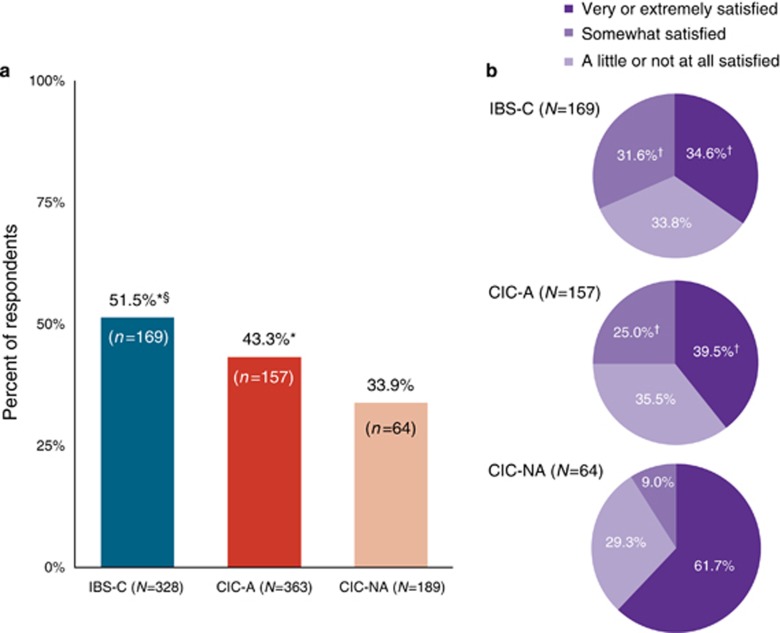
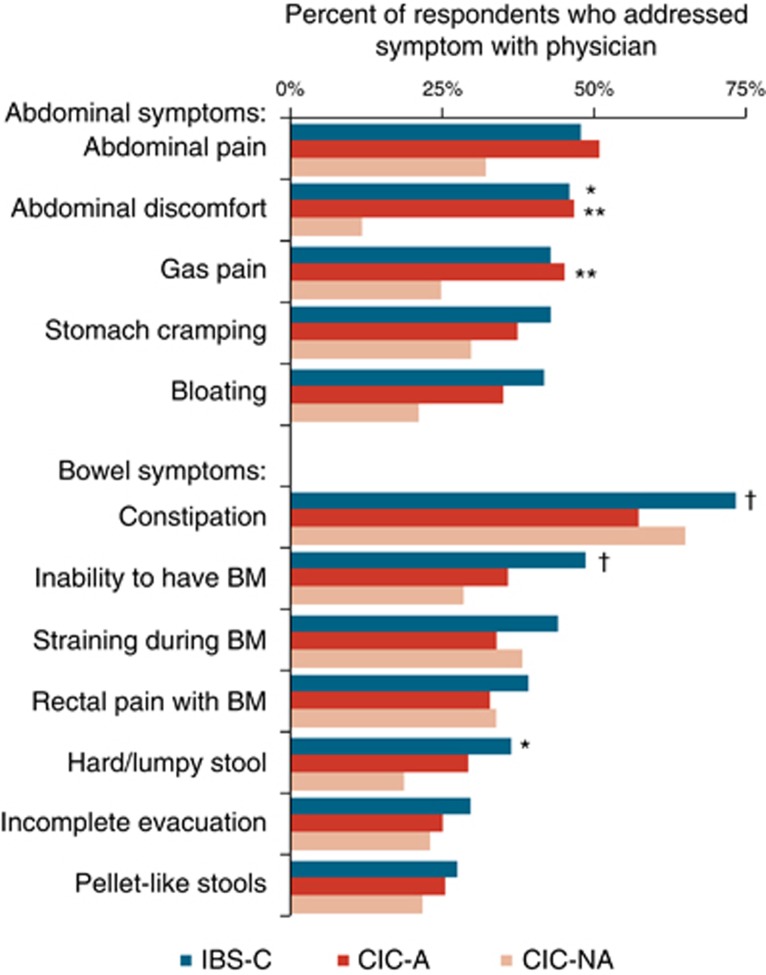
Methods: In a US population-based survey, respondents meeting the Rome III criteria for IBS-C or CIC rated symptom frequency and bothersomeness, missed work and disrupted productivity, and degree of obtaining and satisfaction with physician care. CIC respondents were analyzed in two subgroups: those with abdominal symptoms ≥once weekly (CIC-A) and those without (CIC-NA).
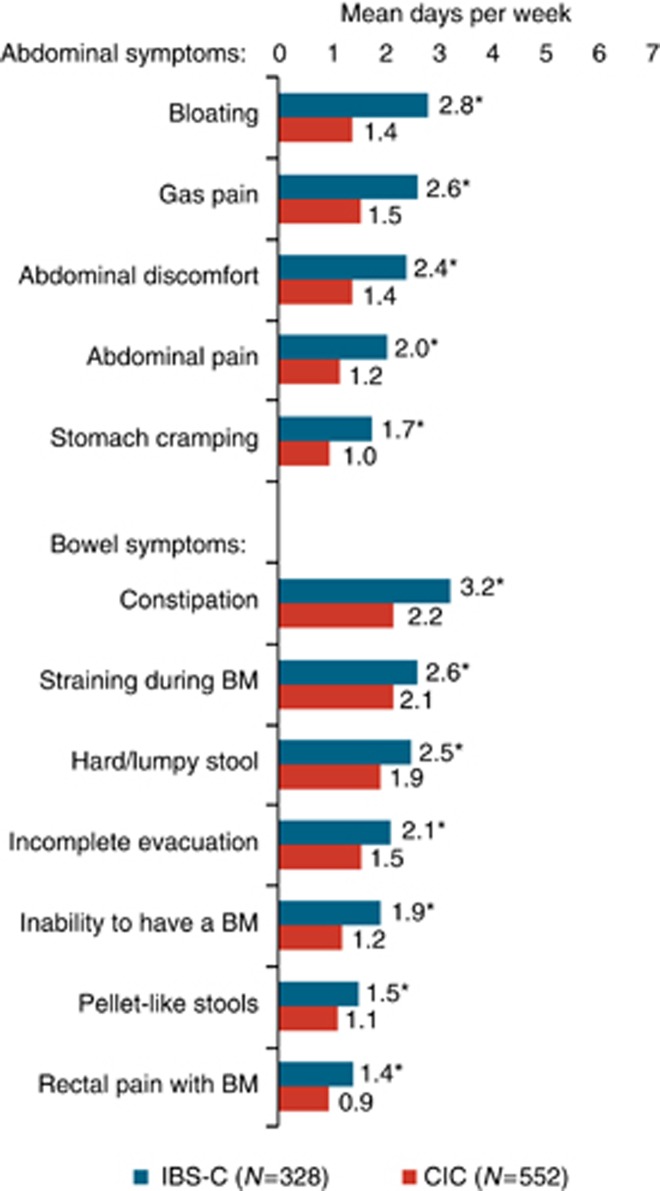
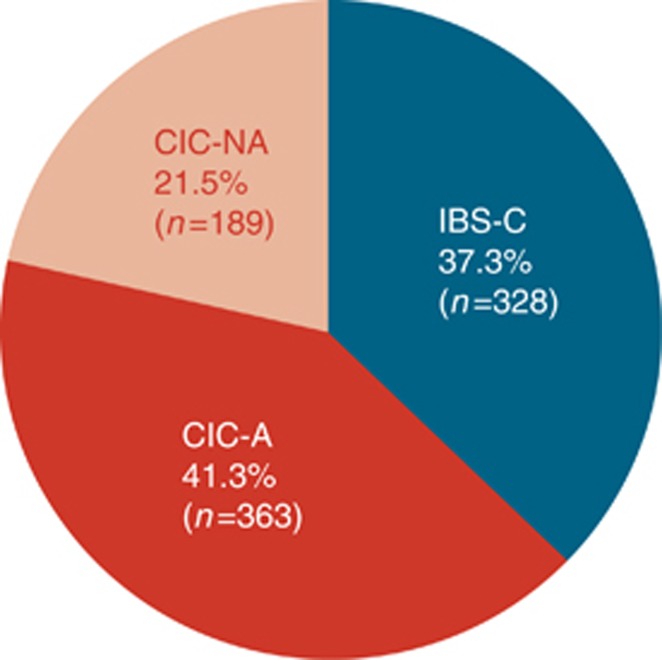
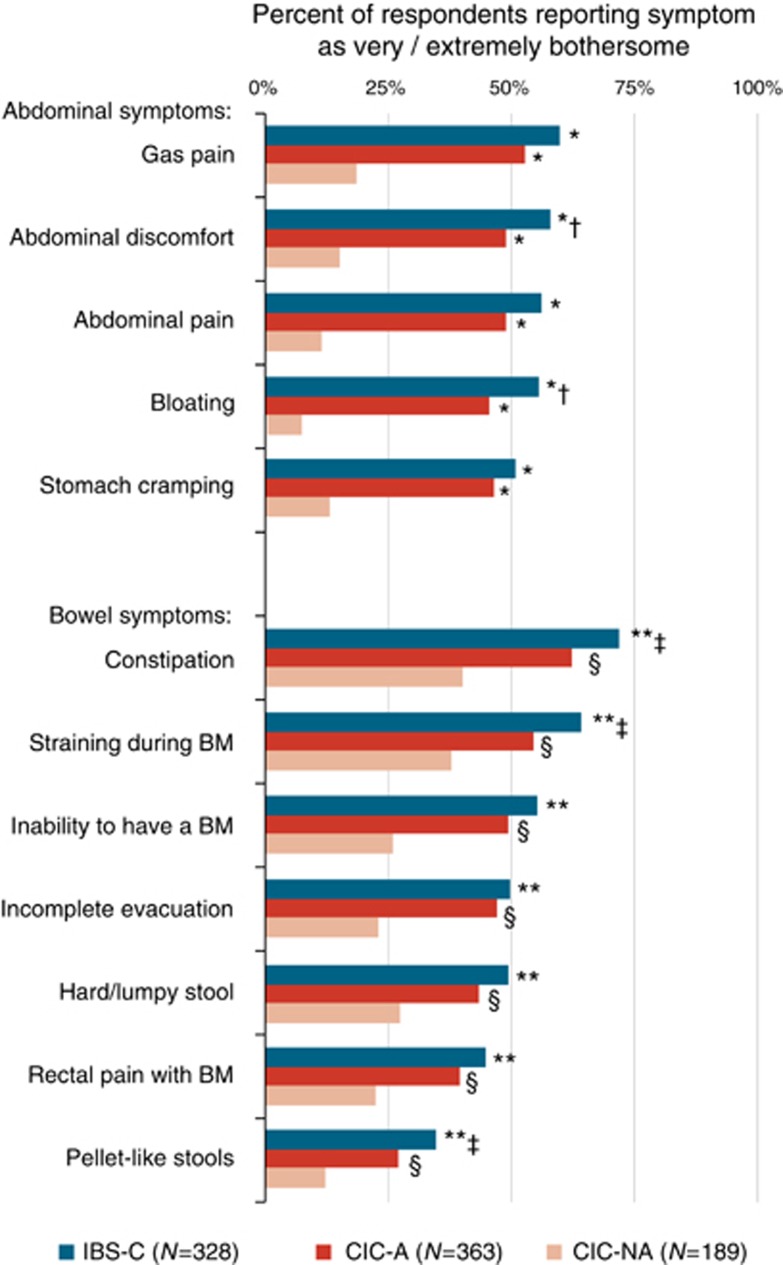
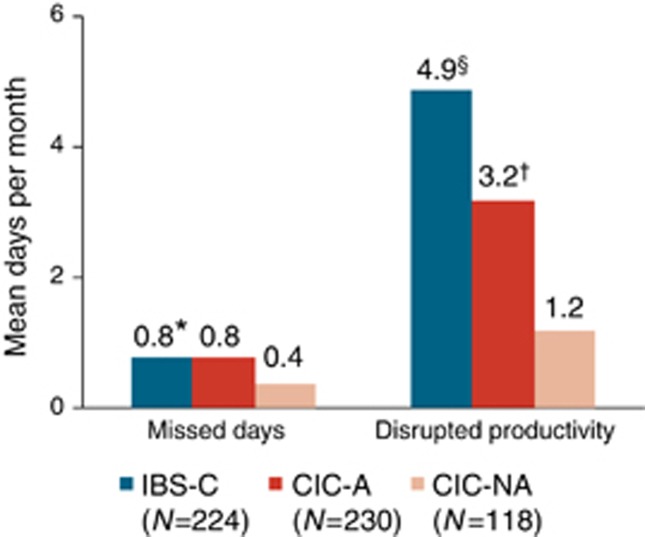
Results: Of the 10,030 respondents, 328 met the criteria for IBS-C and 552 for CIC (363 CIC-A; 189 CIC-NA). All symptoms were significantly more frequent in IBS-C vs. CIC respondents (P<0.0001). Constipation was extremely/very bothersome in 72% of IBS-C respondents, 62% of CIC-A, and 40% of CIC-NA (P<0.01 all pairs). All 11 other measured symptoms were significantly more bothersome in IBS-C and CIC-A vs. CIC-NA respondents. In IBS-C vs. CIC-A, abdominal discomfort, bloating, straining, and pellet-like stools were also significantly more bothersome, with other remaining symptoms similar. Gastrointestinal symptoms disrupted productivity a mean of 4.9 days per month in IBS-C respondents, 3.2 in CIC-A, and 1.2 in CIC-NA (P<0.001 all pairs); missed days were similar in IBS-C and CIC-A respondents.
Conclusion: CIC respondents with abdominal symptoms experience greater disease burden compared with CIC respondents without frequent abdominal symptoms and have a disease burden profile that is similar to IBS-C respondents.
Figures
References
-
- Lovell RM, Ford AC. Global prevalence of, and risk factors for, irritable bowel syndrome: a meta-analysis. Clin Gastroenterol Hepatol. 2012;10:712–721. - PubMed
-
- Quigley EM, Abdel-Hamid H, Barbara G, et al. A global perspective on irritable bowel syndrome: a consensus statement of the world gastroenterology organisation summit task force on irritable bowel syndrome. J Clin Gastroenterol. 2012;46:356–366. - PubMed
-
- Longstreth GF, Thompson WG, Chey WD, et al. Functional bowel disorders. Gastroenterology. 2006;130:1480–1491. - PubMed
-
- Suares NC, Ford AC. Prevalence of, and risk factors for, chronic idiopathic constipation in the community: systematic review and meta-analysis. Am J Gastroenterol. 2011;106:1582–1591. - PubMed
-
- Frissora CL, Koch KL. Symptom overlap and comorbidity of irritable bowel syndrome with other conditions. Curr Gastroenterol Rep. 2005;7:264–271. - PubMed
Publication types
MeSH terms
LinkOut - more resources
Full Text Sources
Other Literature Sources
Medical
Miscellaneous
