Visceral adiposopathy: a vascular perspective
- PMID: 25781557
- PMCID: PMC4442778
- DOI: 10.1515/hmbci-2014-0047
Visceral adiposopathy: a vascular perspective
Abstract
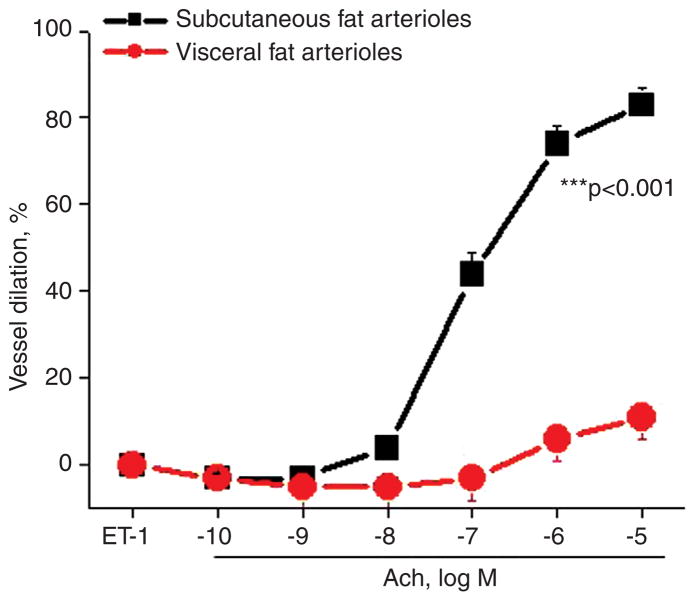
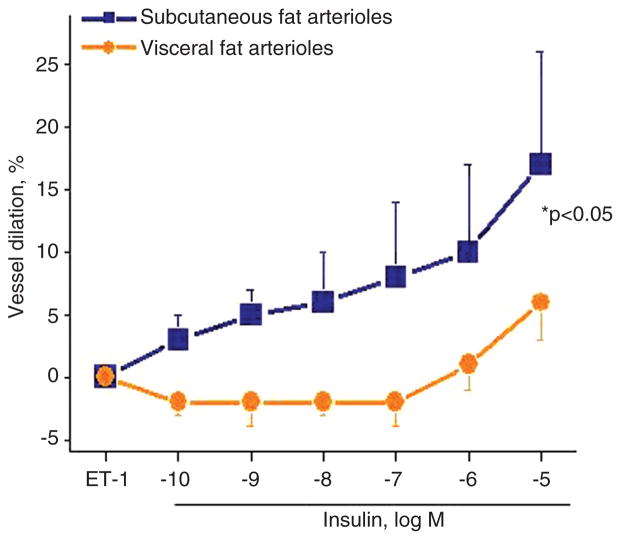
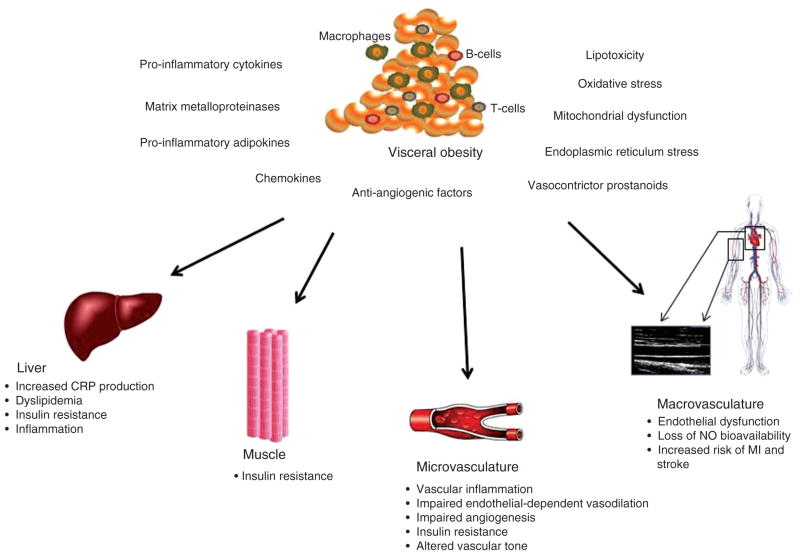
Obesity has emerged as one of the most critical health care problems globally that is associated with the development of insulin resistance, type 2 diabetes mellitus, metabolic dysfunction and cardiovascular disease. Central adiposity with intra-abdominal deposition of visceral fat, in particular, has been closely linked to cardiometabolic consequences of obesity. Increasing epidemiological, clinical and experimental data suggest that both adipose tissue quantity and perturbations in its quality termed "adiposopathy" contribute to mechanisms of cardiometabolic disease. The current review discusses regional differences in adipose tissue characteristics and highlights profound abnormalities in vascular endothelial function and angiogenesis that are manifest within the visceral adipose tissue milieu of obese individuals. Clinical data demonstrate up-regulation of pro-inflammatory and pro-atherosclerotic mediators in dysfunctional adipose tissue that may support pathological vascular changes not only locally in fat but also in multiple organ systems, including coronary and peripheral circulations, potentially contributing to mechanisms of obesity-related cardiovascular disease.
Conflict of interest statement
Figures
References
-
- Wang YC, McPherson K, Marsh T, Gortmaker SL, Brown M. Health and economic burden of the projected obesity trends in the USA and the UK. Lancet. 2011;378:815–25. - PubMed
-
- Flegal KM, Carroll MD, Kit BK, Ogden CL. Prevalence of obesity and trends in the distribution of body mass index among US adults, 1999–2010. J Am Med Assoc. 2012;307:491–7. - PubMed
-
- Kitahara CM, Flint AJ, Berrington de GA, Bernstein L, Brotzman M, MacInnis RJ, Moore SC, Robien K, Rosenberg PS, Singh PN, Weiderpass E, Adami HO, Anton-Culver H, Ballard-Barbash R, Buring JE, Freedman DM, Fraser GE, Beane Freeman LE, Gapstur SM, Gaziano JM, Giles GG, Hakansson N, Hoppin JA, Hu FB, Koenig K, Linet MS, Park Y, Patel AV, Purdue MP, Schairer C, Sesso HD, Visvanathan K, White E, Wolk A, Zeleniuch-Jacquotte A, Hartge P. Association between class III obesity (BMI of 40–59 kg/m2) and mortality: a pooled analysis of 20 prospective studies. PLoS Med. 2014;11:e1001673. - PMC - PubMed
Publication types
MeSH terms
Grants and funding
LinkOut - more resources
Full Text Sources
Other Literature Sources