


An expanded regulatory network temporally controls Candida albicans biofilm formation
- PMID: 25784162
- PMCID: PMC4464956
- DOI: 10.1111/mmi.13002
An expanded regulatory network temporally controls Candida albicans biofilm formation
Abstract
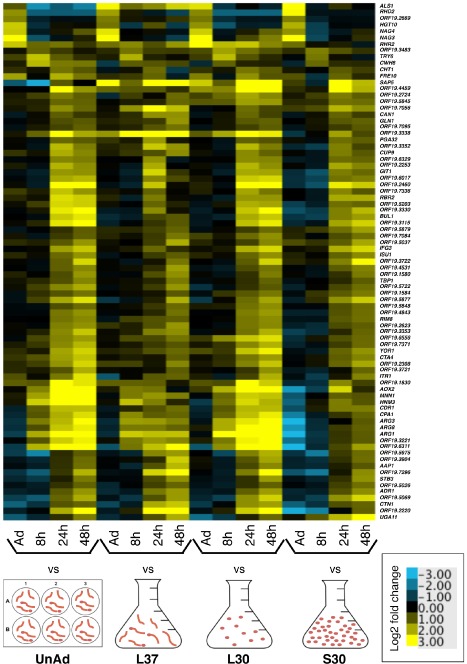
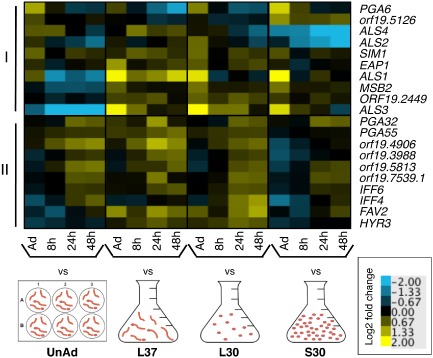
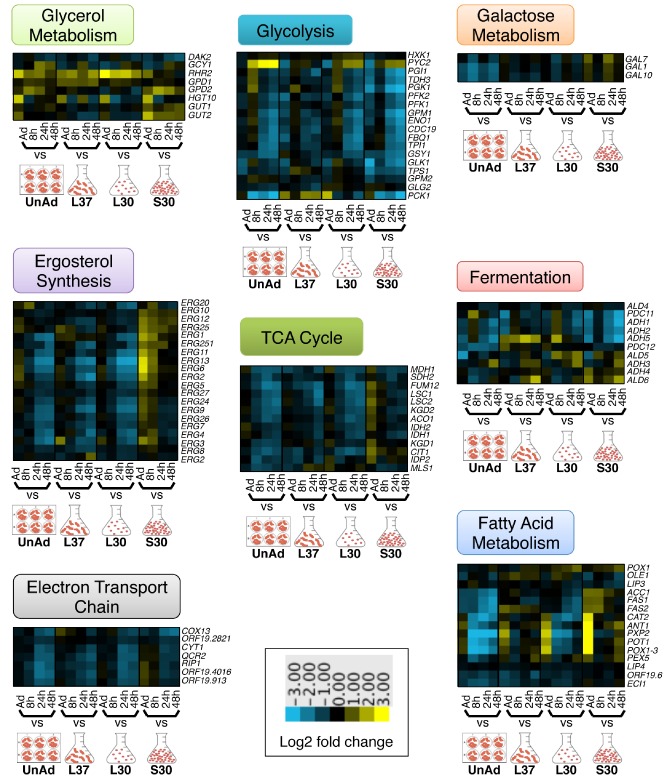
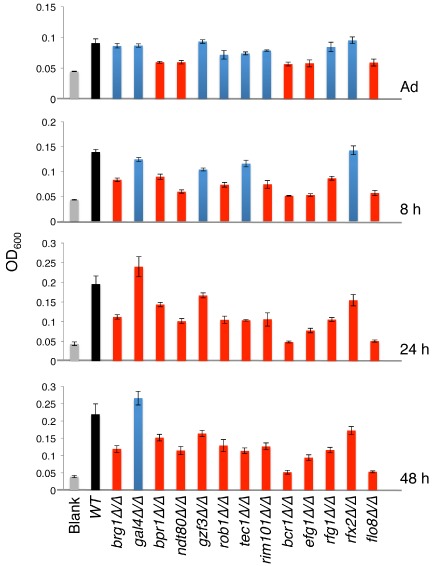
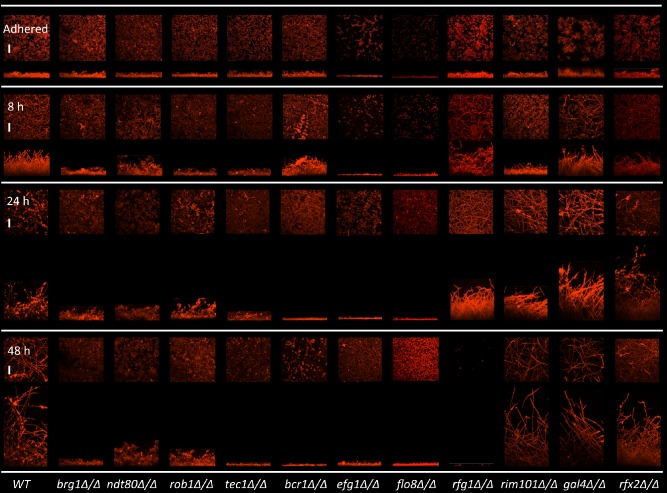
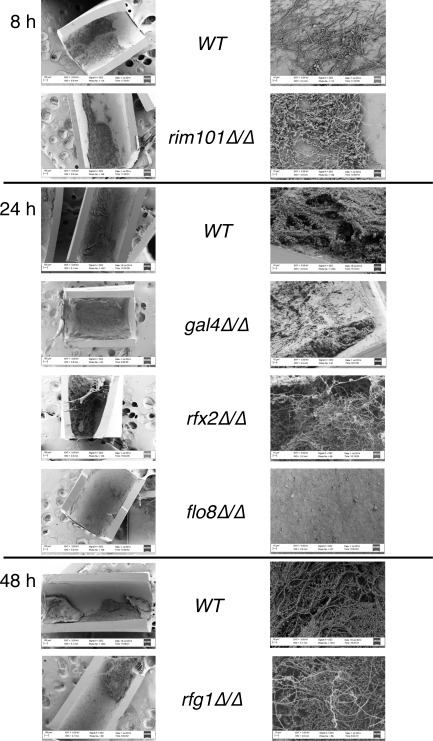
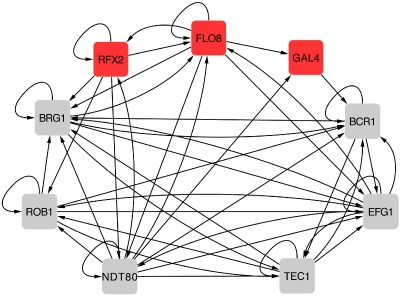
Candida albicans biofilms are composed of highly adherent and densely arranged cells with properties distinct from those of free-floating (planktonic) cells. These biofilms are a significant medical problem because they commonly form on implanted medical devices, are drug resistant and are difficult to remove. C. albicans biofilms are not static structures; rather they are dynamic and develop over time. Here we characterize gene expression in biofilms during their development, and by comparing them to multiple planktonic reference states, we identify patterns of gene expression relevant to biofilm formation. In particular, we document time-dependent changes in genes involved in adhesion and metabolism, both of which are at the core of biofilm development. Additionally, we identify three new regulators of biofilm formation, Flo8, Gal4, and Rfx2, which play distinct roles during biofilm development over time. Flo8 is required for biofilm formation at all time points, and Gal4 and Rfx2 are needed for proper biofilm formation at intermediate time points.
© 2015 The Authors. Molecular Microbiology published by John Wiley & Sons Ltd.
Figures
References
-
- Baillie, G.S. , and Douglas, L.J. (1999) Role of dimorphism in the development of Candida albicans biofilms. J Med Microbiol 48: 671–679. - PubMed
-
- Bonhomme, J. , and d'Enfert, C. (2013) Candida albicans biofilms: building a heterogeneous, drug‐tolerant environment. Curr Opin Microbiol 16: 398–403. - PubMed
Publication types
MeSH terms
Substances
Grants and funding
LinkOut - more resources
Full Text Sources
Other Literature Sources
Molecular Biology Databases
