


Increased plant productivity and decreased microbial respiratory C loss by plant growth-promoting rhizobacteria under elevated CO₂
- PMID: 25784647
- PMCID: PMC4363858
- DOI: 10.1038/srep09212
Increased plant productivity and decreased microbial respiratory C loss by plant growth-promoting rhizobacteria under elevated CO₂
Abstract
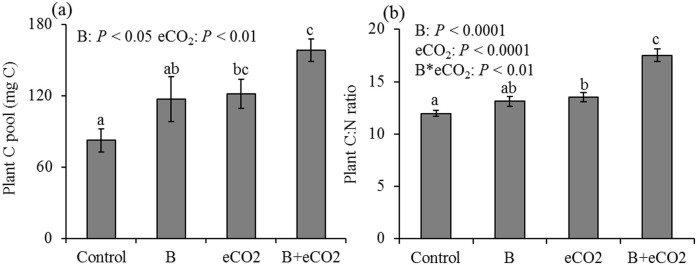
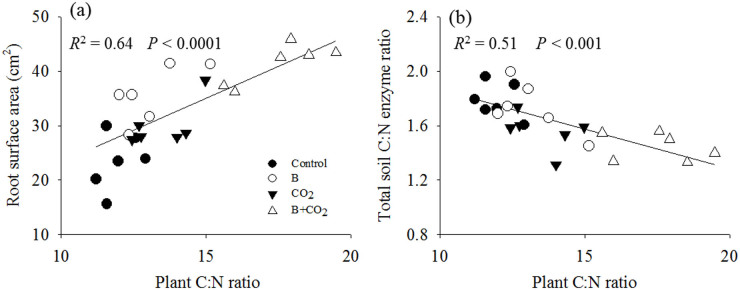
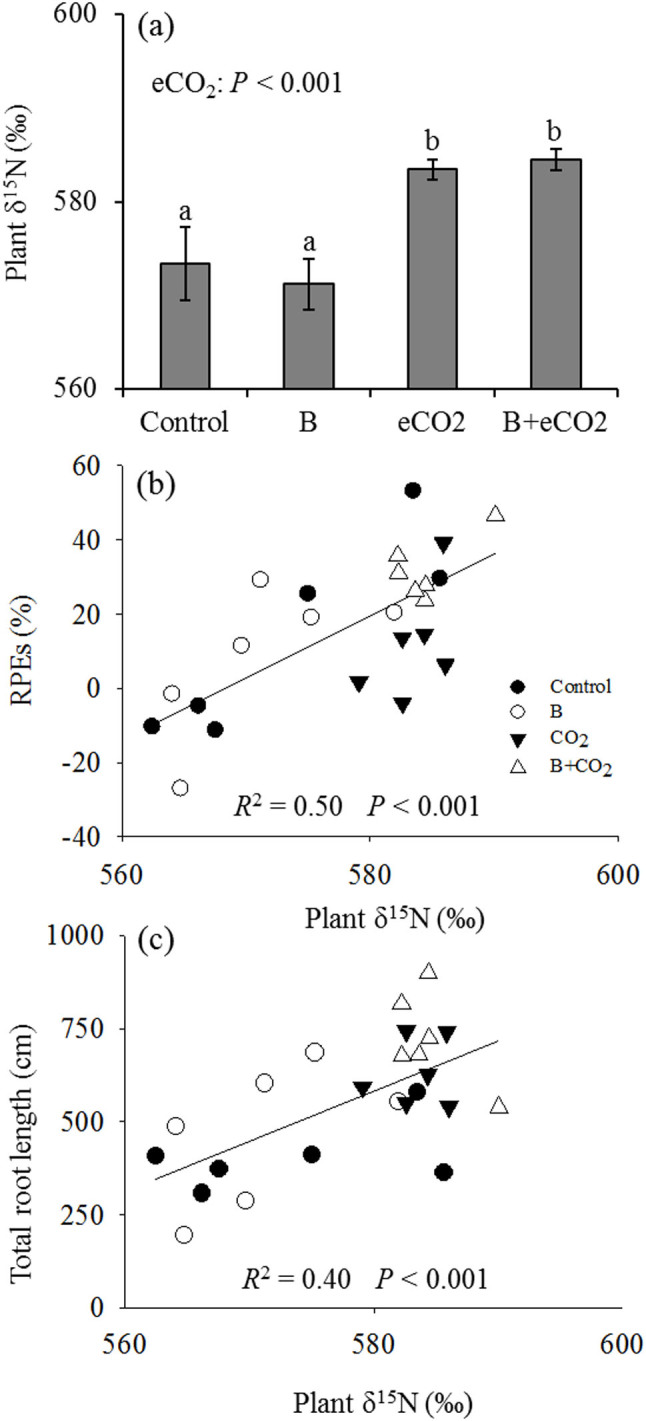
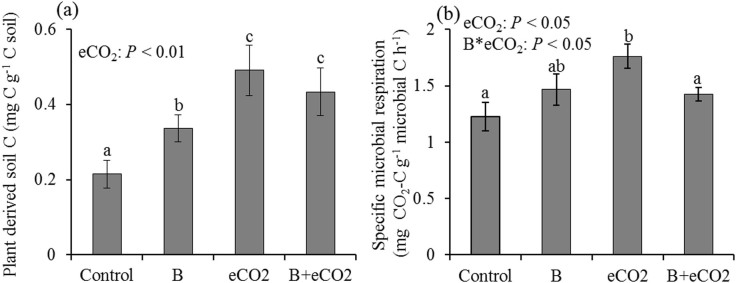
Increased plant productivity and decreased microbial respiratory C loss can potentially mitigate increasing atmospheric CO₂, but we currently lack effective means to achieve these goals. Soil microbes may play critical roles in mediating plant productivity and soil C/N dynamics under future climate scenarios of elevated CO₂ (eCO₂) through optimizing functioning of the root-soil interface. By using a labeling technique with (13)C and (15)N, we examined the effects of plant growth-promoting Pseudomonas fluorescens on C and N cycling in the rhizosphere of a common grass species under eCO₂. These microbial inoculants were shown to increase plant productivity. Although strong competition for N between the plant and soil microbes was observed, the plant can increase its capacity to store more biomass C per unit of N under P. fluorescens addition. Unlike eCO₂ effects, P. fluorescens inoculants did not change mass-specific microbial respiration and accelerate soil decomposition related to N cycling, suggesting these microbial inoculants mitigated positive feedbacks of soil microbial decomposition to eCO₂. The potential to mitigate climate change by optimizing soil microbial functioning by plant growth-promoting Pseudomonas fluorescens is a prospect for ecosystem management.
Conflict of interest statement
The authors declare no competing financial interests.
Figures
References
-
- Lal R. Soil carbon sequestration to mitigate climate change. Geoderma 123, 1–22 (2004).
-
- Cramer W. et al. Global response of terrestrial ecosystem structure and function to CO2 and climate change: results from six dynamic global vegetation models. Glob. Change Biol. 7, 357–373 (2001).
-
- Hart K. M. et al. Tracking the fate of microbially sequestered carbon dioxide in soil organic matter. Environ. Sci. Technol. 47, 5128–5137 (2013). - PubMed
-
- Luo Y. & Zhou X. Soil respiration and the environment. (Elsevier Academic Press, 2006).
-
- Schlesinger W. H. & Andrews J. A. Soil respiration and the global carbon cycle. Biogeochemistry 48, 7–20 (2000).
Publication types
MeSH terms
Substances
LinkOut - more resources
Full Text Sources
Other Literature Sources
Molecular Biology Databases
