


Association between cardiorespiratory fitness and the determinants of glycemic control across the entire glucose tolerance continuum
- PMID: 25784661
- PMCID: PMC4407752
- DOI: 10.2337/dc14-2813
Association between cardiorespiratory fitness and the determinants of glycemic control across the entire glucose tolerance continuum
Abstract
Objective: Cardiorespiratory fitness (VO2max) is associated with glycemic control, yet the relationship between VO2max and the underlying determinants of glycemic control is less clear. Our aim was to determine whether VO2max is associated with insulin sensitivity, insulin secretion, and the disposition index, a measure of compensatory pancreatic β-cell insulin secretion relative to insulin sensitivity, in subjects representing the entire range of the glucose tolerance continuum.
Research design and methods: A cohort of subjects (N = 313) with heterogeneous age, sex, BMI, and glycemic control underwent measurements of body composition, HbA1c, fasting glucose, oral glucose tolerance (OGTT), and VO2max. OGTT-derived insulin sensitivity (SiOGTT), glucose-stimulated insulin secretion (GSISOGTT), and the disposition index (DIOGTT) (the product of SiOGTT and GSISOGTT) were measured, and associations between VO2max and these determinants of glycemic control were examined.
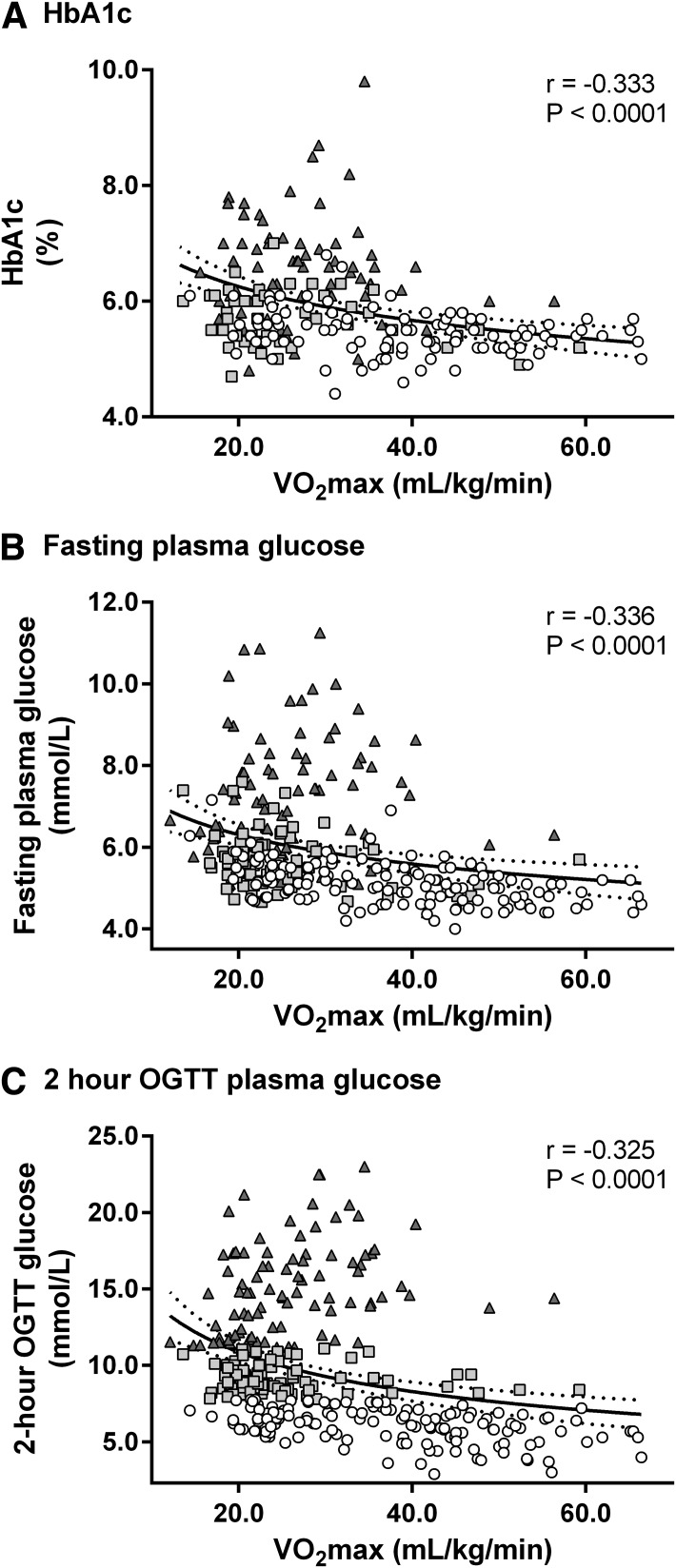
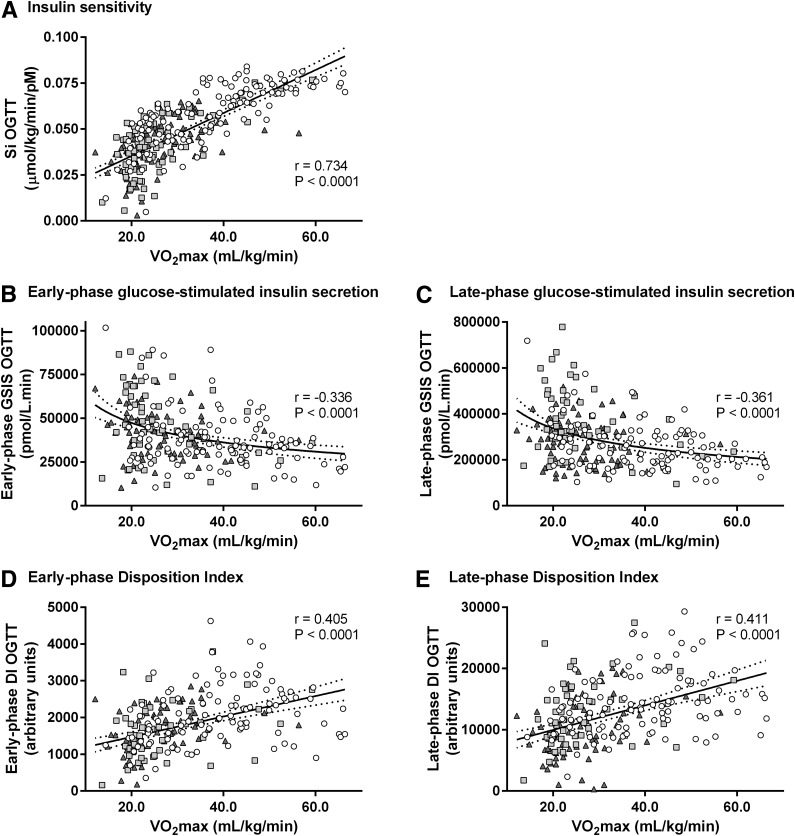
Results: A low VO2max was associated with high HbA1c (r = -0.33), high fasting glucose (r = -0.34), high 2-h OGTT glucose (r = -0.33), low SiOGTT (r = 0.73), and high early-phase (r = -0.34) and late-phase (r = -0.36) GSISOGTT. Furthermore, a low VO2max was associated with low early- and late-phase DIOGTT (both r = 0.41). Interestingly, relationships between VO2max and either glycemic control or late-phase GSISOGTT deteriorated across the glucose tolerance continuum.
Conclusions: The association between poor cardiorespiratory fitness and compromised pancreatic β-cell compensation across the entire glucose tolerance continuum provides additional evidence highlighting the importance of fitness in protection against the onset of a fundamental pathophysiological event that leads to type 2 diabetes.
© 2015 by the American Diabetes Association. Readers may use this article as long as the work is properly cited, the use is educational and not for profit, and the work is not altered.
Figures
References
-
- Jallut D, Golay A, Munger R, et al. Impaired glucose tolerance and diabetes in obesity: a 6-year follow-up study of glucose metabolism. Metabolism 1990;39:1068–1075 - PubMed
-
- Balducci S, Zanuso S, Nicolucci A, et al.; Italian Diabetes Exercise Study (IDES) Investigators . Effect of an intensive exercise intervention strategy on modifiable cardiovascular risk factors in subjects with type 2 diabetes mellitus: a randomized controlled trial: the Italian Diabetes and Exercise Study (IDES). Arch Intern Med 2010;170:1794–1803 - PubMed
Publication types
MeSH terms
Substances
Grants and funding
LinkOut - more resources
Full Text Sources
Other Literature Sources
Medical
