Lantibiotic resistance
- PMID: 25787977
- PMCID: PMC4394878
- DOI: 10.1128/MMBR.00051-14
Lantibiotic resistance
Abstract
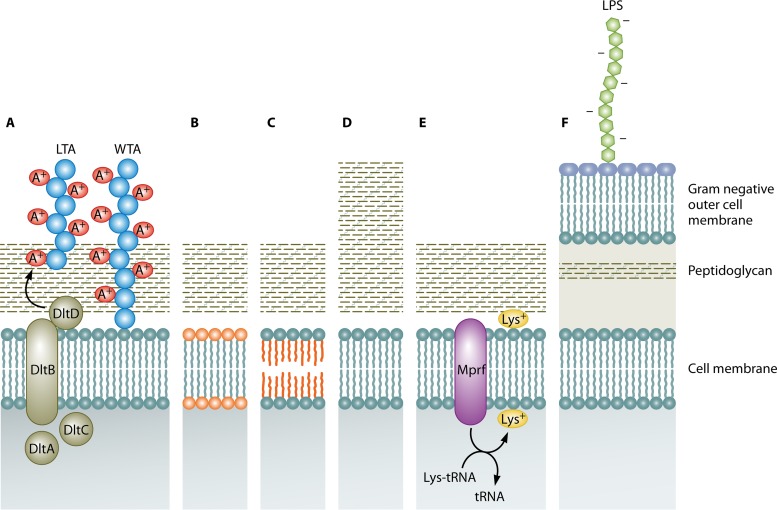
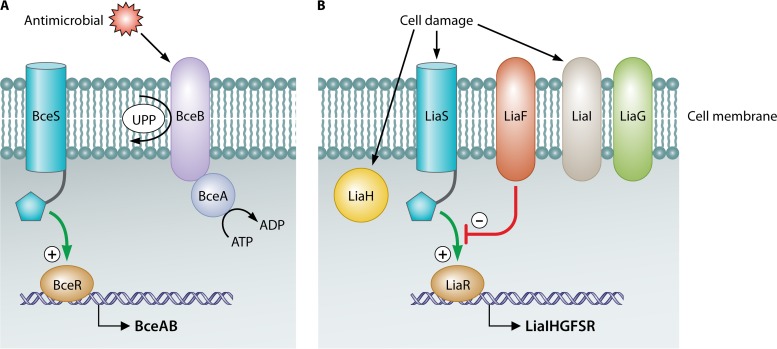
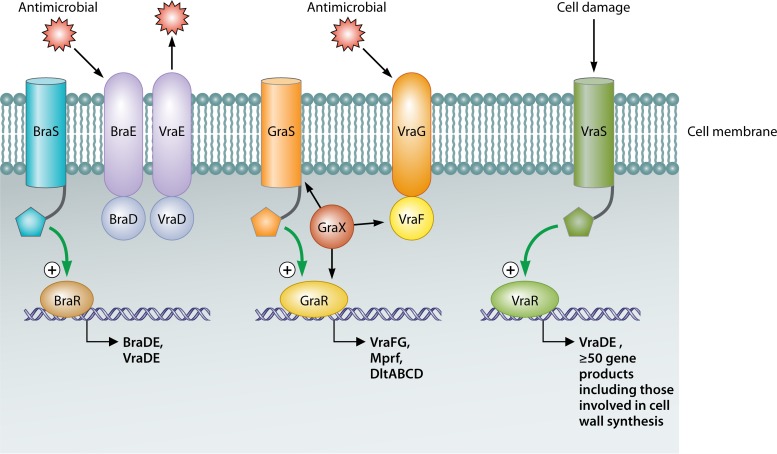
The dramatic rise in the incidence of antibiotic resistance demands that new therapeutic options will have to be developed. One potentially interesting class of antimicrobials are the modified bacteriocins termed lantibiotics, which are bacterially produced, posttranslationally modified, lanthionine/methyllanthionine-containing peptides. It is interesting that low levels of resistance have been reported for lantibiotics compared with commercial antibiotics. Given that there are very few examples of naturally occurring lantibiotic resistance, attempts have been made to deliberately induce resistance phenotypes in order to investigate this phenomenon. Mechanisms that hinder the action of lantibiotics are often innate systems that react to the presence of any cationic peptides/proteins or ones which result from cell well damage, rather than being lantibiotic specific. Such resistance mechanisms often arise due to altered gene regulation following detection of antimicrobials/cell wall damage by sensory proteins at the membrane. This facilitates alterations to the cell wall or changes in the composition of the membrane. Other general forms of resistance include the formation of spores or biofilms, which are a common mechanistic response to many classes of antimicrobials. In rare cases, bacteria have been shown to possess specific antilantibiotic mechanisms. These are often species specific and include the nisin lytic protein nisinase and the phenomenon of immune mimicry.
Copyright © 2015, American Society for Microbiology. All Rights Reserved.
Figures




References
-
- Rea MC, Ross RP, Cotter PD, Hill C. 2011. Classification of bacteriocins from Gram-positive bacteria, p 29–53. In Drider D, Rebuffat S (ed), Prokaryotic antimicrobial peptides. Springer, New York, NY.
-
- Wiedemann I, Breukink E, van Kraaij C, Kuipers OP, Bierbaum G, de Kruijff B, Sahl HG. 2001. Specific binding of nisin to the peptidoglycan precursor lipid II combines pore formation and inhibition of cell wall biosynthesis for potent antibiotic activity. J Biol Chem 276:1772–1779. doi: 10.1074/jbc.M006770200. - DOI - PubMed
Publication types
MeSH terms
Substances
LinkOut - more resources
Full Text Sources
Medical
Molecular Biology Databases