


An Overview of Current Regulatory Requirements for Approval of Biosimilar Insulins
- PMID: 25789689
- PMCID: PMC4504437
- DOI: 10.1089/dia.2014.0362
An Overview of Current Regulatory Requirements for Approval of Biosimilar Insulins
Abstract
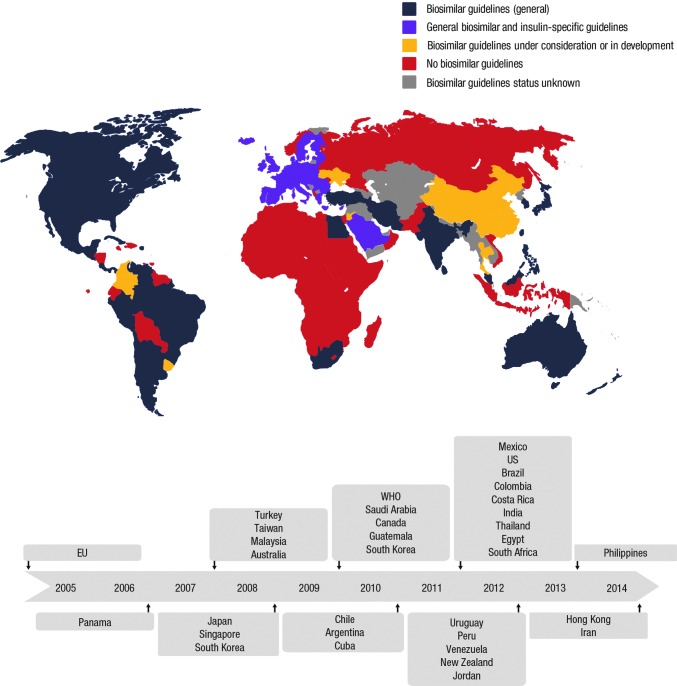
Insulin analog patent expiry is likely to mean that, increasingly, copies of original biopharmaceutical products will be submitted for authorization. Experience with biosimilars in other therapeutic areas suggests that careful regulation and caution are needed. Published guidelines of regulatory authorities around the world on approval of biosimilars and, where available, insulin biosimilars were reviewed. Information was sourced through Internet searching and cross-referencing guidelines. As of August 2014, general biosimilar and insulin-specific guidelines are available in 34 countries and two countries/regulatory domains, respectively. Many guidelines are clearly related to, or partly derived from, the general and insulin-specific European Medicines Agency (EMA) guidelines. Areas covered by these guidelines are fairly consistent, covering preclinical, pharmacokinetic (PK), and pharmacodynamic (PD) studies in humans and clinical areas; however, there are differences in emphasis. The EMA insulin-specific guidelines include detailed criteria on PK/PD studies, as do most other general biosimilar guidelines and, to a lesser extent, clinical studies. The U.S. Food and Drug Administration has general biosimilar guidelines, emphasizing consideration of the whole package of in vitro, biological, and human studies, rather than concentrating on any one aspect. In countries such as Mexico, guidelines are broad, leaving wide discretion to the regulatory authority. In conclusion, from a global perspective, this area of drug regulation is heterogeneous and evolving, and the authors call for an initiative aimed at harmonizing the requirements for biosimilar insulins.
Figures
References
-
- Thorpe R, Wadhwa M: Terminology for biosimilars—a confusing minefield. GaBI J 2012;1:132–134
-
- Rotenstein LS, Ran N, Shivers JP, et al. : Opportunities and challenges for biosimilars: what's on the horizon in the global insulin market? Clin Diabetes 2012;30:138–150
-
- Heinemann L: Biosimilar insulins. Expert Opin Biol Ther 2012;12:1009–1016 - PubMed
-
- Gough S: Biosimilar insulins: opportunities and challenges. Pract Diabetes 2013;30:146–148
Publication types
MeSH terms
Substances
LinkOut - more resources
Full Text Sources
Other Literature Sources
Medical
Research Materials
Miscellaneous
