. 2015 Mar 19;10(3):e0118312.
doi: 10.1371/journal.pone.0118312. eCollection 2015.

Clinical features of autoimmune autonomic ganglionopathy and the detection of subunit-specific autoantibodies to the ganglionic acetylcholine receptor in Japanese patients

Affiliations

Clinical features of autoimmune autonomic ganglionopathy and the detection of subunit-specific autoantibodies to the ganglionic acetylcholine receptor in Japanese patients

Shunya Nakane et al. PLoS One. .

Abstract

Autoimmune autonomic ganglionopathy (AAG) is a rare acquired channelopathy that is characterized by pandysautonomia, in which autoantibodies to ganglionic nicotinic acetylcholine receptors (gAChR) may play a central role. Radioimmunoprecipitation (RIP) assays have been used for the sensitive detection of autoantibodies to gAChR in the serum of patients with AAG. Here, we developed luciferase immunoprecipitation systems (LIPS) to diagnose AAG based on IgGs to both the α3 and β4 gAChR subunits in patient serum. We reviewed the serological and clinical data of 50 Japanese patients who were diagnosed with AAG. With the LIPS testing, we detected anti-α3 and -β4 gAChR antibodies in 48% (24/50) of the patients. A gradual mode of onset was more common in the seropositive group than in the seronegative group. Patients with AAG frequently have orthostatic hypotension and upper and lower gastrointestinal tract symptoms, with or without anti-gAChR. The occurrence of autonomic symptoms was not significantly different between the seropositive and seronegative group, with the exception of achalasia in three patients from the seropositive group. In addition, we found a significant overrepresentation of autoimmune diseases in the seropositive group and endocrinological abnormalities as an occasional complication of AAG. Our results demonstrated that the LIPS assay was a useful novel tool for detecting autoantibodies against gAChR in patients with AAG.


Conflict of interest statement

Competing Interests: The authors have declared that no competing interests exist.

Figures

Fig 1
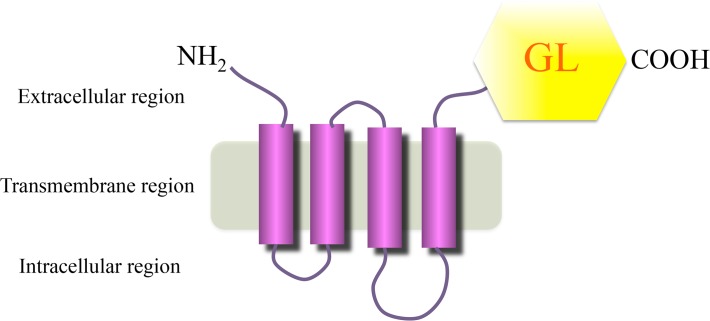
Fig 1. Schematic representation of the acetylcholine receptor (AChR) α3-Gaussia luciferase (GL) 8990.
For the ganglionic AChR (gAChR)-LIPS assay, human embryonic kidney (HEK) 293 cells were transfected with an expression plasmid for the gAChRα3 or β4-GL reporter.
Fig 2
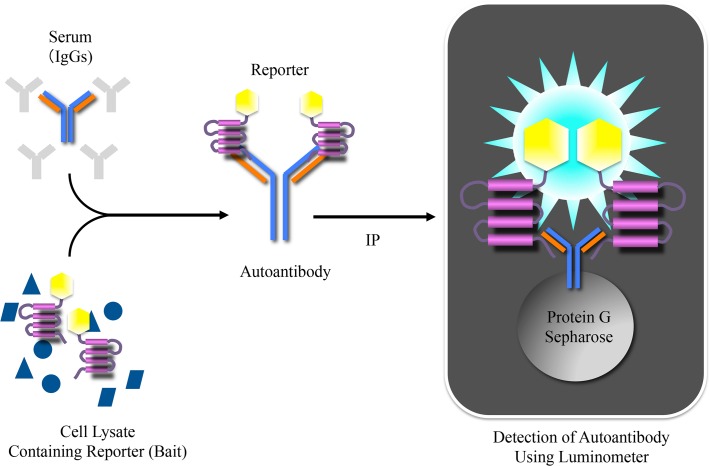
Fig 2. The Luciferase Immunoprecipitation Systems (LIPS).
The soluble fractionated component from the solubilized HEK 293F cells, including the gAChRα3 or β4-GL, reacted with human serum, and the specific luciferase activities of the gAChRα3 or β4-GL were found with the luminometer. The in vitro LIPS assay can quantitatively evaluate an interaction between an antigen and an antibody with high sensitivity and without a radioisotope.
Fig 3
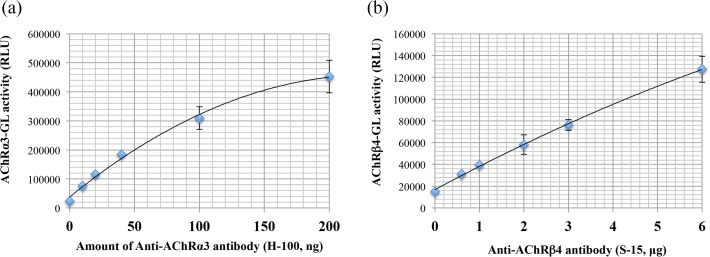
Fig 3. Confirmation of the LIPS assay system for the gAChRα3 or β4 with ready-made antibodies.
The anti-gAChRα3 antibody (H-100) and the anti gAChRβ4 antibody (S-15) bound the gAChRα3-GL and the gAChRβ4 reporters, respectively in a dose-dependent manner (a and b). The X-axis indicates the amount of ready-made gAChRα3 or β4 antibody used. The Y-axis indicates the gAChRα3 or β4-GL activity. The line with closed diamonds shows the results that were obtained in this experiment.
Fig 4
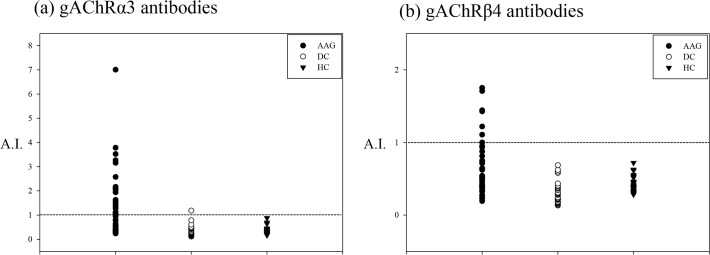
Fig 4. LIPS for gAChR in the sera from patients with autoimmune autonomic ganglionopathy (AAG) and controls.
We tested the sera from patients with AAG, disease controls (DC), and healthy controls (HC). a) Anti-gAChRα3 antibodies were detected in 23 samples. The mean anti-gAChRα3 antibody level in the HC was 0.305 antibody index (A.I.), which was significantly lower than in the AAG samples with a mean level of 1.210 A.I. (p < 0.001). b) Anti-gAChRβ4 antibodies were also detected in seven samples, as shown in Fig. 4B (p = 0.005). The mean anti-gAChRβ4 antibody level in the HC was 0.367 A.I., which was significantly lower than the measn level of 0.618 A.I. in the AAG samples (p < 0.001).
Fig 5
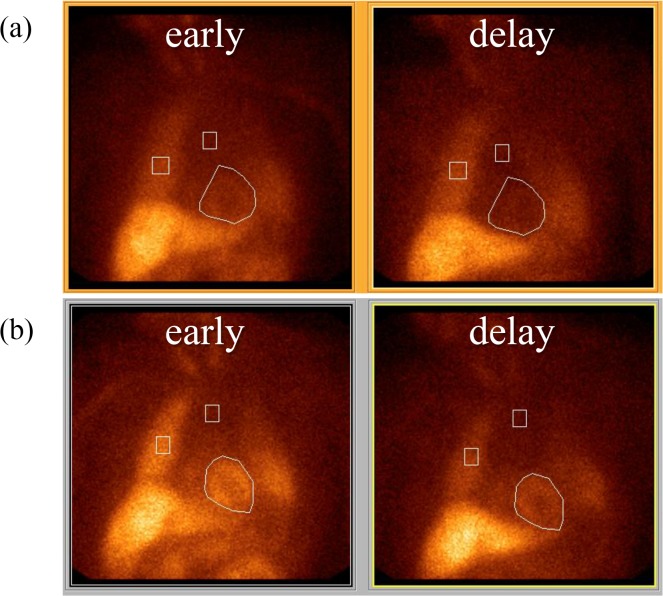
Fig 5. [123I] meta-iodobenzylguanidine (MIBG) cardiac imaging. Early and Delayed.
a)123I-MIBG myocardial scintigraphy revealed that the heart/mediastinum (H/M) ratio was decreased at the baseline (early, 1.55; delay, 1.32). A reduced HM ratio indicates peripheral noradrenergic depletion. b) Combined immunomodulatory therapies resulted in a remarkable improvement in the H/M ratio (early, 2.38; delay, 2.23).

References

    1. Vernino S, Sandroni P, Singer W, Low PA. Invited Article: Autonomic ganglia: target and novel therapeutic tool. Neurology 2008;70: 1926–1932. 10.1212/01.wnl.0000312280.44805.5d - DOI - PMC - PubMed
    1. Skok MV, Voitenko LP, Voitenko SV, Lykhmus EY, Kalashnik EN, Litvin TI, et al. Alpha subunit composition of nicotinic acetylcholine receptors in the rat autonomic ganglia neurons as determined with subunit-specific anti-alpha (181–192) peptide antibodies. Neuroscience 1999;93: 1427–1436. - PubMed
    1. Vernino S, Low PA, Fealey RD, Stewart JD, Farrugia G, Lennon VA. Autoantibodies to ganglionic acetylcholine receptors in autoimmune autonomic neuropathies. N Engl J Med 2000;343: 847–855. - PubMed
    1. Wang Z, Low PA, Jordan J, Freeman R, Gibbons CH, Schroeder C, et al. Autoimmune autonomic ganglionopathy: IgG effects on ganglionic acetylcholine receptor current. Neurology 2007;68: 1917–1921. - PMC - PubMed
    1. Kobayashi S, Yokoyama S, Maruta T, Negami M, Muroyama A, Mitsumoto Y, et al. Autoantibody-induced internalization of nicotinic acetylcholine receptor α3 subunit exogenously expressed in human embryonic kidney cells. J Neuroimmunol 2013;257: 102–106. 10.1016/j.jneuroim.2012.12.010 - DOI - PubMed

Publication types