


Multiplex serum cytokine immunoassay using nanoplasmonic biosensor microarrays
- PMID: 25790830
- PMCID: PMC4447431
- DOI: 10.1021/acsnano.5b00396
Multiplex serum cytokine immunoassay using nanoplasmonic biosensor microarrays
Abstract
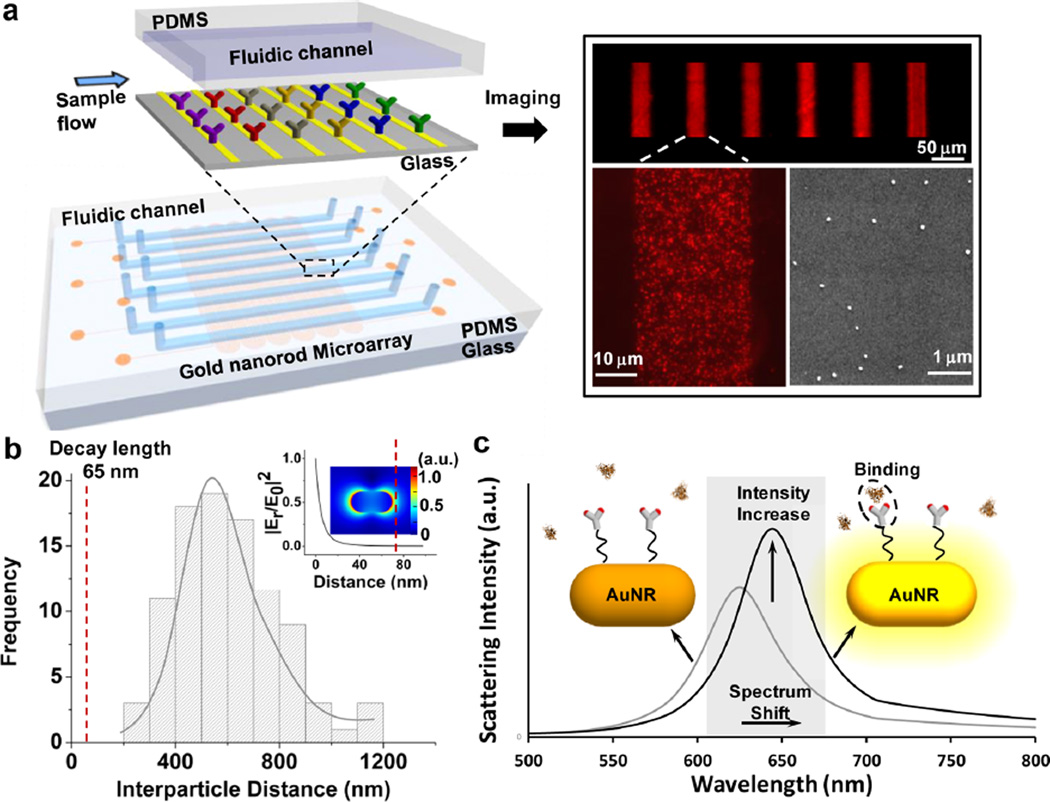
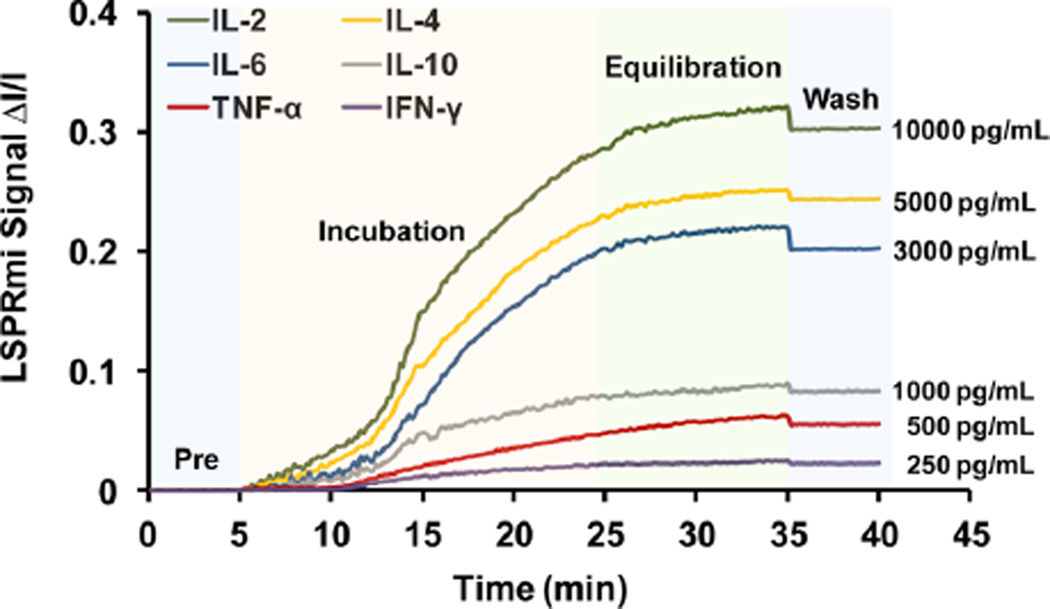
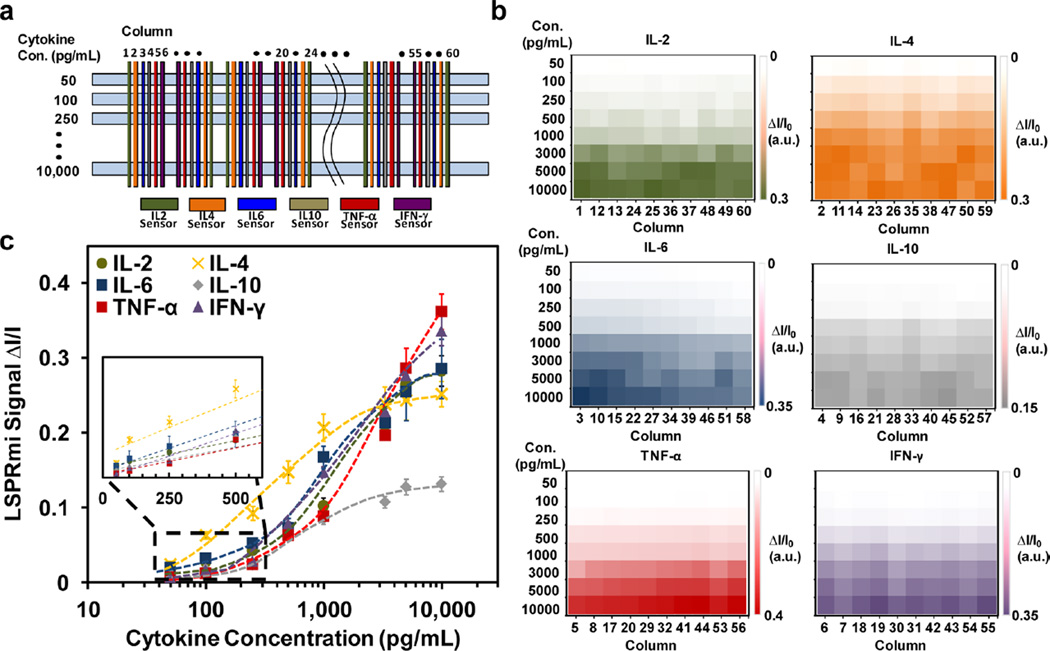
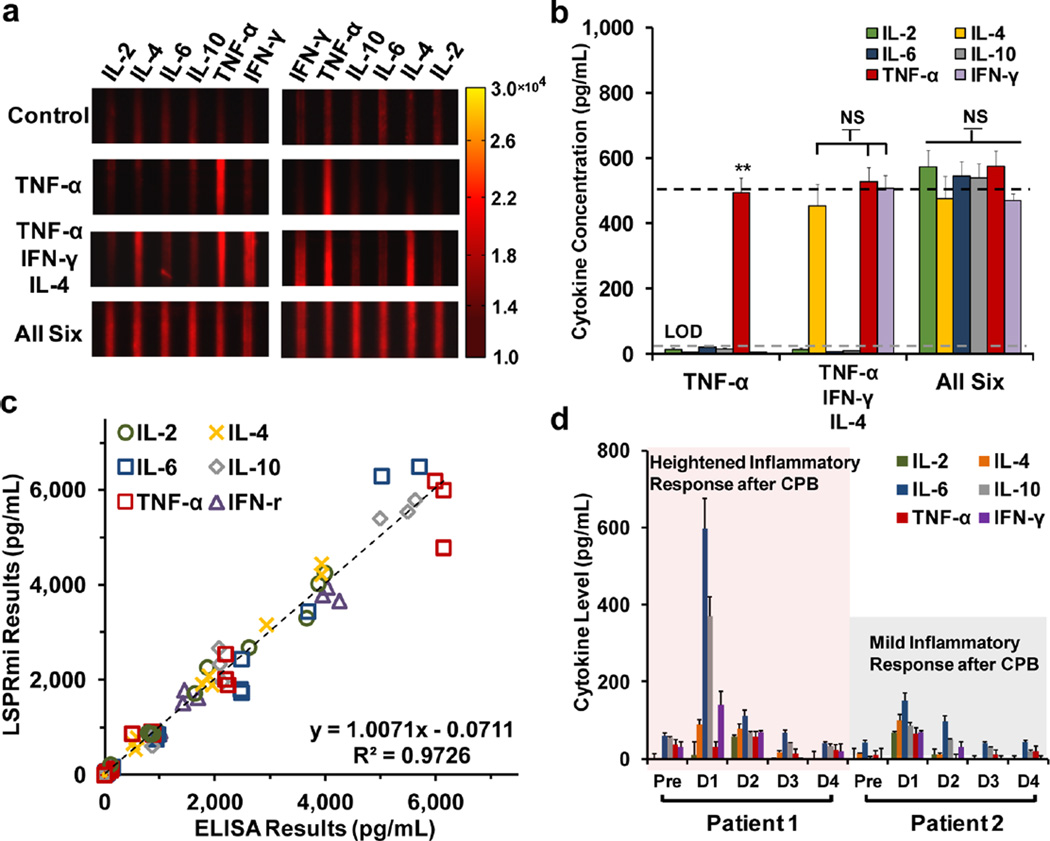
Precise monitoring of the rapidly changing immune status during the course of a disease requires multiplex analysis of cytokines from frequently sampled human blood. However, the current lack of rapid, multiplex, and low volume assays makes immune monitoring for clinical decision-making (e.g., critically ill patients) impractical. Without such assays, immune monitoring is even virtually impossible for infants and neonates with infectious diseases and/or immune mediated disorders as access to their blood in large quantities is prohibited. Localized surface plasmon resonance (LSPR)-based microfluidic optical biosensing is a promising approach to fill this technical gap as it could potentially permit real-time refractometric detection of biomolecular binding on a metallic nanoparticle surface and sensor miniaturization, both leading to rapid and sample-sparing analyte analysis. Despite this promise, practical implementation of such a microfluidic assay for cytokine biomarker detection in serum samples has not been established primarily due to the limited sensitivity of LSPR biosensing. Here, we developed a high-throughput, label-free, multiarrayed LSPR optical biosensor device with 480 nanoplasmonic sensing spots in microfluidic channel arrays and demonstrated parallel multiplex immunoassays of six cytokines in a complex serum matrix on a single device chip while overcoming technical limitations. The device was fabricated using easy-to-implement, one-step microfluidic patterning and antibody conjugation of gold nanorods (AuNRs). When scanning the scattering light intensity across the microarrays of AuNR ensembles with dark-field imaging optics, our LSPR biosensing technique allowed for high-sensitivity quantitative cytokine measurements at concentrations down to 5-20 pg/mL from a 1 μL serum sample. Using the nanoplasmonic biosensor microarray device, we demonstrated the ability to monitor the inflammatory responses of infants following cardiopulmonary bypass (CPB) surgery through tracking the time-course variations of their serum cytokines. The whole parallel on-chip assays, which involved the loading, incubation, and washing of samples and reagents, and 10-fold replicated multianalyte detection for each sample using the entire biosensor arrays, were completed within 40 min.
Keywords: localized surface plasmon resonance (LSPR); multiplexed immunoassay; nanoplasmonic sensing; optofluidics; serum cytokines.
Figures
References
-
- Opal SM, DePalo VA. Anti-Inflammatory Cytokines. Chest. 2000;117:1162–1172. - PubMed
-
- Rothenberg EV. Cell Lineage Regulators in B and T Cell Development. Nat. Immunol. 2007;8:441–444. - PubMed
-
- Damas P, Canivet JL, de Groote D, Vrindts Y, Albert A, Franchimont P, Lamy M. Sepsis and Serum Cytokine Concentrations. Crit. Care Med. 1997;25:405–412. - PubMed
-
- Lippitz BE. Cytokine Patterns in Patients with Cancer: A Systematic Review. Lancet Oncol. 2013;14:E218–E228. - PubMed
-
- Maczynska I, Millo B, Ratajczak-Stefanska V, Maleszka R, Szych Z, Kurpisz M, Giedrys-Kalemba S. Proinflammatory Cytokine (IL-1 beta, IL-6, IL-12, IL-18 and TNF-alpha) Levels in Sera of Patients with Subacute Cutaneous Lupus Erythematosus (SCLE) Immunol. Lett. 2006;102:79–82. - PubMed
Publication types
MeSH terms
Substances
Grants and funding
LinkOut - more resources
Full Text Sources
Other Literature Sources
Miscellaneous
